
The “Orientalesque” language family is a primary language family of the world I propose, consisting of the “Oriental” languages of East Asia and the Amerindian languages of the Americas and Siberia. The “Oriental” languages mainly include Chinese, Burmese, Tibetan, Japanese, Korean and Mongolian. The Amerindian languages include all the indigenous languages of the Americas as well as some other related groups spoken over in Siberia.

It all started when I came up with my theory about the existence of the aforementioned “Oriental” language family. I decided that these languages of East Asia must be related to each other because of extensive “ideological” parallels and psycholinguistic cohesion between the peoples who speak them. There is a sort of informal political alliance between the countries in which these languages are spoken that I call “the Super-Tongue Alliance”, and they collaborate a lot in tipping things in their direction, particularly to counter anti-Oriental racism. They communicate between each other on a subliminal basis, making use of their hereditary linguistic superiority, with all “Oriental” languages being Super-Tongues for the enhancement of the capacity for reason.

The Amerindian languages, for their part, were also all Super-Tongues for the enhancement of the capacity for acuity. This was the case until belligerent European imperialists came onto the scene and extreme violent racism cut the Amerindians off from this hereditary flair, through trauma and as populations declined with use of indigenous languages fading to make way for prestigious European ones.

The Amerindian languages all buzz about infinity or a related concept. The “Oriental” languages, about efficiency or a related concept.

Amerindian Buzz-Concepts include…
- infinity
- Infinitiii#♾
- infinitude
- limitlessness
- boundlessness
- omnipotence
- eternality
- sempiternity
- serendipity
- reaction
- transversity
- prepotency
“Oriental” Buzz-Concepts include…
- efficacy
- efficiency
- accomplishment


The “Orientalesque” languages can be understood as the “Conceptual-Abstract” Tongues. The “Oriental” languages can be understood within this as the “Efficient” Tongues, and the Amerindian languages as the “Boundless” Tongues.
It all started many tens of thousands of years ago when we all still lived in Africa. Maybe even more than one hundred thousand years ago. Regardless, we all still dwelled together, so to speak, adhered within one collective society at first, in which cohesion was vehemently enforced. Cohesion was enforced even as preliminary ethnicities and races began to take shape, which happened much earlier on than people think. Although due to practical snags, we did live separately within our different preliminary groups, but still all firmly linked to each other between groups within the “Proto-Global”/“Original” template.

We all spoke languages that were related to each other and descended from “Proto-Global”, the very first (sophisticated) human language. I call these languages the “Original” Tongues. We had “Origino-Nostratico”, the Language of Serendipity, the very first language of intellect. The “Origino-Nostraticos” were the preliminary ancestors of today’s Europeans. We also had “Origino-Turkique”, the Language of Aspiration, the very first language of culture – spoken by preliminary forebears of today’s Turkic peoples. Another Original tongue of note was “Origino-Orientalesquey”, the Language of Originality itself, the world’s first Super-Tongue – spoken by, of course, the ancestors of today’s “Orientalesques”.
The “Origino-Orientalesqueys” lived a nomadic lifestyle, flitting between other groups and displaying parasitic behaviour, freeloading a bit like today’s gypsies. They were then rejected by the others, reduced to ostracisation, famine, desolation, bullying, even violence. This was the very first incidence of mass human cruelty. The extent of the rejection varied between group to group, with some objecting to the aggression that was being spearheaded by the “Origino-Nostraticos”. The very first political opinions of sorts were formed thus. The oppression was such that a neuropsychological discrepancy -pressure gap- was formed between the repressed “Origino-Orientalesqueys” and the rest. It was from this discrepancy, in filling the pressure gap, that the very phenomenon of psychological trauma first came to exist. The traumatised “Origino-Orientalesqueys” retreated inwards, learning to introspect, developing heightened senses, self-awareness, and rationality. In their traumatised haze, they invented a brand new type of human language: the Language of Sensitivity. As I said above, before this, all human language was related and descended from “Proto-Global”. The “Origino-Orientalesqueys”, now the “Pre-Orientalesques” going by my terminology, used their enhanced rationality to get back in favour with the others, in due course sharing their know-how and making it possible for other groups to invent their own new types of human language. People didn’t all break away immediately: many took their time and stayed adhered to the “Proto-Global” mould for many thousands of years hence. But eventually, the “Origino-Nostraticos” would go on to invent the Language of Intuition, becoming the “Pre-Nostratics”. And very late on, the “Origino-Turkiques” would institute the Language of Cohesion, becoming the “Pre-Turkics”.


The “Pre-Nostratics” would go on to become the Original Representers within the human population. The instinct to #represent that was carved out thus is why we now have celebrity culture. The “Pre-Turkics” would become the Original Pinnaculars, representing the best humanity had to offer on a cultural level for many aeons upon aeons until they were dramatically displaced by the Indo-European Classical tradition. Today, Turkic languages buzz about class or related concepts, FYI. And what about the “Pre-Orientalesques”?
They became THE human beings in the aftermath of the famine. Why? Their heightened senses, self-awareness and rationality also led to the cultivation of the phenomenon of perspective. The invention of perspective, so to speak, made the “Pre-Orientalesques” the absolutist human beings, thanks to their enhanced capacity to amass human experience. Recycling the ideology behind the Language of Originality, they became THE ppl within the original human population.


The Orientalesques didn’t leave Africa first: they were not the first group to branch away geographically and physically from the “Proto-Globals”, but they were the first to do so linguistically and psychologically. The first group to up and leave Africa was in fact the “Blockfuls”, descendants of today’s Aboriginal Australians. When the Orientalesques finally left Africa, they moved into Eurasia, eventually setting up the Proto-Orientalesque base i.e. heartland around the Sakhalin Gulf in what is now Siberia. This was just south of the glaciers from the last ice age, which the Orientalesques believed to have spiritual importance.

Every single Orientalesque language is a language of intellect – at least technically, just.

When #it was called, there were 5 factions within the Proto-Orientalesque population.



The descendants of today’s Han Chinese were THE faction among these… The five being:
- The Sparky Ones – now dissolved between Sinitic Sino-Tibetans & North Amerindians
- The Grounded Ones – now Sino-Tibetans, particularly Tibeto-Burman peoples inc. Burmese & Tibetans
- The Cultivated Ones – now Japanese & Koreans
- the Contemplative i.e. Pinnacular Ones – now the Mongols
- The Innovators – original forebears of the Amerindians
I can tell you that the original forebears of the Amerindians broke away from the ancestors of the Mongols – before #it was called, ofc. They established themselves as the Innovators, living nomadically around Siberia for a while, trying to figure out what they wanted to do with themselves for the rest of all eternity, beyond playing with their hereditary psycholinguistic flair. Indeed, Mongoloid DNA has been found throughout Amerindian ethnicities, and Native Americans are thus understood to be of Mongoloid origin. However, it was only when the Buzz-Concept infinity was ideated on the first Beringia crossing that the Amerindians were able to branch away properly and found their own new Orientalesque language family. Before that they were technically still bound to the Mongols, stifled by them. The ppl who called #it, however, decided to give it to them, believing that they would surely get their act together and found some new major type of Orientalescence eventually, sooner or later. Out of principle. And that they did on the first Beringia crossing, so major being the invention of the Buzz-Concept infinity that the Amerindians were able not only to establish their own new Orientalesque family but engender an entire new strand and dimension of Orientalescence. And thus there were the Efficient Tongues and the Boundless Tongues, within the Conceptual-Abstract Tongues.
I think that Mongolian is the language that bears closest resemblance to Proto-Orientalesque. Although the traditionalist Orientalescence has surely been exaggerated and magnified through the Mongol contemplative inclination.
However, the Mongols are not THE Orientalesques, or even THE Orientals. They are the pinnacular Orientals. THE Orientals are rather the Tibetans, and THE Orientalesques… the Inuits…!


THE Amerindians are the Nahua/Aztecs.


The Amerindians may have lost much of their hereditary linguistic supremacy, but the Buzz-Concept infinity has retained its status as the world’s most superior. It enhances cognitive capacity on a seemingly infinite scale, from fostering intellect to enhancing one’s sensory reality. The Buzz-Concepts of American English are (1) success and (2) limitlessness – number 2 being limitlessness/infinity from the Amerindian languages instead of passion from British English. It is through this that the Buzz-Concept infinity is a very powerful force in the world.

On a trip up to Beringia, a couple of Proto-Amerindian leaders had the idea to make a crossing of the mysterious expanse of land they came across that we now know to be the Bering land bridge. This land bridge once connected Siberia to Alaska, and had opened up during the last ice age when glaciation caused sea levels to fall. Walkable passage had formed between the ice structures below, and they could see across to the mountains on the other side, believing the area to have pivotal spiritual importance. They hatched a plan, a plan to go back and prepare the others wherever they were based, get everyone’s spiritual guns blazing and then bring them back to Beringia whereupon they would make the crossing. So the leaders went back to base, collected the others, and people were divided up into two camps: the Sturdy Ones and the Benevolent Dreamers. They were hoping to have some sort of spiritual awakening or epiphany upon finally making the journey. On the crossing, the Sturdy Pack had the idea for the Buzz-Concept infinity. They developed tunnel vision, the harsh conditions causing them to retreat inwards like their “Origino-Orientalesquey” forebears, and had a burst of energy that created an intellectual buzz. They took heed of the heightened sensory experience they were now accessing, and this insight crystallised into the Buzz-Concept infinity. The concept of infinity corresponds to the Proto-Amerindians’ commitment to pushing the boundaries of the human experience to its furthest limits and beyond, in case you didn’t get that. The Benevolent Dreamers perished on the crossing. They had had the Buzz-Concept idea fantasia/fantasy/fancifulness. It was when they had had the idea for this Buzz-Concept back over in Siberia that the group had been divided in two. Human psychology used to be much more fragile than it is now, and the harsh conditions along with the physical exertion caused the Dreamers to malfunction, leading to paralysis. The sensory overwhelmment from the unfurling of the Buzz-Concept fantasia made it possible for their psychology to just malfunction like that. And so they were stuck in the cold, unable to feed themselves, awaiting death. The calls of their adorable little children, whose psychological plasticity enabled them to resist malfunction to an extent, were only just heard by the former pack, the Sturdy Ones. To save their own psychology, the Sturdy Ones could only find it in themselves to save the effervescent Dreamer children. Today you can identify people of Amerindian descent who are descended from the Dreamer children through their haunting effervescence. “The Loss”, as I call it, is why Amerindians of today are committed to embracing the harshness of life as it comes, down to its roughest edges. It is all symbolic of “The Loss”, so we may never forget (a) what the world lost in the demise of those cuties & their delightful Buzz-Concept idea fancifulness, and (b) the power of the Amerindians’ hereditary sturdiness.
The Mongols, for their part, would have been THE Orientalesques. But the Amerindian vision proved so potent that the Mongol “pinnacularity” was dramatically eclipsed by the Buzz-Concept infinity in due course. And so it was the Eskimo-Aleut peoples of Alaska and Northern Canada, speakers of the “Catalystic” Tongues, including the Inuits and the Yupiks, who ultimately came out on top of that pile. Orientalescence is of course about pushing the very limits of the human experience, and the Eskimo-Aleut vision for making use of the cognitively supreme Buzz-Concept infinity proved much more potent in those pivotal early years than the Pre-Mongol insightful contemplative “pinnacularity”. What really happened was that the Eskimo-Aleuts managed to find a way to live more faithfully to the foundational Proto-Orientalesque template than their Mongoloid forebears. And it was when this step was made in Amerindian prehistory that it all kicked off and the “Amerindiosphere” exploded. To this day, Inuits are obsessed with steps and stepping. The Amerindians went on to populate the Americas in their entirety, and the Buzz-Concept infinity mushroomed into the variety of forms in which is now encountered, from omnipotence to sempiternity. And so on.
The Alaskan Amerindians kept in touch with their Oriental cousins back in Eurasia until the Bering land bridge closed up some 10-15,000 years ago. There was a tradition whereby any major development made with regard to human cognition & sensoriality in the chronicles of the Buzz-Concept infinity, made to the knowledge of the Alaskan big dogs, would occasion a voyage back the way of the Proto-Orientalesque heartland. These voyages had as their purpose to convey to other Orientalesques the aforementioned developments, with the end of updating the collective Orientalesque intellectual hereditary canon, so to speak. So the Orientals were by no means detached from Amerindian innovation as it snowballed.
Inspired, the Orientals back in East Asia competitively set about honing their own visions…
The Chinese are the Oriental freestylers…
They would go on to invent the Language of Processing…
The 4 layers of (Mandarin) Chinese:
- 效 | xiào : effect, efficacy • efficacy best translates as 效率 but the Buzz-Concept of Chinese is encapsulated by just the one character 效, denoting efficacy of a distinctly elemental kind. Fact: they don’t really have words in Chinese, they go by concept
- 人 | rén : people, person, man, human being, personality, folk • in this special context, 人 stretches to mean humanity/sociality/sociability/“personability”. So the secondary Buzz-Concept of Chinese is not “person” but better “personality”
- 汉 / 漢 | Hàn • the Han ethnicity makes up 92% of the population of the People’s Republic of China, numbering 1.4 billion ppl worldwide
- 一 |yī : one • i.e. uniformity/singularity > consistency/conformity/simplification… The Chinese r rly committed to their quest for elemental efficacy
The Japanese are the Oriental sophisticates…
They invented the Language of Knowledgeability…
The 4 layers of Japanese / 日本語 / Nihongo:
- 効 • KŌ • effect, efficiency, success -> “elemental” efficiency
- 楽 • RAKU • ease, comfort -> “vital mental streamlining”
- 和 • WA • old name for Japan: the Wajin/Yamato were the measured Oriental people. Gentle, discreet, subtly ruminative in competition with the Mongols. The Japanese are now the ~sophisticates~. 和 also refers to the cultural concept of “harmony”, i.e. a peaceful unity within a social grouping in which members prefer the continuation of a harmonious community over their personal interests. The original transcription 倭 “wa” is now pejorative, meaning “dwarf/submissive people”
- 奏 • SŌ • playing ~> playing, rising, play music, speak to a ruler, complete, perform, finesse, superficiality, frivolity, lightheartedness (soulfulness of a positive variety)
The Koreans have cultivated the Language of Rationality/Logicality…
The 4 layers of (South) Korean / 한국어 / Hangugeo:
- 산 | SAN = “elemental productivity” • 산 = 🏔 yes, 산 actually means “mountain”, also “mount”, and can mean “berg”, “acid”, “apex stone” or “reckoning”. But it can be combined with other Koreanograms to give “productivity, fecundity”, and more. What’s the connection btwn 산 & its concrete translations and “productivity”? The highly abstract connection can only be described as “elemental productivity”: mountains being produced from the earth; trouble or pain or reaction being produced by acid; the point produced by an apex stone on a roof; the consequence produced from act to bring about a reckoning
- 적 | JEOG = having your wits about you in the world… being on top of the game of life/history… 적 translates first as “enemy”, “target”… creating contradiction: why would you want to be the enemy?… no, not the enemy: being that b***h… f**k them… and then also necessarily leading to “conscientiousness”, “social responsibility”, “boss-ness”
- 한 | HAN = one • 한 refers principally to Koreanness in this context ofc. But surely alludes to collective Oriental efficiency, too. This is also evidence corroborating my theory about a relationship between 한국어 / HANgug-eo o of 한국 / Hanguk / (South) Korea and Chinese / 汉语 / HÀNyǔ of the Han people / 汉人 / 漢人 / HÀNrén. Also, I am fairly sure that HAN meant “great/major/big” in some “Proto” language, however far back, maybe even Proto-Global
- 양 / YANG = sheep, amount, positive… • “bucking up”
The Mongols cultivated the Language of Commitment…
The 4 layers of Mongolian / монгол хэл / ᠮᠣᠩᠭᠣᠯ ᠬᠡᠯᠡmb / mongol khel:
- ᠪᠦᠲᠦᠮᠵᠢmb • бүтэмж • butemzh • efficiency, success, effect, accomplishment
- ᠨᠢᠭᠡᠳᠬᠡᠬᠦmb • нэгтгэх • negtgekh • integration, unity
- Mongolianness
- Continuity, flow, fluidity, adaptability
Oriental ppl slay over nature and natural phenomena when they speak their languages. The Chinese over peculiar spectacular natural phenomena 🏞. The Burmese over trees 🌳. The Tibetans over earth 🤎. The Japanese over flora 🌸. The Koreans over mountains ⛰.
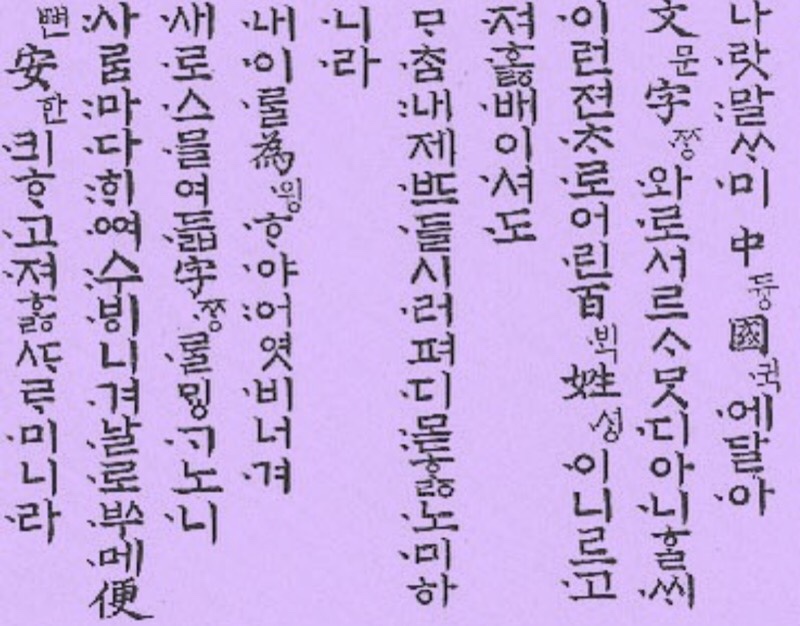

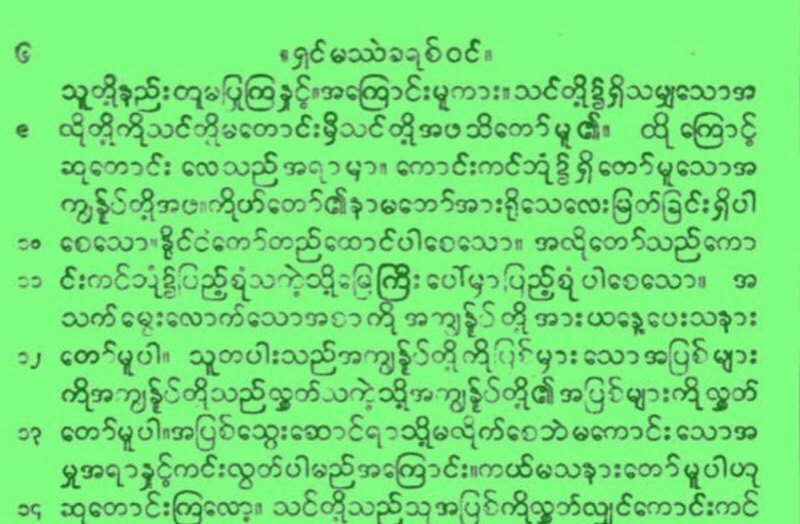

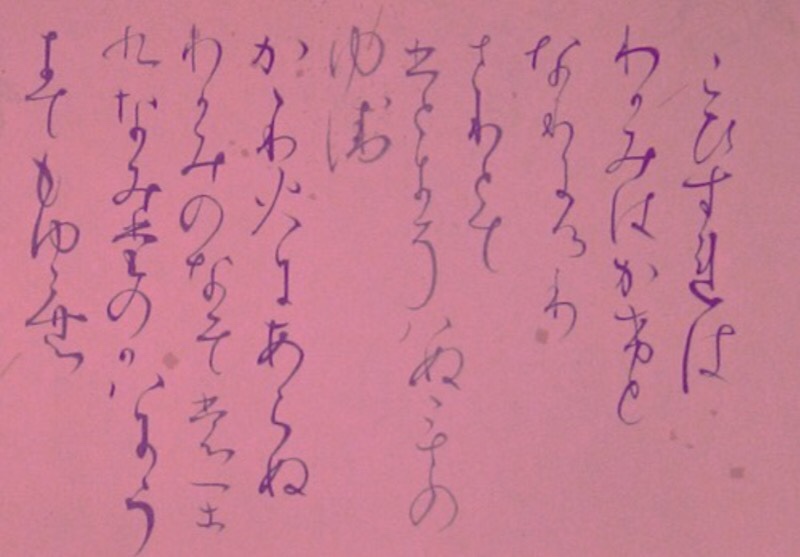



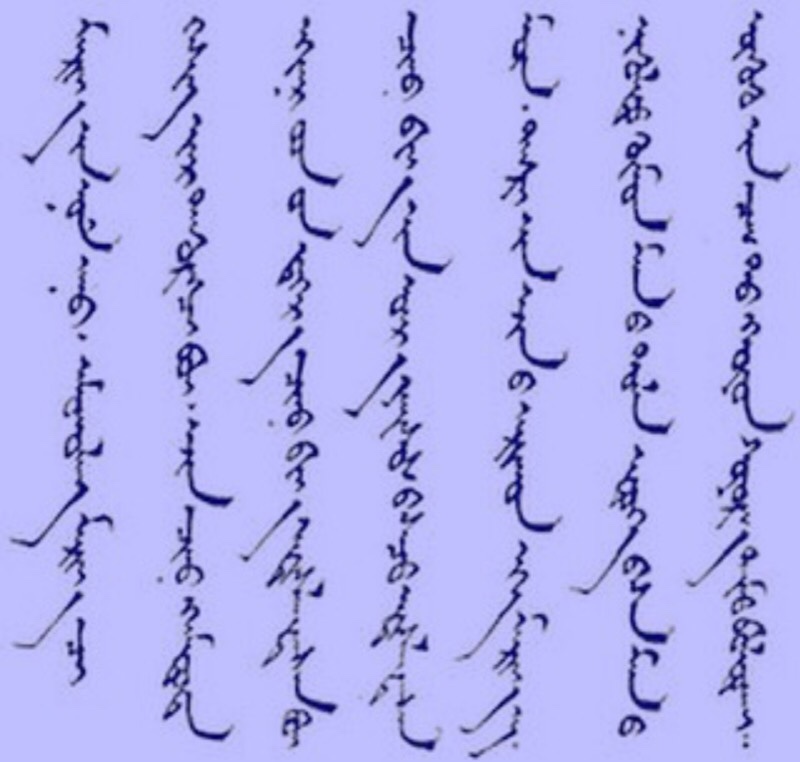


For their part, the Proto-Amerindians slayed over the phenomenon of nature that is humanity itself, rising above and beyond… The Amerindians now slay over the nervous system and different feelings. To become a major Amerindian tribe you would have to work your way up from mere sensation to emotion. So, for example, Nāhuatl speakers of México slay over the emotion of lust. The Nāhuatl language belongs to the Uto-Aztecan family, spoken by the vibrant Amerindians & THE Amerindians. The other Uto-Aztecans, meanwhile, slay over different sensations arising from the experiences of sexuality. The Aztecs/Nahua managed to up their game to slaying over the resultant emotion of lust. And thus they became an Amerindian people of transcending significance. Indeed, Amerindians were bound by this rigid system, so only the people who had it in them to make such a leap would ever get to be a major Amerindian group. And there is only a certain number of emotions. However, the Eskimo-Aleut peoples (again), as THE Orientalesques, blessed as they are thus, slay over the sensations of emotionality itself. They get to slay over the sensations of emotionality itself. They are the most phenomenally astute of all the characteristically astute Amerindian peoples. The Eskimo-Aleut family splits up initially between the Eskimos, encompassing the Inuit and the Yupik, and the related Aleut people of the Aleutian Islands. Of the three groups (Inuit, Yupik and Aleut), two of them count as major Amerindian peoples, notably. The Eskimo-Aleut languages are the “Catalystic” Tongues, extra handy for this exact business, for catalysing advancement and human progress leading to superior cultural status. So two of the three indeed have the status of emotion-slaying noteworthy Amerindian peoples, with the Inuit slaying over the emotion of excitement and the Yupik over amusement.

The Uto-Aztecans are the vibrant Amerindians. They are also THE Amerindians. And within that the Nahua/Aztec ppl are THE Amerindians, more specifically. This is because they have preserved the legacy of the groundbreaking, lucid, rich mental activity & processing & intellectual animativity of the adventurers who realised the prehistoric Beringia crossing – those traits being exhibited to a degree never before experienced by any other humans. The Uto-Aztecan languages are spoken in the Western United States, Mexico and El Salvador.

The 4 layers of Nahuatl / Aztec / Mexicano / Nāhuatl / Nāhuatlahtōlli / Mēxihcatlahtōlli / Mācēhuallahtōlli:
- Infinitiii#♾ • I don’t know how you would say infinity exactly in Nahuatl, but there is an AMOTLAMINI, meaning “infinito en número” / “infinite in number”
- Fervour/ardency/ardour/intensity
- Nahua-ness
- Procedure

And thus I present the Orientalesque primary language family!
 The Buzz-Concept Project