


Within every linguacultural group there are THE ones, the pinnaculars, the freestylers, and much more – the extent of this trend varies of course depending on how many members a group has.
THE ones are the heirs to the original fundaments, often to the purest or the most legitimate iteration of the “Proto-“ language and culture. THE pinnaculars in theory exist to represent the best that that grouping may well have to offer – occupying its pinnacle. And the freestylers are, well, the freestylers, who freestyle and experiment with the collective heritage. This pattern occurs with THE ones because someone has to inherit the original “Proto-“ fundaments, or the strand of global heritage will be lost. Furthermore, back in Africa, when we began to branch away from the “Proto-Global” mould, we did so on these premises: the Pre-Orientalesques were THE Originals (THE human beings now being Africans FYI); the Pre-Semito-Africans were the Original Sophisticates; the Pre-Blockfuls were the Original Freestylers; the Pre-Nostratics were the Original Representers, and the Pre-Turkics the Original Pinnaculars. It was just a thing: we had to have concrete ideas for ways to break away from the Original mould or it wouldn’t work and people wouldn’t have been able to successfully coordinate all this activity that has ensued. And we subconsciously seek to emulate our ancestors for ease of mind. Also, whenever a new group branches away they have to have a meaningful way to differentiate themselves (such as by being the creative Slavs, like the Ukrainians, for example).

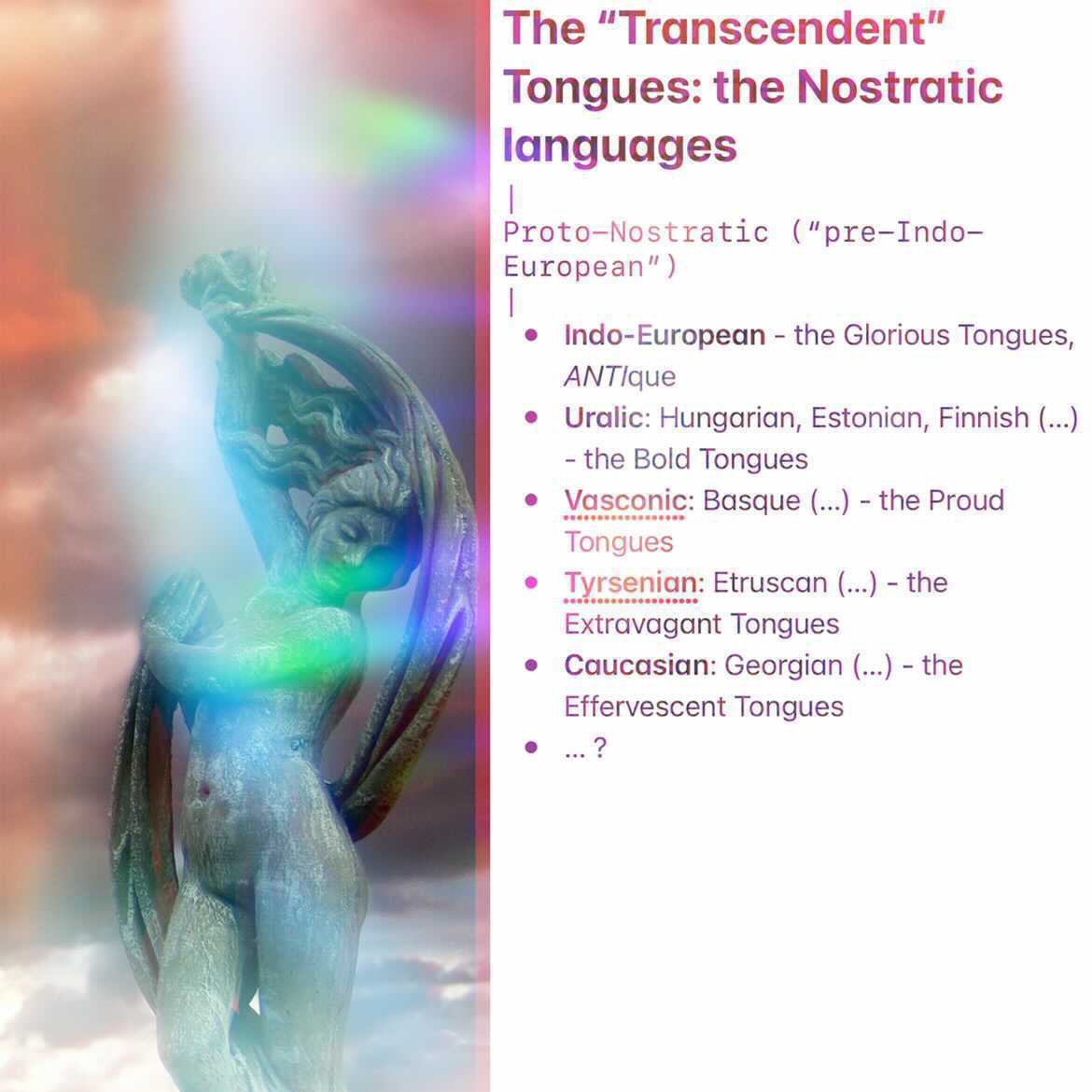
The Nostratic languages are a primary language family I propose constituting the Indo-European languages, the Uralic languages, the Vasconic languages, the Tyrsenian languages, and more. Indo-European languages include English, German, Dutch, Spanish, Portuguese, French, Italian, Latin, Greek, Russian, Farsi and Hindi. Europe is the contemporary Nostratic heartland.
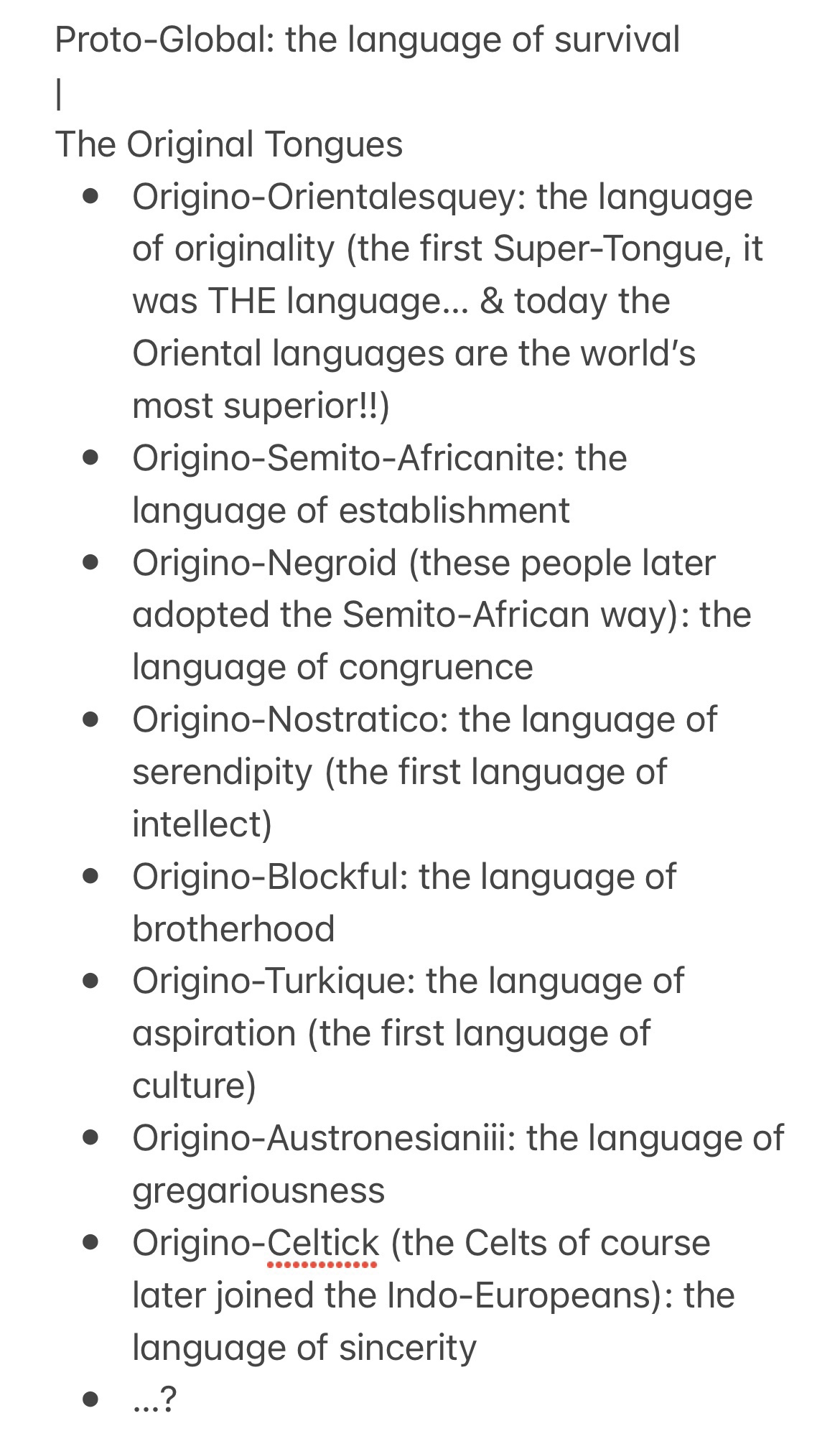
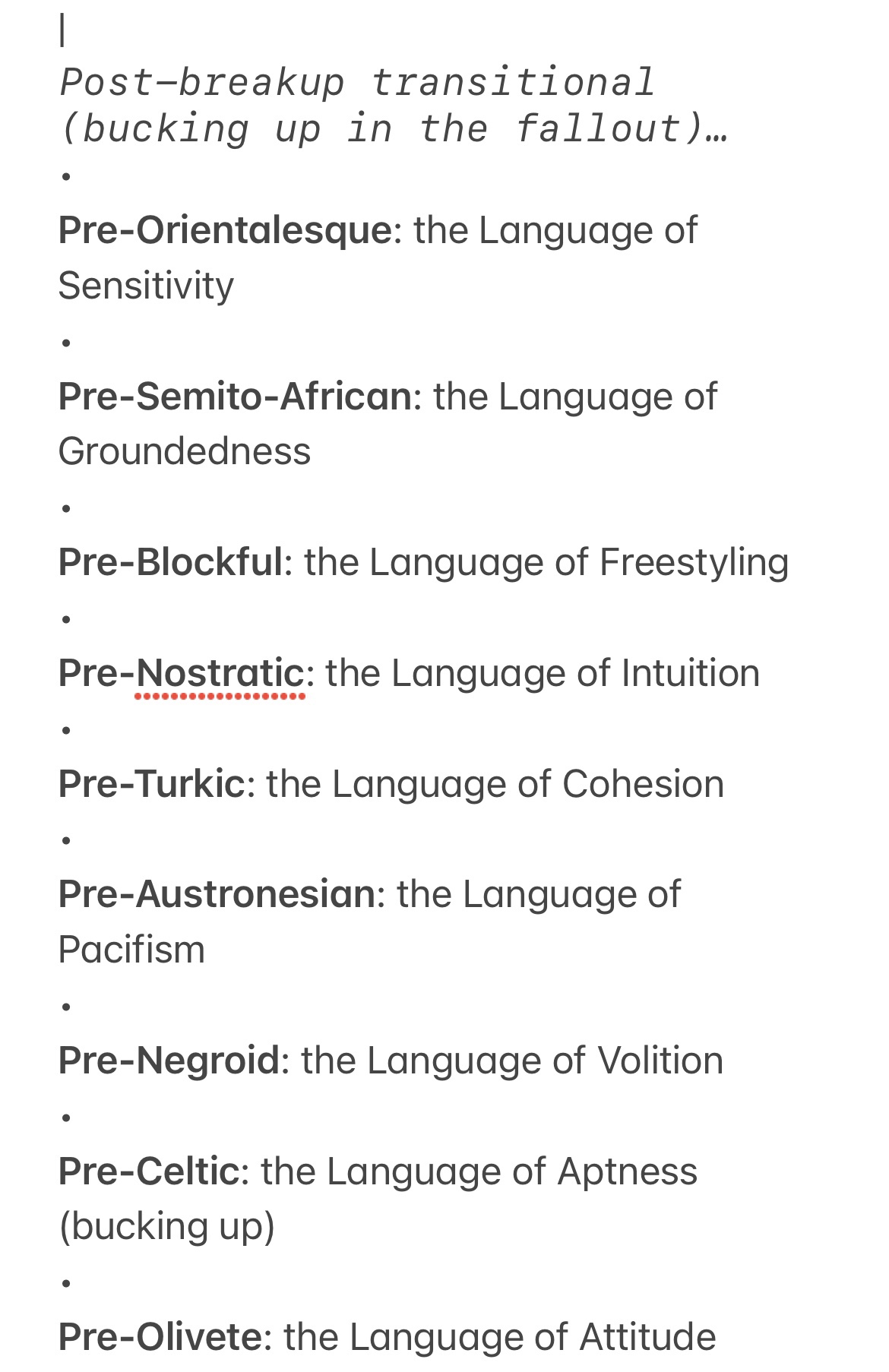
The first ancestors of today’s Nostratic peoples emerged from the collective human race speaking Origino-Nostratico, the Language of Serendipity. This was the very first language of intellect. Nostratic peoples have always been highly discerning. They were very magnificent and noticed how their magnificence made life much easier, bringing more serendipity their way than other groups. In due course they turned to discernment to further enhance this effect. And that was how the Nostratic tradition began. When human beings figured out how to effectively depart from the Proto-Global psycholinguistic template and create new types of language that weren’t necessarily related to and thereby descended from Proto-Global, the “Nostratics” did so in their transformed capacity as the Pre-Nostratics who cultivated the Language of Intuition – intuition being the next step up from discernment, of course. The Pre-Nostratic people would later evolve into diverging groups, including the Indo-Europeans.
The four layers of Pre-Nostratic, the Language of Intuition…
- Consciousness
- Exquisiteness
- Nostraticism
- (Advantage)
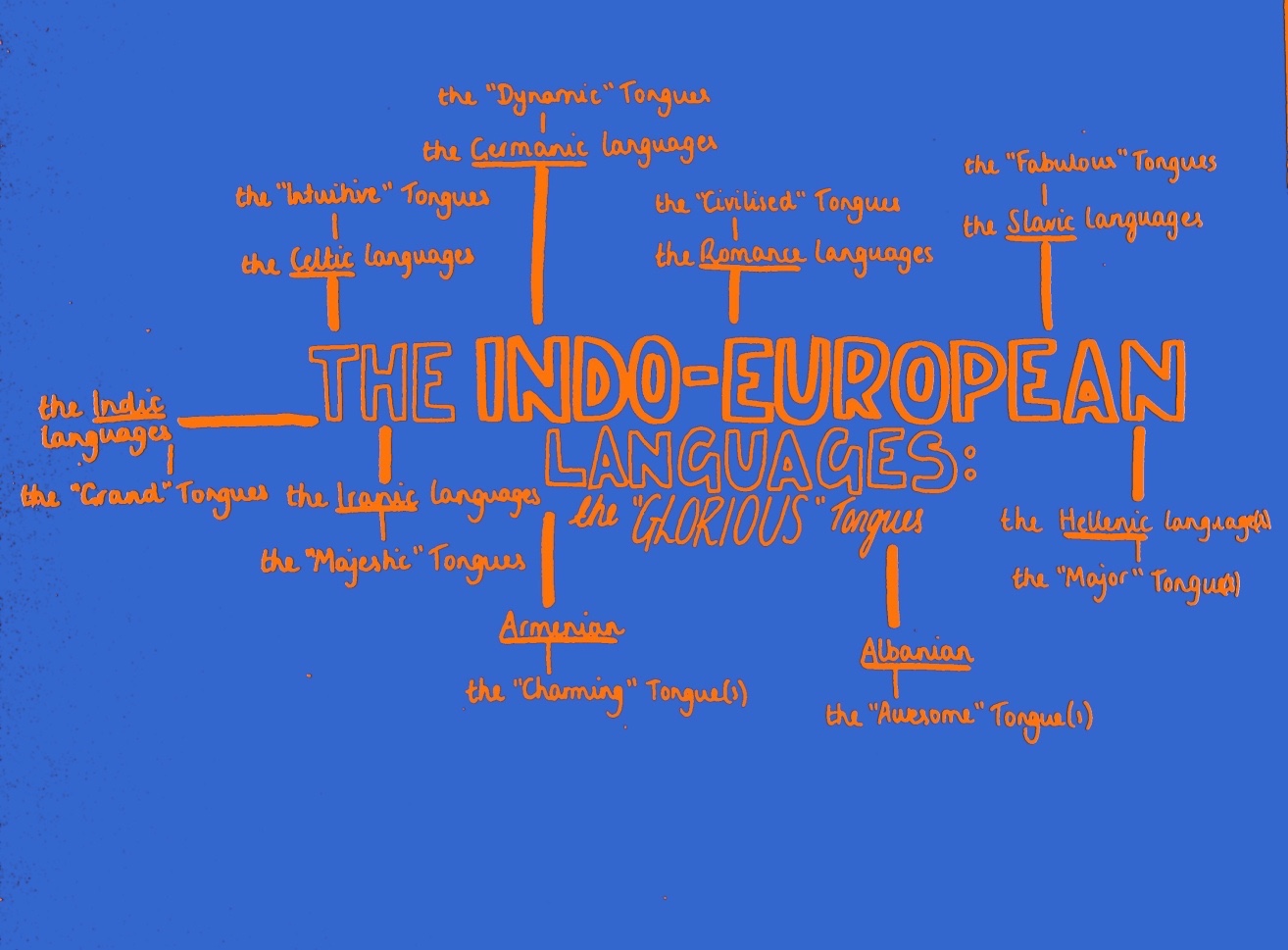
The Nostratic languages collectively are the Transcendent Tongues. The Indo-European languages are the Glorious Tongues.
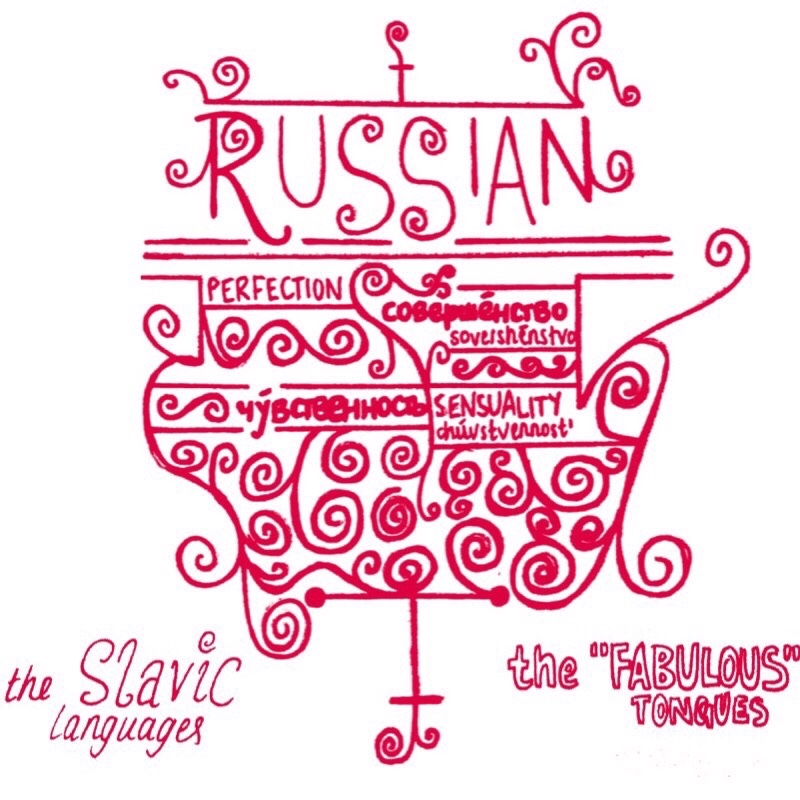
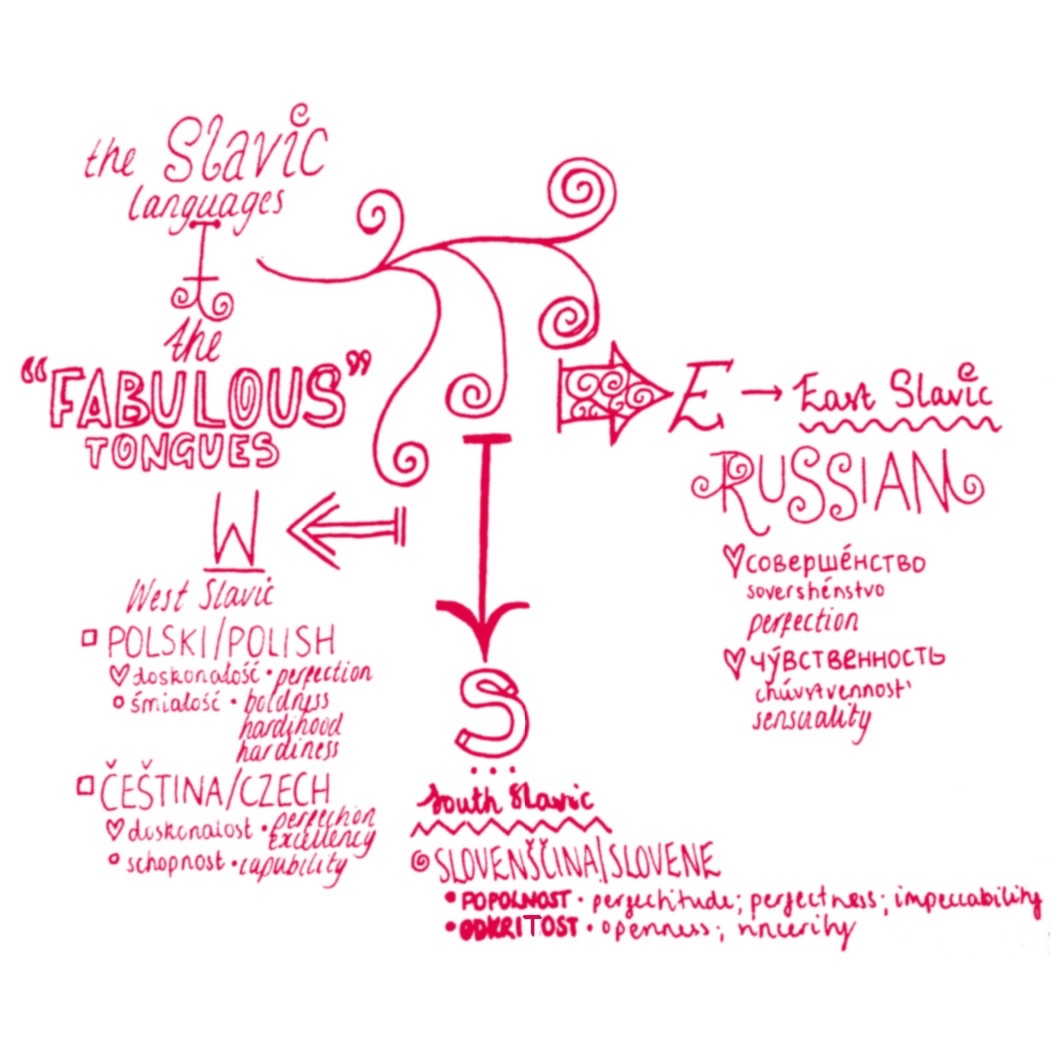
To explain the pun in the name of this post: the Slavic languages of Eastern Europe buzz about perfection, making these peoples extremely precise, exacting and discerning, particularly when it comes to their founding hereditary strong suit of communication. In the United Kingdom we have two main types of lawyer: the solicitor and the barrister. The barristers are the lawyers who notably represent people in the courts, at the bar, for example, whereas solicitors take care of matters like conveyancing behind the scenes, so to speak. Traditionally, the barristers lead the pack as the representers, the sparky legal practitioners who work on the hard-hitting frontline of matters of justice, shaping judicial precedent as it emerges, for example. However, there are many more solicitors practising than barristers, soliciting the forces of Justice more discreetly and subtly to effectuate -via endless paperwork- the precedent put forth as the law by legislators, judges, and barristers. The profession of solicitor is notoriously tedious. There is a striking parallel here between the nature of the legal discipline of “soliciting” and the dynamic of the scope of “Slavicity”. Both require high levels of discernment and sharp critical thinking skills. Both pursuits centre around acutely refined usage of language, be it legal prose or oral communication between Slavs. Indeed, the root of the ethnonym Slavic is shared by the word slovo, meaning “word” in Russian. Hence, slovicitors… people who are highly adept in the realm of Slavicity, of sloviciting…!
The Slavic languages are spoken in Eastern Europe, divided between the branches of East, South, and West. 10 Slavic languages have at least one million speakers and enjoy official status as the national languages of countries they are predominantly spoken in. Russian, Belarusian and Ukrainian are East Slavic languages. Polish, Czech and Slovak belong to the West group. Meanwhile, South Slavic languages include Bulgarian, Macedonian, Serbo-Croatian and Slovene.
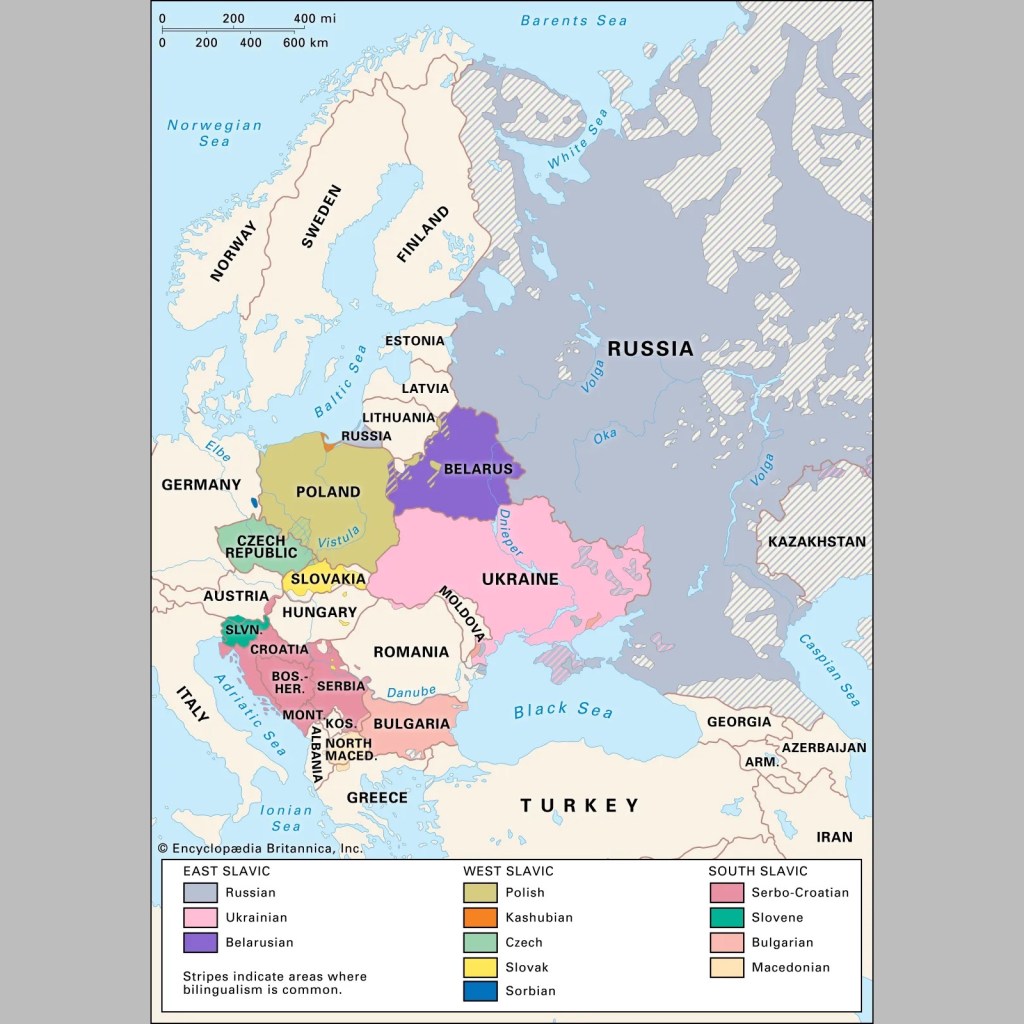
The Slavic languages, however, do not sit independently within the Indo-European family tree. Rather, they belong to the Balto-Slavic branch, along with the Baltic languages Latvian and Lithuanian.

The 4 layers of Latvian, latviešu valoda, the Language of Rigour…
- pareizība • correctness, accuracy, precision, authenticity, propriety, accurateness
- bezbailība • fearlessness, audacity, intrepidity, pluck, daring
- latvietība
- intuīcija, intuition


The 4 layers of Lithuanian, lietuvių kalba, the Language of Acumen…
- tikslumas • accuracy, precision, exactness, rigour, fidelity, definition, punctuality, exactitude, faithfulness, truth, orderliness, nicety
- teinsingumas • justice, fairness, equity, veracity, right, rightness, truth, propriety, rectitude
- lietuviškumas
- nujautimas • foreboding, premonition, anticipation, presentiment, presage, misgiving, intuition, suspicion, prognostication, augury, hunch
To be Lithuanian is to be discerning.


Latvian and Lithuanian are East Baltic languages. Now the West Balts… now they were insane
The 4 layers of Prussian / Old Prussian / Prūsiskai, the Language of Fortuity
- tìkriskan, straightness, precision
- subanpalīkisnā, devotion, self-devotion, dedication, commitment
- Prussianness
- brewīnsli, chance, opportunity, reason


Balto-Slavic peoples are THE communicators of the Indo-European macrofamily. They are alternatively the dark Western Indo-Europeans, and the Western Indo-European freestylers.


Within that, the Balts are the idealists and the Slavs the pragmatists. But this was not the straightforward root of their division, as you will see.
It is noteworthy that the Esperanto language was created by a Pole, a Slav, called L. L. Zamenhof. Esperanto is the single best known and most widespread constructed language, having amassed a significant amount of speaking and study. Called la lingvo internacia, it was intended as a universal second language for international communication. Created in 1887, it has tens of thousands speakers contemporaneously. The word esperanto itself translates into English as “one who hopes”. Its vocabulary is derived primarily from the Romance languages. The Buzz-Concept of Esperanto is communication, necessarily.
The 4 layers of Esperanto:
- Communication
- Sociability
- Universalism, globalism, internationalisation, the world
- Perfectionism…
1st layer communication – geddit? Necessarily – because languages can be understood as “systems of communication” that people use to communicate… 2nd layer sociability – geddit? Because people love to be sociable, and Esperanto-speakers are internationally sociable… 3rd layer the world because it was created to be a universal language for international communication… 4th layer perfectionism because it was created by a Slavic-speaker whose native tongue buzzes about perfection…!
The Buzz-Concept of Esperanto is communication, necessarily, by default. All constructed languages ever created have stumbled here, of course not knowing that there are these things I have termed Buzz-Concepts. They are all kind of derivative and one-dimensional and clumsy and just don’t work as practical “systems of communication” that people might actually be eager to use. The most impressive attempts are actually therefore those of fantasy authors and screenwriters, even though those languages aren’t designed to actually be used. Why? I suppose it’s in the nature of fantasy authorship, to look beyond.


And as speakers of Transcendent Tongues, we Nostratic-speakers have moreover been looking beyond like this for aeons. Is that the very foundation of our identities? Probably.
Looking back to the Pre-Nostratic era, the era following our break from the Proto-Global template and before we actually established the Nostratic family that we now use today: in this era we spoke the Language of Intuition, which buzzed about consciousness.
The Pre-Celts, initially having constituted their own primary race, joined up with the Nostratics in this era. The Celts were a vastly biologically superior ethnicity who had until then lived shrouded by their own hereditary supremacy. They were compelled by Nostratic forward-thinking and enchanted by their discernment. The incorporation of the Pre-Celts caused Nostratic ambition to flourish. But the Pre-Celts’ inherent superiority went largely unnoticed, views shrouded by ambition, people relying on intuitive discernment rather than concrete cognisance to make sense of the world around them. The ancestors of today’s Slavs, however, set themselves aside and started to experiment with doing their own thing, so to speak – endlessly intrigued by the Celts. They kept a close eye on the Celts, and they began to collaborate. The Pre-Slavs learnt from the Celts about the importance of things like accuracy, precision, detail-orientation – Pre-Celtic having been the Language of Aptness. The Slavs were enchanted, inspired, and let themselves drift away psychologically from the others somewhat, paving the foundations for the establishment of the Nostratic > Indo-European > Western Indo-European > Balto-Slavic > Slavic languages way back then. The Pre-Balts hopped on board with the Pre-Slavs at some point, in their own right, backing up their vision with acumen, insightfulness and buoyancy. Yes, those foundations for the paths for development that would only take hold tens of thousands years later were laid way back then. Everything that was learnt was preserved cautiously within language, whether in the form of a dialect or in the form of a fully separate language. The foundation of the Slavic identity therefore had a linguistic basis, hence how they became THE Indo-European communicators later on.

Within the modern Slavic grouping, THE Nostratics and THE Indo-European communicators, the East Slavs are THE Slavs and necessarily therefore THE Slavic communicators. Specifically, THE Slavs are the Russians. Yet, in fact, Ukrainians are THE communicators within THE Slavic communicators within THE Indo-European communicators, making the Ukrainians ultimately “the ones”, arguably. Russians may be THE Slavs, but their soullessness as ruthless speakers of the Language of Precision surely means that the charge of “the ones” was ultimately left to the Ukrainians – until Ukraine was re-absorbed by Russia in the age of empire, whereupon the flow was once again reversed.

And so the Slavs have always been really good at communicating. But what really was it that underpinned these foundations? It was the process of learning. Learning from the effortlessly inspiring Pre-Celts. Thus the foundation of Slavic culture was and is a case of “And what did u learn?”… They continue to be intrepidly curious and eager to learn from life.
But doesn’t all this learning from life get tedious? Well, that’s why Proto-Balto-Slavic was the Language of Fruitfulness. Today, Slavs are obsessed with fruit… & therefore in turn with growth & productivity & progress & supremacy


Proto-Balto-Slavic is a hypothetical proto-language descending from Indo-European which would give rise to the Baltic and Slavic languages. Proto-Balto-Slavic is estimated to have been spoken between c. 3000 to 1000 BC.
Back in the Pre-Nostratic era, preliminary divisions began to take shape, much to the chagrin of the lower orders who loved things the way they were. People had caught on to the Slavic subculture and souls became firmly divided. But as we now know, settling is not the Nostratic way – we are of course better disposed to rising above and beyond, now speaking the Transcendent Tongues.


So war broke out. Thus we had the world’s first war. It was a civil war. We were thus divided preliminarily into three broad factions…
- The Pre-Indos, who would later become the Eastern Indo-Europeans
- The Pre-Europeans, who would later become the Western Indo-Europeans i.e. Europeans
- The Pre-Alterno-Nostratics, who would become all the other non-Indo-European Nostratic peoples
The repugnant Pre-Indos had imprinted on the sexy Pre-Alterno-Nostratics, and the tension and resulting stress led to abuses from the aggressive Pre-Indos. Compelled by Pre-Alterno-Nostratic sexiness and driven wild with thirst for blood by Pre-European majesty i.e. genetic superiority, the Pre-Indos were furthermore looking to establish themselves as the leaders and superior classes rather than the genetically superior Pre-Europeans. The Pre-Nostratics together had invented cruelty, although well before this, it is worth noting. It was around this time that the Pre-Indos invented guile i.e. cunning i.e. artfulness in order to realise their aforementioned aims of domination. The Pre-Alterno-Nostratics were so traumatised by the abuses that they resolved never to forgive the Pre-Indos. The mighty Pre-Europeans were forced against their will to defend the likeable Pre-Alterno-Nostratics from Pre-Indo intrusion. Humiliated, the Pre-Indos launched into war. The Pre-Alterno-Nostratics largely remained on the sidelines, instead planning to make their breaks if they were to be dissatisfied by the terms of reunification in the case of Pre-Indo victory. Fed up, the Pre-Europeans would eventually concede to the Pre-Indos to quell violence and harassment.
Living under the Pre-Indo order, much frustration was experienced as a result of clipped Pre-European wings. In their efforts to correct the twisted dynamic and rise back to the top as was their birthright, the Pre-Europeans invented and cultivated astuteness.
The Pre-Alterno-Nostratics, meanwhile, of course weren’t at all interested in cooperating with the Indos anymore and kept their heads down, carefully carving out their secret visions for separatism. Lots of effort was expended over this phase to make it #lit, to maintain cooperation. The ancestor of work culture i.e. conscientiousness was born. The overly enthusiastic Pre-Indos would continue to irk them, nonetheless, and the Pre-Alterno-Nostratics became really, truly nasty pieces of work who maintained deceptive façades of impassivity. The oppression caused them inversely to invent egalitarianism, and they also became preliminarily bilingual, speaking their own language or dialect on the side, the Language of Equilibrium. It was really due to Pre-Alterno-Nostratic nastiness that the post-war reunification didn’t quite work out.
The Pre-Europeans agreed to share their cultivated astuteness with the others, causing everyone else to take heed of the Slavic tradition that had by then firmly solidified. Everyone bucked up – to match up with the legacy of the Pre-Celts, who had spoken the Language of Aptness i.e. of Bucking up. It was sort of an outing and a betrayal of the Pre-Slavs, rationalised upon the fact they had been taking advantage of the Fourth Layer #advantage, usurping the collective Pre-European serendipitous flow. In a final attempt to make reunification work, we decided to cultivate a new language, the first non-Orientalesque Super-Tongue…
After the war, we all collectively decided to refresh our perspectives and undertake the adventure of leaving Africa. This was upon our addition of the Fourth Layer of human language to concretise our dominion in the realm of cultural superiority that emerged from the post-war conscious conscientiousness. In honour of the adventure and the success of the Fourth Layer, a new language was instituted, the Language of Trumping. This was a Super-Tongue, our first, which I term Uni-Nostratic.
The 4 layers of Uni-Nostratic, the Language of Trumping:
- Primacy
- Glamour
- Nostraticism
- Excellency
“Trumpophonism” was, of course, wild. Everyone really bucked up to try to make the Language of Trumping work, the Pre-Alterno-Nostratics even opting to give us one last chance to prove ourselves worthy of their ongoing loyalty and rigorous, exacting adherence.
So, Trumpophonism was wild – note the parallel here with the out of Africa stereotype, now considered by many as the land of safaris and wild ranging lions etc. Here was when we learnt how to trump the rest of our species, and we had duly been seeking to distance ourselves from the beloved wild African homeland of humanity.
And note that I say the continued yet reluctant adherence of the Pre-Alterno-Nostratics was rigorous and exacting. Like Balto-Slavic culture.
To explain the the intuition—trumping succession: also note that you must always utilise intuition to be able to trump.
Once fully settled down in Eurasia, after about 10-15,000 years, we continued to co-dwell for a while longer to be sure to translate everything we had learned into an all-powerful collective canon via language: and thus we had Proto-Nostratic, the Language of Enterprise. Although, Uni-Nostratic could have been the Proto-Nostratic language. The Language of Enterprise was an awkward fit, unable to ensure full cohesion, pre-existing divisions already having been exacerbated by the fact that all the trumping that was being done had really caused people’s unsightly true colours to show, but it served us well. All the effort expended and compromises made over this phase have been propelling us ever since. Proto-Nostratic was so rich and sophisticated it was surely the first “classical” tongue of sort
The Pre-Indo variety of Uni-Nostratic had been the Language of “Trumpoticness”, and so potent it was that it enabled them finally to earn back the loyalty of the Pre-Europeans. A sort of common ground was thus established between the Pre-Europeans, still technically subjugated, and the Pre-Indos, revolving around their shared eagerness for what would become the Indo-European vision.
The 4 layers of the Language of Trumpoticness:
- Total primacy—aggression
- Complete glamour—ostentation
- Absolute Nostraticism—?
- Utter excellency—arrogance
Things ironically looked promising for them all. But the Pre-Alterno-Nostratics were thoroughly turned off by the others’ arrogance and Indo repugnance ofc for good. They broke away initially as the freestylers, the idiosyncratics, the MegaQuirkies, keeping things low-key and quirky to deter the Indos, in due course cultivating the Language of Excelling designed to maintain/juggle order along with the potency of their visions. As had been being planned for millennia, the MegaQuirkies would eventually be the first to branch out into their rough modern groupings.
The Nostratic languages are collectively the Transcendent Tongues. The “Alterno-Nostratic” languages are the Distinguishing Tongues. The Indo-European languages are the Glorious Tongues. The Uralic languages, including Hungarian, Estonian, Finnish, are the Bold Tongues. The Vasconic languages, including Basque, are the Proud Tongues. The Tyrsenian/Tyrsenic/Tyrrhenian/Tyrrhenic languages, including Etruscan, were the Extravagant Tongues. The Caucasian languages of the Caucasus -including the three families Northeast Caucasian, Northwest Caucasian, and South Caucasian/ Kartvelian, Georgian notably being a Kartvelian language- being the Effervescent Tongues. FYI.
THE MegaQuirkies are the Uralic peoples, specifically the Hungarians. Hungarian is a Super-Tongue for enhancement of the capacity for general competence. The Hungarians and their Uralic cousins are THE MegaQuirkies because they take discerning heed of their MegaQuirky supremacy, maintaining rigorous languages of intellect, rather than allow the quirkiness to flourish liberally.
The Pre-Europeans and the Pre-Indos would form a coalition, eventually to become the Proto-Indo-Europeans, as I alluded to above.
Bear in mind that these developments all occurred probably over thousands of years each so there was plenty of time to be picking up and discarding new languages, as predilections were always in flux. Uni-Nostratic and Proto-Nostratic would have been spoken for at least ten thousand years each. The flourishing of the Indo-European world, rather, actually happened very rapidly over the past ten thousand years.
Anyway, then we had the Proto-Indo-Europeans, who at first spoke the Language of Progression. They would then invent the concept of glory upon strenuous accumulation of crops from farming, whereupon they started to speak the Language of Glorification. They were pastoralists who are supposed to have been dwelling in the Pontic-Caspian steppe.

Proto-Indo-European is generally hypothesised to have been spoken from 4500BC to 2500BC, although estimates do vary. To me it not only seems possibly but more likely that it emerged around 9,000BC or so – flourishing by 8,000BC. According to the Kurgan hypothesis, first put forward in 1956 by Marija Gimbutas, it is suggested that the Proto-Indo-Europeans left traces in the form of the archaeological Yamnaya culture / Pit Grave culture, associated with the kurgans (burial mounds) on the Pontic-Caspian steppe north of the Black Sea. They were supposedly nomadic pastoralists who domesticated the horse, allowing them to migrate across Europe and Asia in wagons and chariots. There are other theories regarding the Proto-Indo-European Urheimat or homeland; this is the most popular.
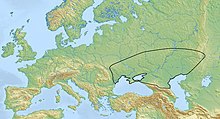
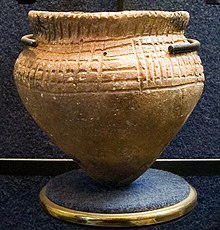
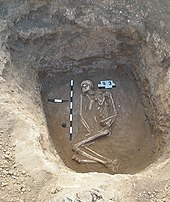
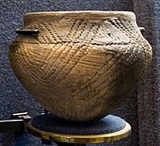
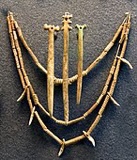
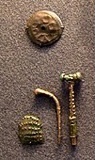
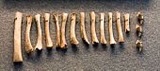
The Proto-Indo-Europeans would break up into three broad primary branches: Western Indo-European, Eastern Indo-European, and the mysterious Groundbreakers. The Western Indo-Europeans would migrate westwards from the homeland into Europe, giving rise to the Albanian, Hellenic/Greek, Italic/Romance, Slavic/Slavonic, Germanic, and Celtic branches of the Indo-European macrofamily. These are spoken by the discerning Indo-Europeans. The Eastern Indo-European languages encompass the Armenian and Indo-Iranian (Indic/Indo-Aryan + Iranic/Iranian) branches. The Eastern Indo-Europeans were the relaxed, dark Indo-Europeans. Then we have the Groundbreakers, all now extinct, who broke away very early on, including the Anatolian and Tocharian languages. The Groundbreakers were made up of a mix of Pre-Nostratics. The Hittites were an Anatolian people, the Anatolians are often believed to be the earliest branch to have split from the Indo-European family, who spoke Hittite, the earliest-attested Indo-European language and the Language of Eminence. The Hittite empire was a major ancient entity which reached its height around the mid-14th century BC, encompassing most of Anatolia and parts of the northern Levant and Upper Mesopotamia. THE Indo-Europeans are the Kurds of the Middle East.

And yet still, even after all this time and development, as explained in the excerpts I included in the beginning of this post, the historic Slav-Celt synchronism and partnership continue to cast their echoes.


💙🕊🇺🇦☮️💛
 The Buzz-Concept Project