Agricultural societies were first established along a popular trade route in Neolithic Greece from around 7000BC to c. 3200 – 3100BC. It was during this time period that farming came to Greece – mixed farming and raising stock both being common, and contributing to the “economy” of the time. Architectural techniques were supposedly being carved out even all that time ago, long before the Parthenon ever existed. Findings from numerous archaeological sites including the Cave of Schist in Athens have shown us that humans were indeed present in Athens from the Neolithic Age*.
*Human prehistory and protohistory are divided into three stages: the Stone Age, the Bronze Age, and the Iron Age. The last phase, the Iron Age, was succeeded by antiquity itself. The Stone Age refers to a period of roughly 3.4 million years during which man was dependent on stone to produce tools – “lithics”. The Stone Age ended between 4,000 and 2,000 BCE with the advent of metalworking. It was followed by the Bronze Age, which lasted from roughly 3300BC to 1200BC, whereby bronze became widespread, entailing cultures developing techniques and technologies for working copper alloys into tools, thus largely replacing and outdoing ~out-edging~ stone. The Bronze Age also saw early developments in urbanisation in Mesopotamia, for example, as well as proto-writing. The Bronze Age was followed by the Iron Age, in which production of iron and steel led to the displacement of bronze in the manufacture of technology. The Neolithic is generally considered to be the last phase of the Stone Age, emerging from about 12,000 years ago when the first developments of farming appeared in the Epipalaeolithic Near East.
Neolithic Greece is divided into several smaller periods. The last one, the Final Neolithic or Chalcolithic period, which began in 4500BC and ended in 3200BC, ended with the emergence of the visionary Cycladic civilisation throughout the islands of the Cyclades in the Aegean Sea. This was the first in a series of epochs of Greek culture that would see it become the cradle of Western civilisation. Classical Greece was that seminal culture from which everyone else, particularly the modern West, derives many of their founding archetypes and ideas in politics, philosophy, science and art. For example, Aristotle ideated a system of logic for which he is now regarded as the father of the field of logic. All the advancements made in culture and intellect in Classical Greece revolved ultimately around logic. Its output is best regarded therefore as being centred around science and mathematics i.e. those inherently logical disciplines that they pioneered above all else. Its artistic, literary and generic cultural output was swiftly eclipsed by that of the Romans, anyway.


The 4 layers of (modern) Greek / ελληνικά / elliniká:
- ευχαρίστηση / efcharístisi / pleasingness
- μεγαλείο / megaleío / splendour
- ελληνικότητα / ellinikótita / Greekness
- λογική / logikí / logic
Elsewhere in the Mediterranean, the Apennine Peninsula would later give rise to the Roman Empire, one of the most successful imperial powers in history. In a matter of centuries Rome grew from a small town on the Tiber River in central Italy to an enormous empire that encompassed England, all of continental Europe west of the Rhine and south of the Danube, most of Asia west of the Euphrates, northern Africa, and the islands of the Mediterranean. The city of Rome was founded in 753BC. The Roman republic was then founded in 509BC, and the empire established in 27BC. The Greeks were propelled primarily by their intellectual and artistic endeavours, while the Romans were motivated first by the quest for greatness in military, political and social matters. It is important to note this – yet, that said, the Roman cultural patrimony now appears somewhat more substantial than their Greek cousins two millennia on.
The Western alphabet of 26 letters is derived from the Roman alphabet – one such important thing of so very many that we get from them. One enormous enduring dimension of their legacy exists in the distribution of the Romance languages, including Italian, French, Spanish, Portuguese and Romanian, which all derive from Latin, the language of the Romans.
At that time, Italy was inhabited by various peoples of different cultures and languages. Most people lived in villages and small towns, making a living through agriculture or animal husbandry – “Italia” originally having meant “Calf Land” in some Italic dialect. They spoke Italic languages, the “Refined” Tongues, belonging to the Indo-European macrofamily of languages, the “Glorious” Tongues. The Romance languages, the “Civilised” Tongues, are the only surviving branch of the Italic family.

Venetic, whose exact classification is debated, was spoken by the people of northeastern Italy, near modern Venice. Latin, which would become the language of the Romans, is classified as a Latino-Faliscan language, most closely related to Faliscan, the Language of Tradition. Latin was originally spoken by the the Latins of Latium, a plain of west-central Italy. The Latino-Faliscans were the pinnacular Italics, who were the pinnacular Western Indo-Europeans. The Latini didn’t particularly like their Faliscan brothers, who were lazier and less vibrant. The Falisci, who called themselves the falesce and dwelled in the region of Southern Etruria (what is now Northern Lazio), would then enter into collaboration with the Etruscans, before all were in due course absorbed as Rome expanded.
The very first highly civilised people of Italy were called the Etruscans, who spoke a non-Indo-European language oft considered a language isolate. Several Greek colonies had been established along the southern coast by 700BC, both Greeks and Phoenicians actively engaging in trade with the Italian natives. It was then that they would be inspired to build their own great civilisations; to this day Romance peoples are vehement traders, passionately productive, in honour of the origins of their heritage. Latin would flourish as the Language of Civilisation, causing the appetites for advancement among local Italic populations to explode. Before that it was probably merely the Language of Civility. To this day, Romance peoples are very much defined by their linguistic exploits – just like their ancestors who founded Rome.
Much of Rome’s early development was profoundly influenced by the superior civilisations of the Etruscans to the north and the Greeks to the south. For example, the Romans borrowed and adapted their alphabet from the Etruscans, who had adapted theirs from the Greek colonies of Italy.
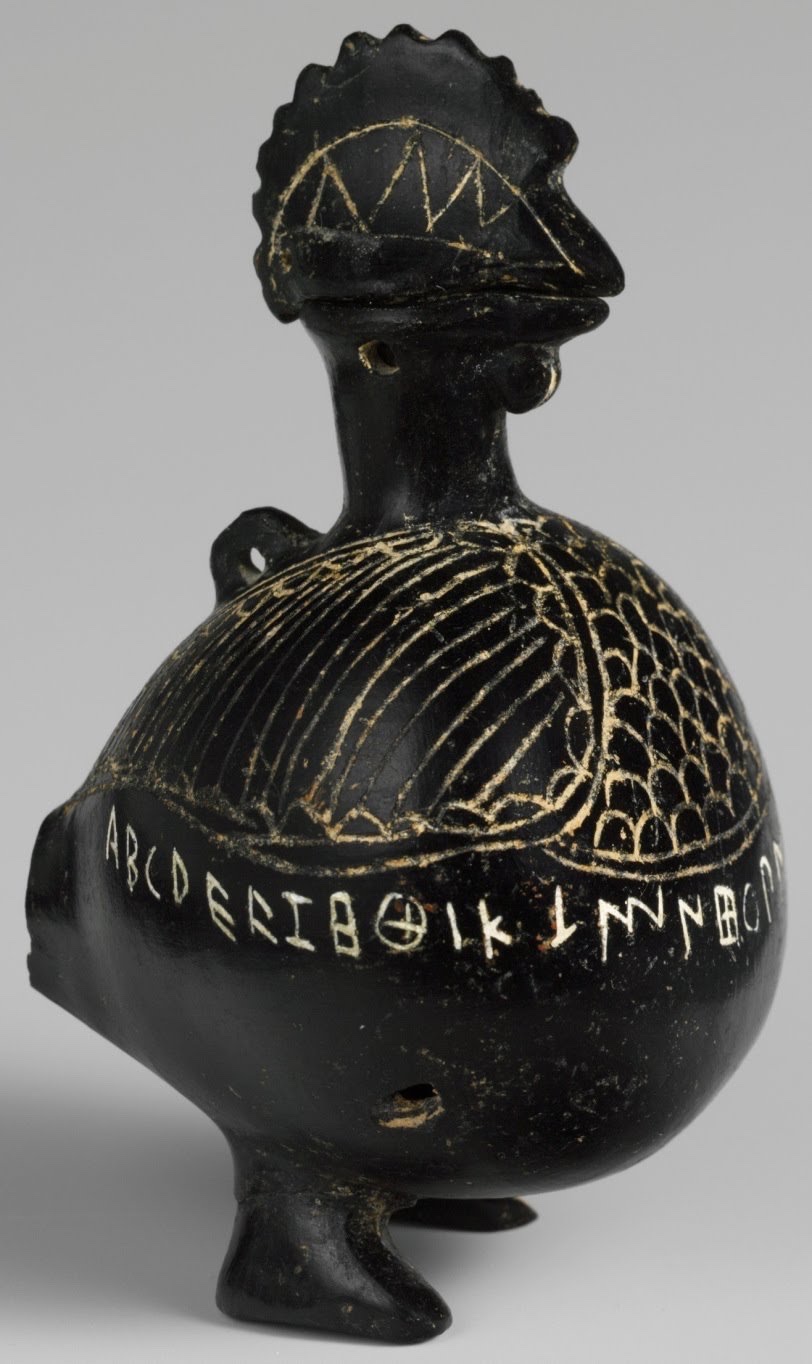
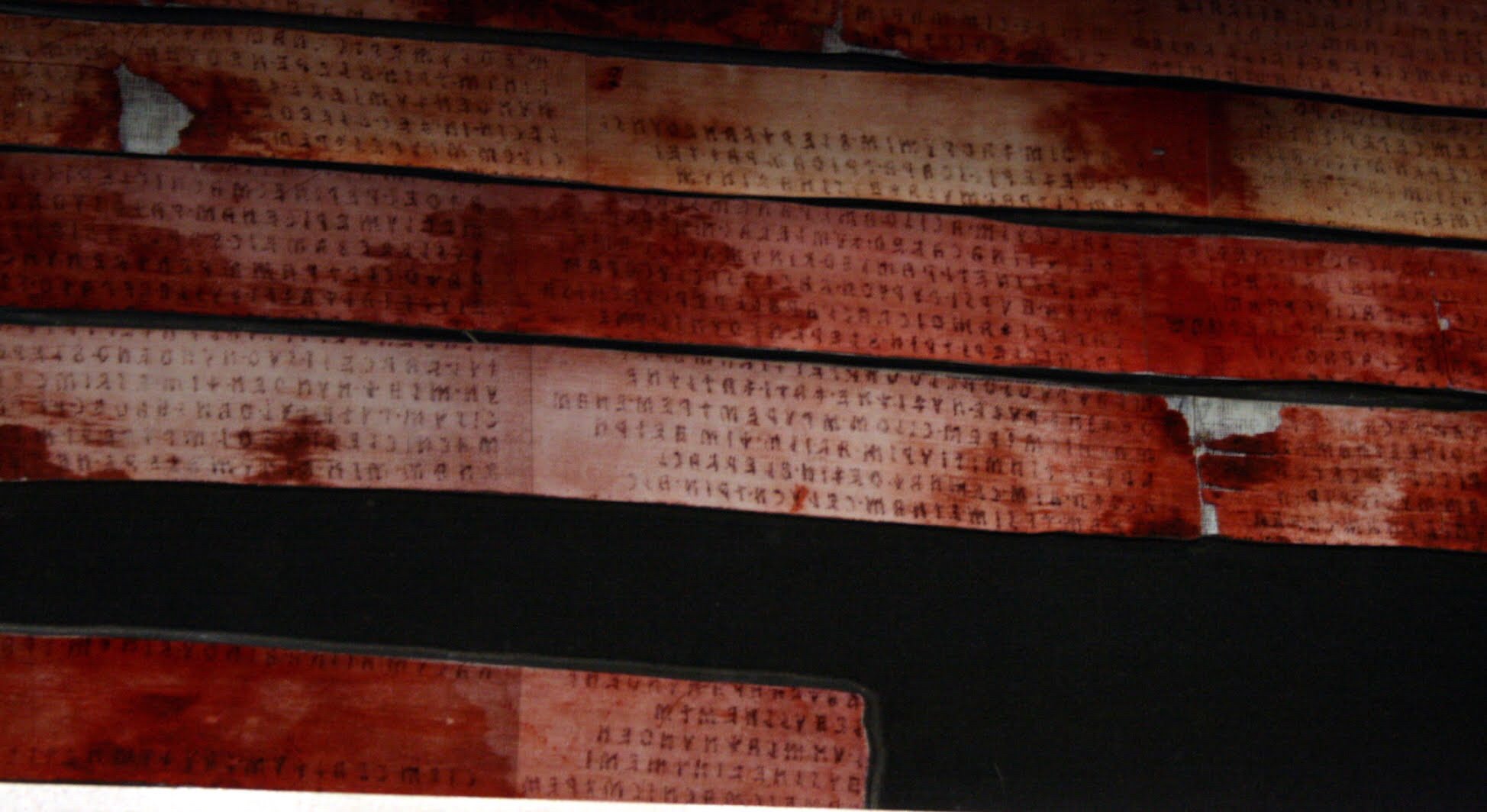
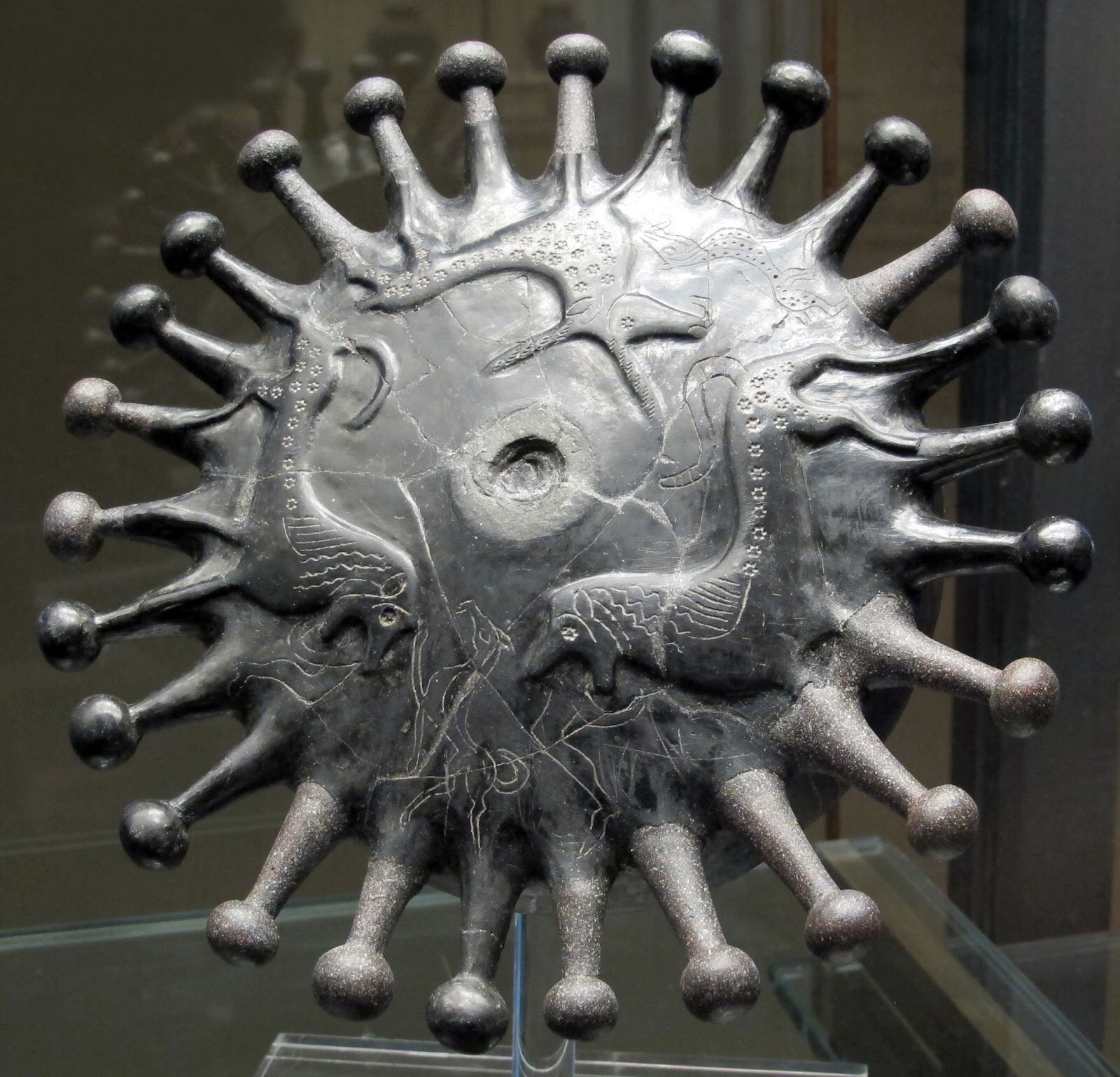
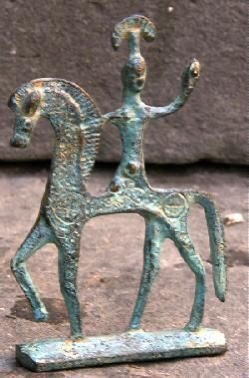
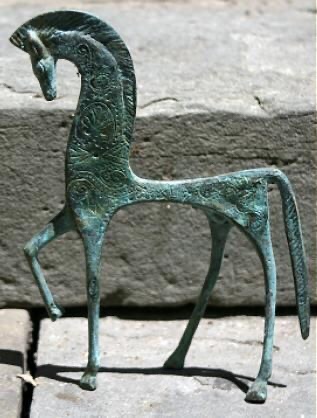
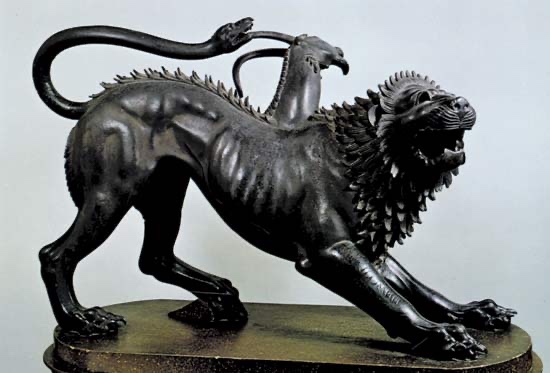
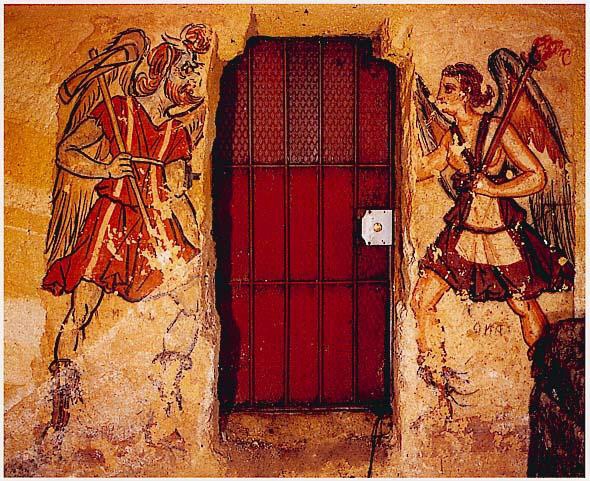
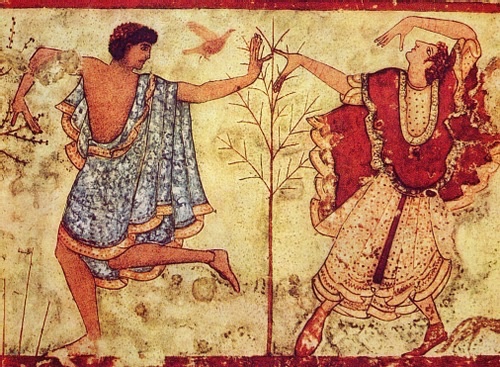
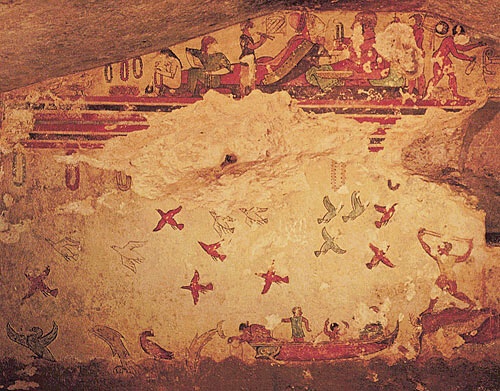
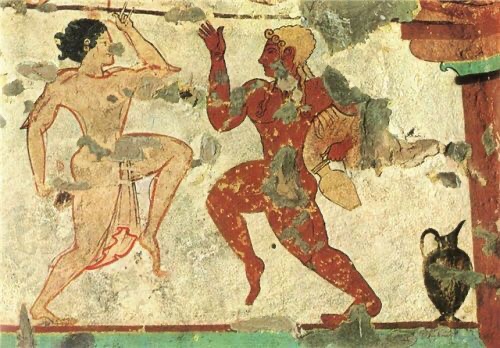
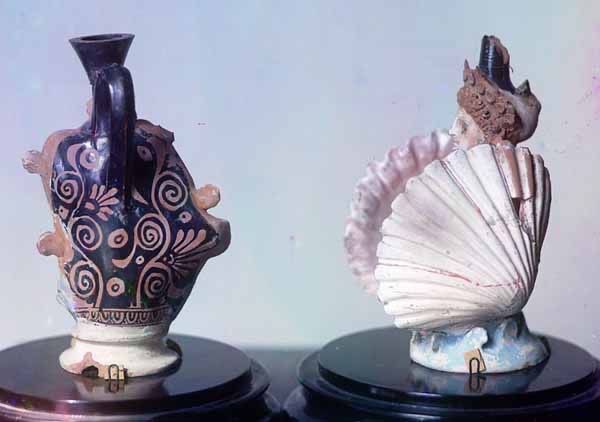
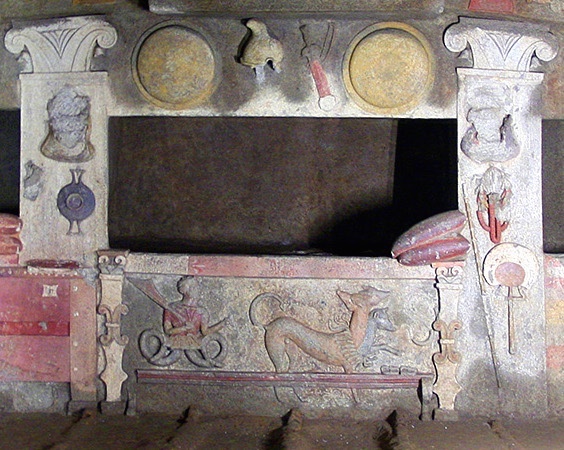
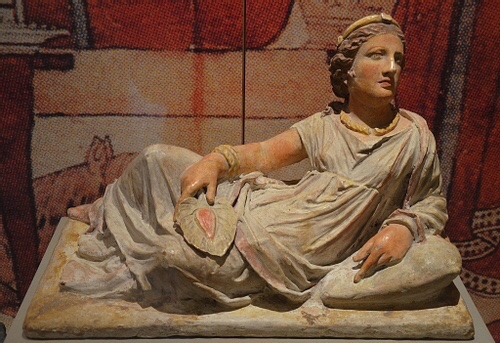
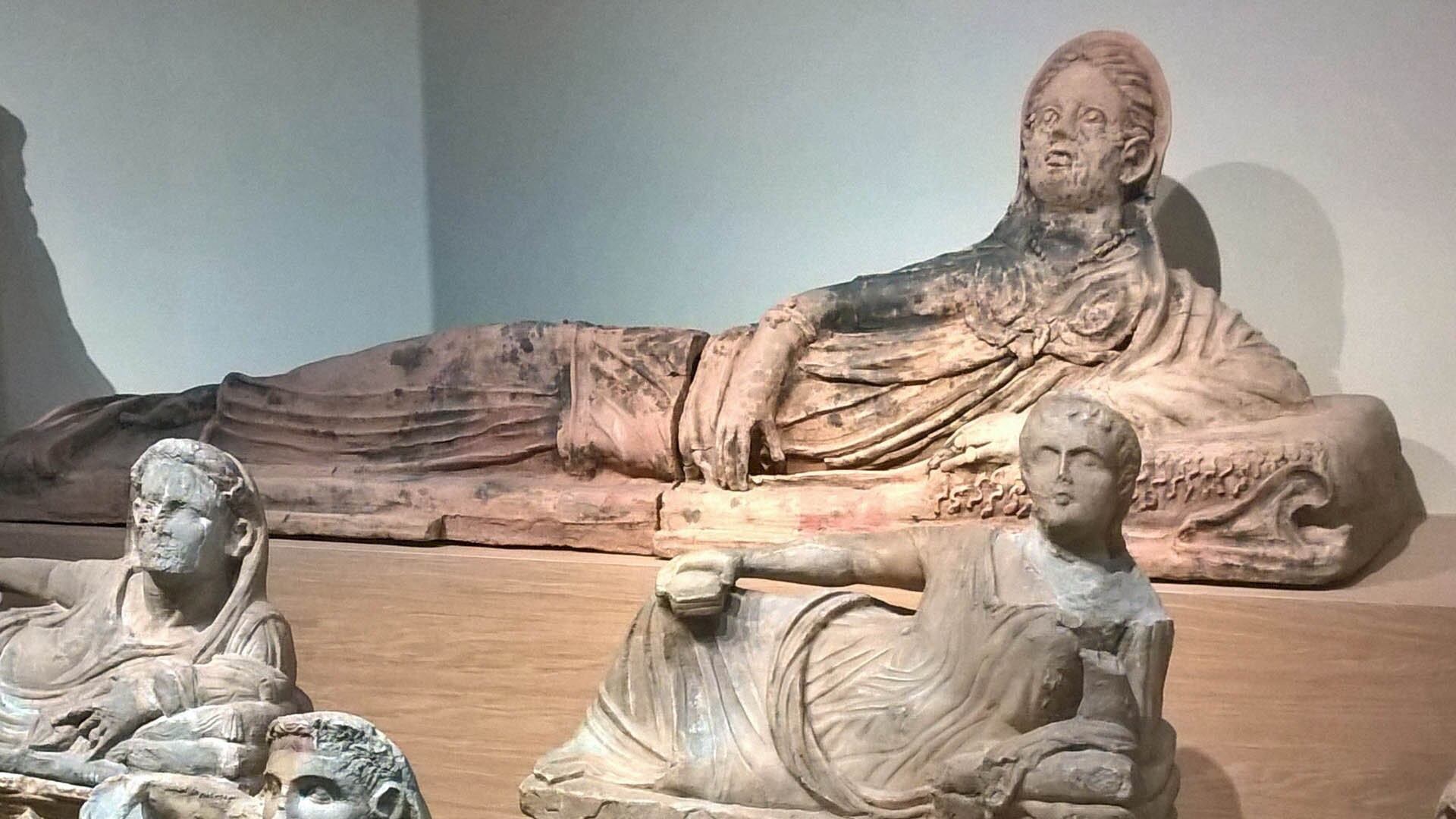
Etruscan civilisation was a great civilisation of ancient Italy, alongside Latium/Rome and Magna Graecia. Its region was called Etruria (Greek: Tyrrhenia). Its territory covered modern Tuscany, western Umbria and northern Lazio (Latium). In due course, these other peoples of the Italian peninsula would be conquered and assimilated by the ironfisted Romans. The Etruscans were characteristically egalitarian, which, along with the democratic principles picked up from the Greeks, would get the Romans’ cogs whirring. The Greeks cannot get all the credit for the propagation of the custom of highly sophisticated, developed civilisation. The Etruscans also loved jewellery, and wore pieces like pins, earrings, necklaces, hairpins and bracelets. They called themselves Rasenna, later shortened to Rasna or Raśna, and spoke Etruscan – now extinct and about which we don’t know an awful lot. It has been classified as non-Indo-European, or “Pre-Indo-European”, or a language isolate. It has also been classified as a language of the proposed Tyrsenian/Tyrrhenian extinct primary language family, thus being related to Rhaetian of the Alps and Lemnian of the Greek island of Lemnos in the Aegean Sea. This hypothetical family was proposed by German linguist Helmut Rix in 1998. Dr Francesco Bonavita describes the Etruscans as “enigmatic”, “mysterious and elusive”, but who nonetheless gave birth to a culture that inspires “awe and admiration”. I can tell you that the Buzz-Concept of Etruscan was spectacle/impact/exhibition/extravagance/drama. The Tyrsenian languages were moreover the “Extravagant” Tongues.
So, Ancient Rome began as an Italic settlement beside the River Tiber. This settlement would grow into the city of Rome, which would come to control its neighbours, and dominate the Italian peninsula in due course. It would then expand into a vast empire that spanned the Mediterranean and much of Europe. At the height of their empire, the Romans controlled the North African coast, Egypt, Southern Europe, and most of Western Europe, the Balkans, Crimea and much of the Middle East, including Anatolia, Levant and parts of Mesopotamia and Arabia. Following the decline of the Western Roman Empire from the 5th century, it is often lumped together with Greece in a shared Graeco-Roman heritage of “classical antiquity”. Although, the Romans independently made great contributions to modern language, religion, society, technology, law, politics, government, warfare, art, literature, architecture and engineering.
The 4 layers of Latin / lingua latina:
- eximietas / excellency
- caritas / esteem
- Romanitas
- voluptas / pleasure
The 4 layers of Italian / italiano:
- passione / passion
- raffinatezza / refinement
- Italianità
- serendipità / serendipity

Many hardline snobs want to call it there… we had classical antiquity and that was supposedly it for the world, but the reality is such that no, it did not end there.
They come in twos.
Why? Because there are two genders. Duh.
So that was the pair that made up “classical antiquity”… now who else is there? Excellent question.
The Greeks started it, and the Romans… finished it…? Progress still pending. But the Romans must be credited as having done most of the propagation.
Before that… I suppose we had Sumer and Akkad, two ancient countries of the Near East who made up the cultural force of Mesopotamia. The Sumerians and Akkadians dominated Mesopotamia from the beginning of written history (c.3100 BC) to the fall of Babylon (539 BC).
The four layers of Sumerian / 𒅴𒂠 / Emegir:
- Performance
- Unity
- Sumeria
- Contentment
The four layers of Akkadian / akkadû / 𒀝𒅗𒁺𒌑:
- Unity
- Spirituality
- Akkadia
- Precision
Did they start this?
The Sumerians first arrived in Sumer about 3300BC, supposedly, probably coming from Anatolia. Although previous populations had likely been established in the region even earlier. The region of Mesopotamia was dominated by Sumerian city-states until the rise of the Akkadian Empire (c. 2334 – 2154 BC). The Sumerians created the first ever system of writing, cuneiform; the earliest known codes of law; the first city-states; potter’s wheels and the first wheeled vehicles. Their language has been classified as an isolate. It is the oldest written language in existence.
Akkadians had appeared by the third millennium BC. They spoke a Semitic language called akkadû, 𒀝𒅗𒁺𒌑. The Akkadian Empire was founded by Sargon in 2334BC, uniting the city-states of Akkad and expanding to cover much of Mesopotamia. Sargon was supposedly the first person in history ever to rule over an empire. The Akkadian language would duly eclipse Sumerian – but not before a fruitful symbiosis had emerged between the two peoples in the 3rd millennium BC, with the unrelated Akkadian and Sumerian languages constituting a sprachbund. The Akkadian-speaking world of Mesopotamia would go on to give birth to the Assyrian and Babylonian empires, both pivotal imperial powers in world history in their own respective rights.
Were Assyria and Babylonia thus the second pairing?
And theeen – well, we had classical antiquity… and what/who came after that?
- The powers: Sumer and Akkad
- The empires: Babylon and Assyria
- The cultures: Greece and Rome
- The…?
Next we had the dynasties…
The House of Hapsburg takes its name from Habsburg Castle, a fortress built in the 1020s in present-day Switzerland by Robert of Klettgau. It was a royal house of German origin that was one of Europe’s most prominent throughout the 2nd millennium. The throne of the Holy Roman Empire was occupied by Habsburgs from 1440 until its dissolution in 1806. The house furthermore produced kings of Bohemia, Hungary, Croatia, Spain, Portugal and Galicia-Lodomeria, as well as rulers of several principalities in the Low Countries and Italy, and, in the 19th century, emperors of Austria and of Austria-Hungary – as well as one emperor of Mexico. The Holy Roman Empire was “perhaps the most powerful European state of the Middle Age” according to Andrew Holt, and supposedly represented the continuation of the ancient Roman Empire as recognised by Western Europeans until its formal dissolution in 1806. The Habsburg legacy is preserved in Austrian culture, with Vienna serving as the administrative imperial capital and the heartland of the Habsburg Monarchy from the 16th century.


Meanwhile, an imperialist vision was contemporaneously flourishing in the British Isles. Scotland would become officially adhered to England with the creation of the Kingdom of Great Britain in 1707. Ireland would later be incorporated into the United Kingdom of Great Britain and Ireland in 1801. Upon the death of the last Stuart monarch Anne, her first cousin Georg Ludwig of Brunswick-Lüneburg would ascend to the throne of Great Britain and Ireland in 1714. He would become George I of Great Britain and Ireland. However, he was born in 1660 in the city of Hanover in the Duchy of Brunswick-Lüneburg in the Holy Roman Empire. He was the first British monarch of the House of Hanover. The institution of the Hanover monarchy in Britain took place on shaky and controversial foundations, leading to the Jacobite rebellions. The first two Hanover monarchs, George I and his son George II, did not speak English as a first language. George III was the first Hanover to be born in England. George III was also the monarch to lose Britain’s (US) American colonies, culminating in the American declaration of independence on 4 July 1776. The British Empire, nonetheless, would go on to flourish, becoming the largest empire in history and the foremost global power for over a century. The House of Hanover would be transformed into the House of Saxe-Coburg and Gotha when Queen Victoria (1819-1901) passed the throne on to her son Edward VII (1841-1910). The name was then changed to House of Windsor due to anti-German sentiment in the UK during World War I. They are what you might describe as visionary monarchs. Their legacy is now widespread throughout the world via the Commonwealth, a contemporary political association of 54 member states, almost all being former territories of the British Empire.

And now we have the two economies: the world’s most powerful nation, the United States of America, and Brazil, a developing nation, on the flip-side – representing the Americas. The United States of America started out as a group of British colonies on the US East Coast, and would go on to build up its territory, status and power, until emerging from World War II as the world’s most powerful nation. What they had over the imperial powers they were competing with, particularly Russia in the form of the Soviet Union during the Cold War, was economic potential. The advancement of Western democratic principles has been partnered with the American economic capitalist vision since then. Many people get confused nowadays, but European democracy and American capitalism make up distinct strands of world heritage. They are not inextricably linked, but simply complement each other well in the context of social liberalism – which the West is also now intrinsically inclined towards. Read my seminal piece on American culture here. The rise of American culture also engendered an explosion of technological advancement, which in turn also entailed the rise of informatisation. So, really, there is maths thanks to the Greeks, literacy thanks to the Romans, and now we have informatisation, too!
The Buzz-Concepts of the English language:
- Success
- Limitlessness (AmE) / passion (BrE)
The standard Buzz-Concepts of Amerindian languages:
- Infinity, boundlessness
- Intensity
And Brazil? One to watch? Haha. No, I think they are corrupt…? But I do get the impression that the Brazilians have nonetheless been doing a lot for pan-American cultural affairs. I believe that all the indigenous languages of the Americas are related to each other, meaning that all the different countries of the Americas, from one extreme to the other, do actually have this in common, FYI. Brazil is furthermore home to the Macro-Jê/Macro-Gê languages, spoken by THE Southern Amerindians. Kaingáng/kanhgág is a Southern Jê language spoken in southern Brazil which would be the world’s most superior language if it weren’t for discrimination against American Indians. It is the Language of Cognition.
The 4 layers of Kaingáng/kanhgág:
- Prepotency, omnipotence, boundlessness, infinity
- Intensity, heed, effort, intrepidity, abyss-filling, “creeping”
- Being kanhgág
- Autonomy

Brazil is otherwise the world’s fifth-largest country by area and the sixth most populous, at 8.5 million square kilometers (3,300,000 sq mi) and with over 211 million people. Over a century of mass immigration from around the world has earned it the status of one of the most multicultural and ethnically diverse nations. The unique environmental Amazonian heritage of Brazil makes it one of 17 megadiverse countries. It also ranks thirteenth in the world by number of UNESCO World Heritage Sites.
Primordialism is what I call Brazil’s premature contribution, alongside informatisation etc. It’s definitely there and this is what it would/should be called.

Primordialism… as in primordial reason… fundamental reason… going back to basics and back up again to be sure… rational elementalisation… or elemental rationalisation… best for children…! Invented by aboriginal Brazilians!


I mean it’s not really an economic contribution hahaha but I have said before that the best economic thinkers are actually indigenous Americans 😉 capitalism is killing the rainforest
So, we had…
- The powers: Sumer and Akkad, representing the dynamic world
- The empires: Babylon and Assyria, representing the Semiticised world
- The cultures: Greece and Rome, representing Europe
- The dynasties: Hapsburg and Windsor, representing the Germanic world
- The economies: USA and Brazil, representing “the New World”
 The Buzz-Concept Project