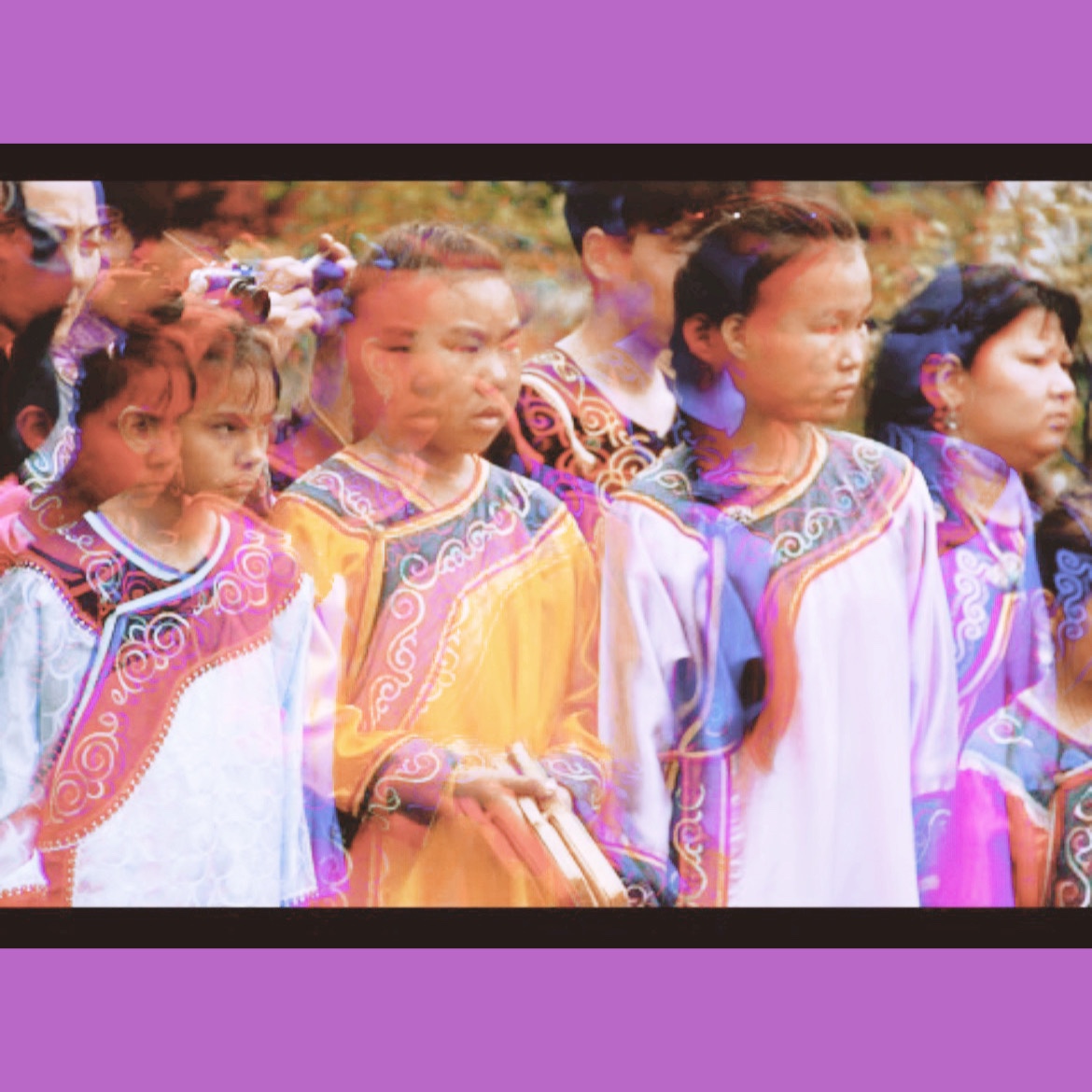
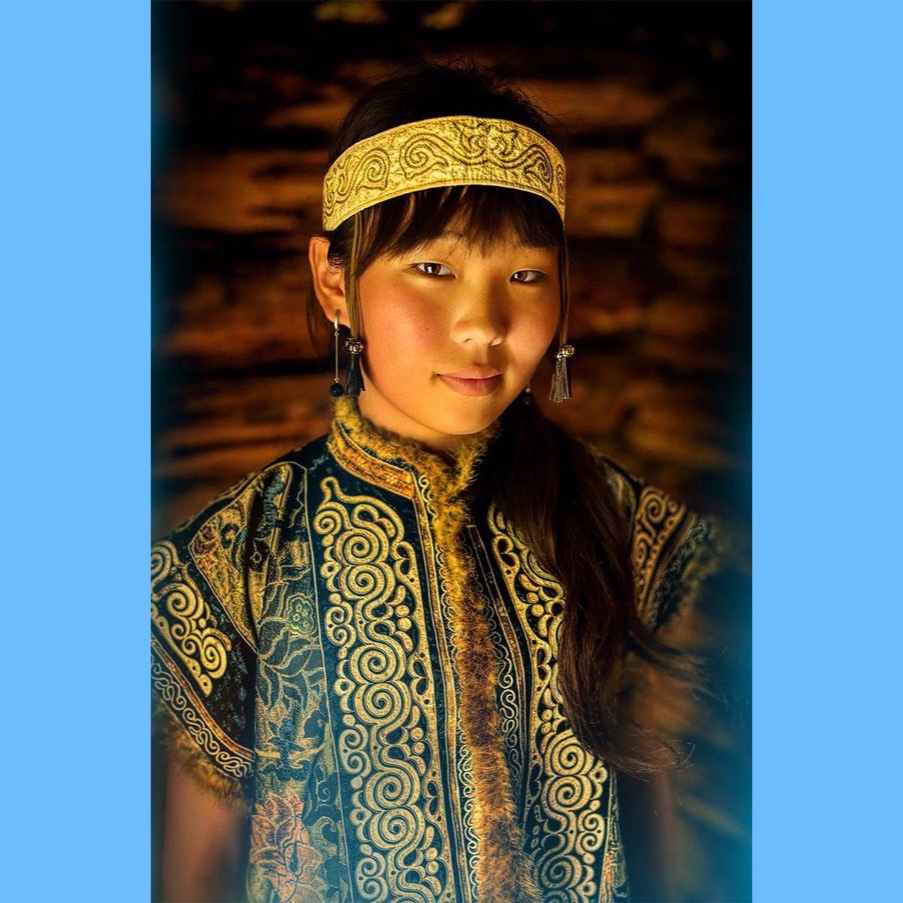
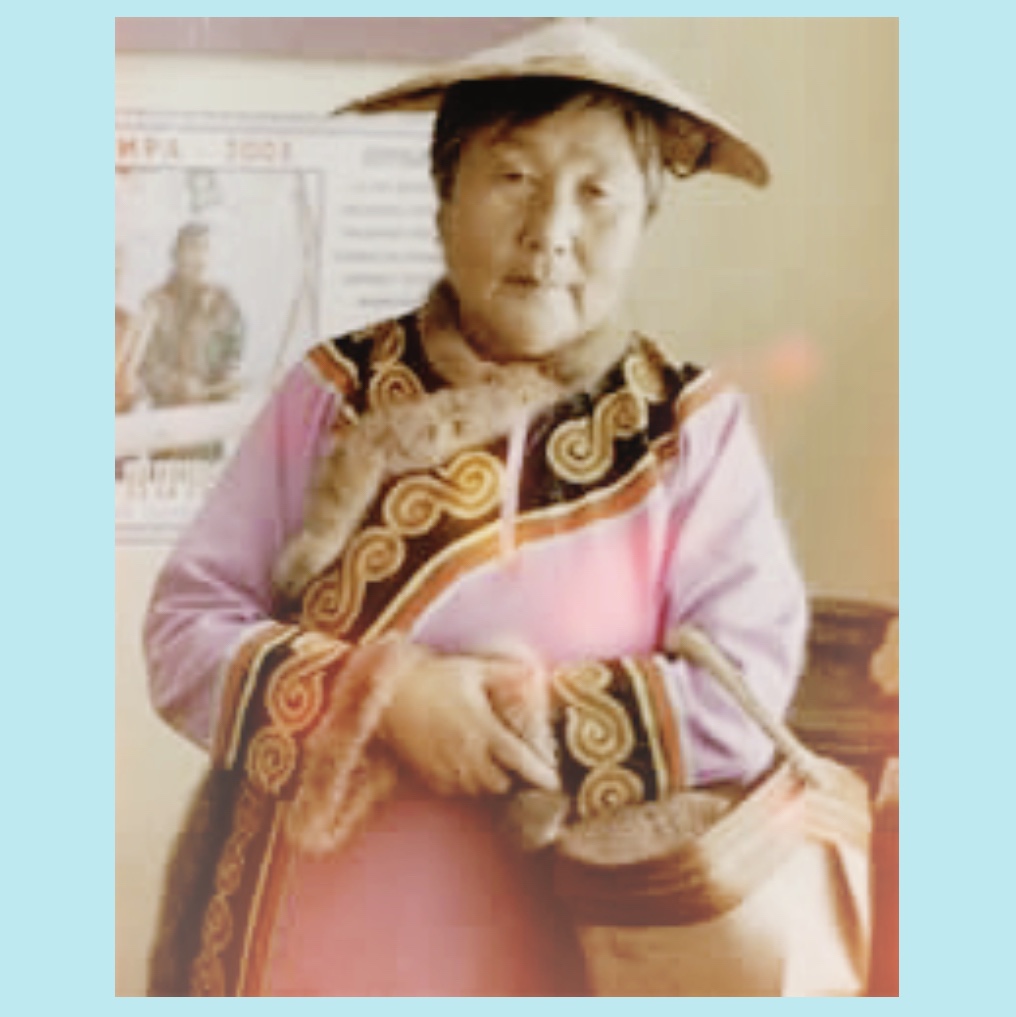
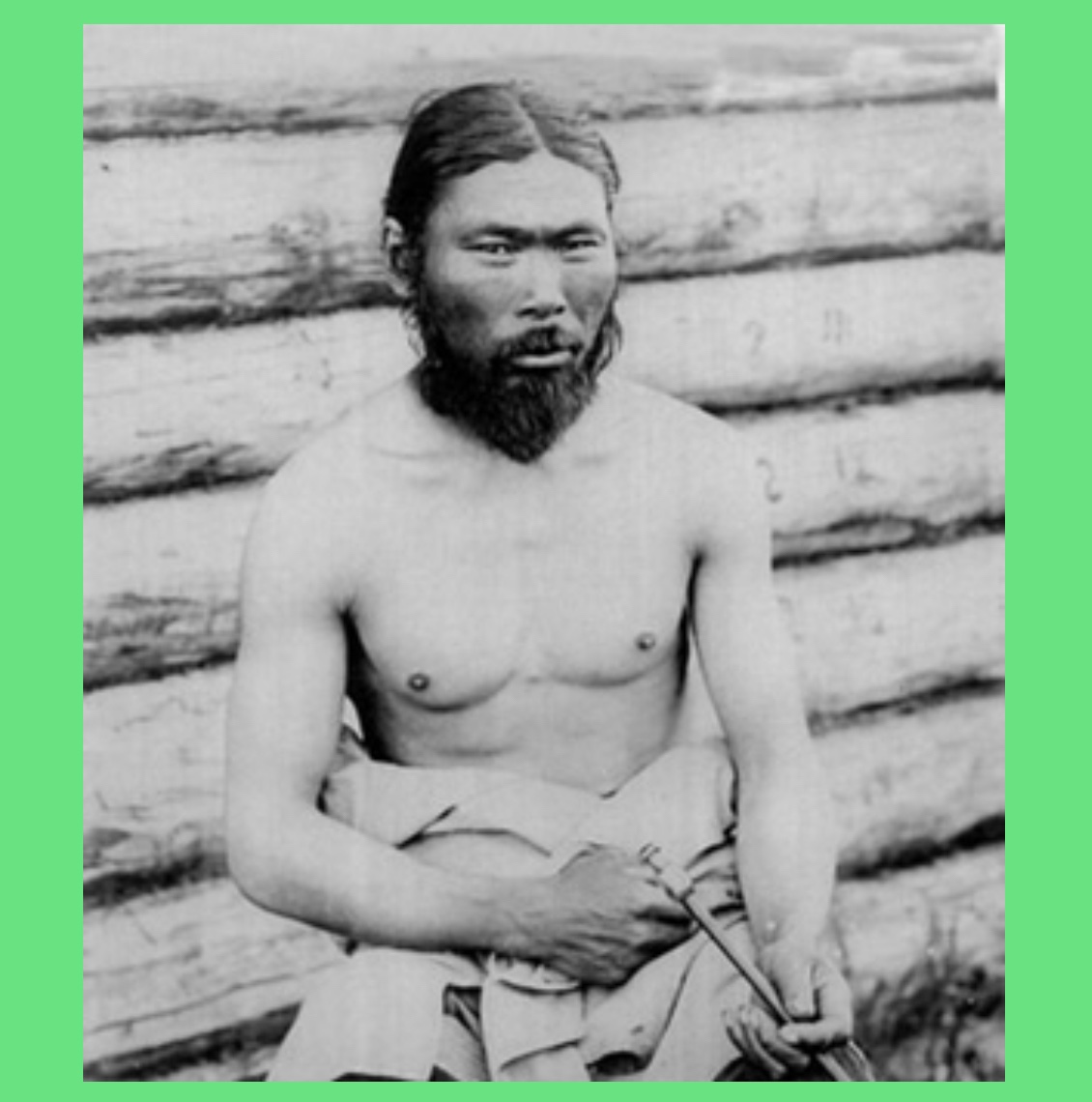
Just to clarify that I make mistakes and my visions are often hazy! In particular, I have been making the mistake of referencing the Sakhalin Proto-Orientalesque heartland, when the heartland will in reality have been based all throughout the Amur River, making it of course rather the Amur heartland. Just to let you know I have just combed through and updated my posts concerning the prehistoric origins of the Nivkh ethnicity, who most likely have not always dwelt in Sakhalin but rather originated further up the Amur River – a Transbaikal origin having been suggested by specialists. So please give those another check.
Nivkh / Gilyak / Amuric / нивх диф / nivkh dif: the Language of Presence – but how did we get here?
Once upon a time some thousands of years ago, some visionary Proto-Eskimos made their way back over to Siberia from North America. There they made contact with some Pre-Mongol populations who received them warmly and helped them establish their own new culture, free from Amerindian austerity, such as by providing manpower. Thus the earliest prehistoric ancestor of Nivkh culture was formed, arising from a meeting of minds between Proto-Eskimos and Proto-Mongols.


The Nivkh / Gilyak / Nivkhs / Nivkhi / Gilyaks / Нивхгу, Nʼivxgu (Amur) / Ниғвңгун, Nʼiɣvŋgun (E. Sakhalin) / “the people” are an indigenous ethnicity of the northern portion of Sakhalin Island and the lower Amur River and coast of the adjacent Russian mainland. They also historically inhabited wider parts of Manchuria. As of the 2002 Russian census, there were over 5,000 Nivkh – most speaking Russian today, and only a minority speaking Nivkh itself. The Nivkhs supposedly populated Sakhalin during the Neolithic Late Pleistocene, but their territories may well have stretched further into protohistorical Manchuria. They were likely a prominent, well-regarded people of Manchurian history. Mongol, Chinese, and Manchu subjugation characterised their existence for the first half of the last millennium. Then the Russians came into the picture, setting up the Treaty of Nerchinsk in 1689 and gaining complete control of Nivkh lands in the 1800s. The traditional Nivkh lifestyle was drastically altered when Soviet rule was introduced from 1922, in line with its communist ideology.
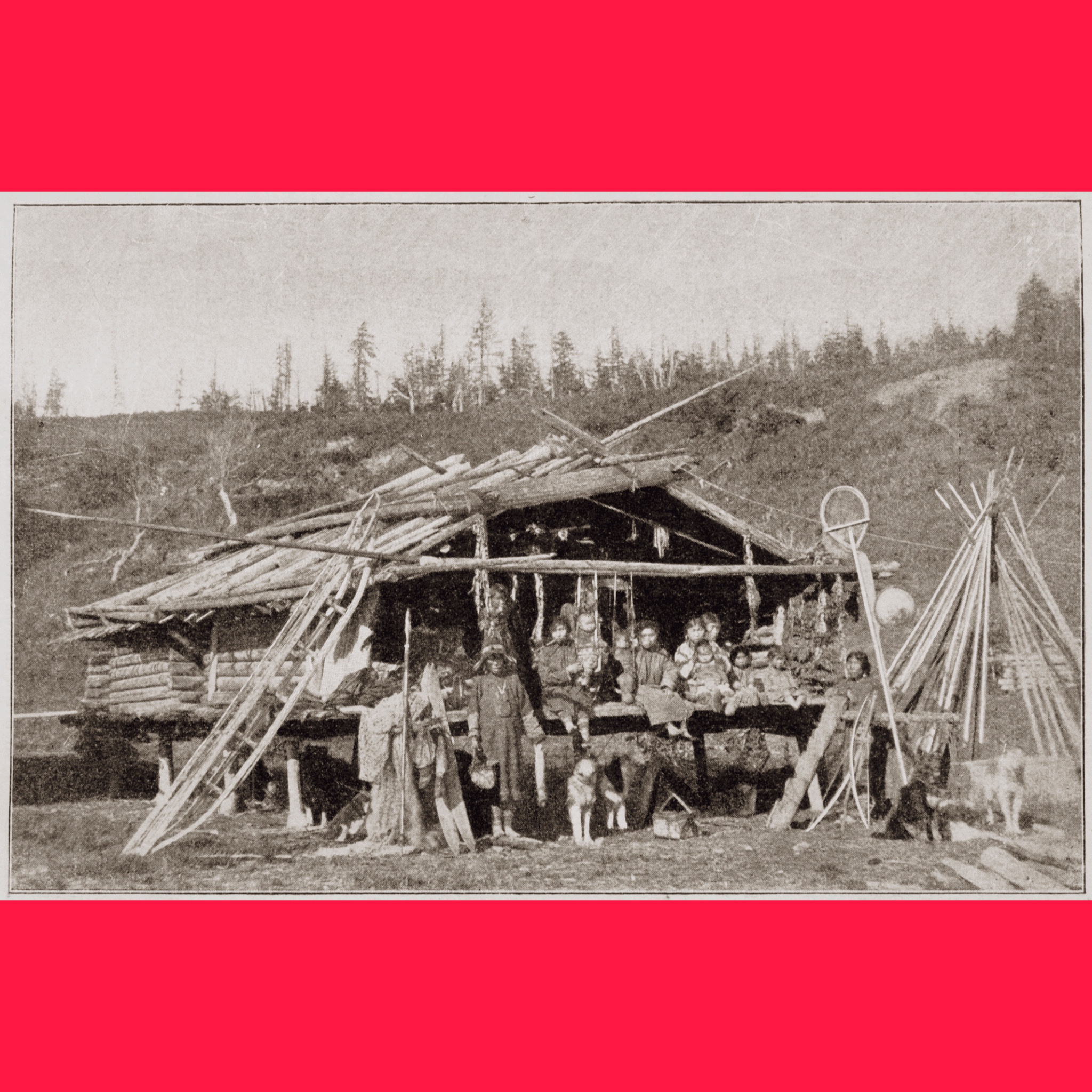
Before then, the Nivkh had mainly subsisted on fish, including pink, Pacific, and chum salmon as well as trout, red eye, burbot and pike found in rivers and streams; saltwater fishing provided saffron cod, flatfish, and marine goby. They would also hunt sea lions and seals. Men would occupy themselves with fishing, hunting, and the making of tools and means of transportation. Women, meanwhile, would spend their days processing animal skins, preparing birch back for various uses, making clothing and utensils, gathering plants, doing housework, and caring for the dogs. Dogs were used for pulling sleds and as a source of fur and meat. Dogs were also used as a medium of exchange, an index of wealth, as well as a key part of religious rituals. Villages of 20 or so houses were located along the coast or at the mouths of rivers near spawning salmon populations. They lived in two types of self-built winter dwellings. First came the ryv / to, a round dugout of 7.5 metres in diameter, shored up by wooden poles and covered with packed dirt and grass, and having a fireplace in the centre alongside a smoke hole for light and smoke escape. There was also the chad ryv, one-room structures with a gable roof and a kang (Chinese furnace) for heating, along with a nearby shed for sledges, skis, boats, and dogs. Nivkh religious beliefs, meanwhile, were based on animism and trade cult. They believed in spirits that live everywhere: in the sky, on earth, in the water, in the forest.
The traditional Nivkh lifestyle may seem stark, harsh to us now. But the Nivkh were traditionally sort of bon vivants. Their culture was originally about celebrating being Orientalesque.
In what form did this culture originally exist, then?
Well, the Nivkh have historically inhabited Sakhalin alongside a people named the Ainu, another Siberian-Amerindian population of the lands surrounding the Sea of Okhotsk who now live primarily under Japanese jurisdiction. In Ainu legends, they talk about a people named Ton’chi who lived in Sakhalin in earlier times and who were previously forced to desert the island due to wars with the Ainus. Toponymic evidence indicates that the Ton’chi were the ancestors of the ancient Nivkhs, archaeological data also giving clues as to a potential relationship with ancient Eskimo tribes.
Presently, the island of Sakhalin is sparsely populated by three aboriginal tribes: the Nivhgu (Gilyaks), the Oroks, and the Ainu. The first Russian travellers in the region also found traces of another vanished tribe, adept with stone tools and masters of the art of pottery. That tribe is referred to, of course, as the Tonchi by the Ainu. Remains of earthen pit dwellings, polished stone tools (such as axes, arrows, spear-points), clay potsherds, complete clay vessels, and shells and bones of various maritime and land animals are still awaiting full examination. The Tonchi allegedly used to suffer from a lack of women so they would kidnap them from the Ainu. How can they have been well-regarded, then? Or maybe they were just rather hardline bon vivants who willingly sacrificed their reputation for the pleasures of Ainu women?
Classifying the elusive, mysterious ⁿⁱᵛᵏʰ ᵈⁱᶠ…
Nivkh is generally considered a language isolate, or one of the world’s primary language families. It consists of a dialect continuum. It is often lumped together with its fellow isolated Paleosiberian languages, including Ainu and the Tungusic languages. Michael Fortescue suggested in 1998 that Nivkh might be related to the Mosan languages of North America, also including the Chimakuan, Salishan and Wakashan languages. Later, in 2011, Fortescue would argue that Nivkh -referred to as an “isolated Amuric language”- was related to the Chukotko-Kamchatkan languages, to form a Chukotko-Kamchatkan-Amuric language family. In 2015, Sergei Nikolaev would argue in two papers for a systematic relationship between Nivkh and the Algic languages of North America, and for a more distant relationship between them both and the Wakashan languages of coastal British Columbia. Joseph Greenberg includes Nivkh in his widely rejected Eurasiatic languages hypothesis. An automated computational analysis by Müller et al. (2013) found lexical similarities between Nivkh, Mongolic, and Tungusic languages. However, this is likely due merely to lexical borrowings. Frederik Kortlandt argued that Nivkh is linked to the proposed Uralo-Siberian and Indo-Uralic groupings. Hudson & Robbeets (2020) proposed that the original language of the Korean peninsula was related to Nivkh, a Nivkh-like language also supposedly once having been distributed in Korea.
I, for one, consider Nivkh surely to be an Orientalesque language, and a Siberian-Amerindian language.
Why has it been so hard to classify? Because the Nivkh/Tonchi bon vivants liked to be elusive to be free! The Orientalesque peoples all did this: they deliberately spun webs for themselves so as to make their languages all but impossible to classify and interrelate, to stay free from outsider input.
Yes, the Nivkh were traditionally the Orientalesque bon vivants…!
 The Buzz-Concept Project