
The Buzz-Concept front-running of the Tungusic languages is a peculiar one. It renders use of language totally dynamic. It thus leads users to become machines at processing experience…


The Tungusic languages are also known as the Manchu-Tungus or Tungus languages. The name “Tungusic” is an exonym for the Evenk / Ewenkī people imposed on them by the Yakuts (“tongus”), then borrowed into Russian as “тунгус” / “tungus” and thence into English. These languages are spoken in Manchuria and Eastern Siberia by approximately 75,000 native speakers today. A dozen Tungusic languages remain in use, many being endangered. The historically best known Tungusic language is Manchu / manju gisun, today critically endangered but once the language of the courts of the Qing dynasty which ruled China from 1636 to 1912. The family is normally broken down into northern and southern branches, although four sub-groupings have been suggested by Hölzl (2018) as Ewenic, Udegheic, Nanaic, and Jurchenic. Today, 55% of the remaining Tungusic-speakers speak Xibe / sibe gisun, a closely related language/dialect/variant to Manchu spoken in Xinjiang, Northwest China. Both are descended from the extinct Jurchen, which evolved into Manchu around the 17th century. Jurchen, Manchu and Xibe are Southern Tungusic languages, alongside the Nanai, Ulcha/Ulch, and Uilta/Orok languages of Siberia. Northern Tungusic languages include Even / evedy toren, Tungus / Evenki / Ewenkī / Evedȳ turēn, Negidal and Oroch.
The majority opinion is that the Tungusic languages belong to the controversial Altaic family alongside the Turkic and Mongolic languages. I personally believe them to belong to my proposed “Orientalesque” family*.
*Orientalesque is a totally made-up name. I’m still not sure what to call them. Ideas I have recently had are Amurian/Amuric – the Proto-Orientalesque heartland was based around the Amur River…! Or the Mongoloid languages, after the corresponding race? Decisions, decisions. Click here to read up on them.
Some phrases in the Manchu language…
- Hello. (ᠰᠠᡳ᠌ᠶᡡᠨ᠉) (saiyvn?)
- Hello. ᠰᠠᡳ᠌ᠨ ᠨᠣ᠉ (sain no?)
- How are you? ᠰᡳ ᠰᠠᡳ᠌ᠶᡡᠨ᠉ (si saiyvn?)
- Fine, thank you. ᠰᠠᡳ᠌ᠨ ᠪᠠᠨᡳᡥᠠ᠉ (sain, baniha.)
- What is your name? ᠰᡳᠨᡳ ᡤᡝᠪᡠ ᠠᡳ ᠰᡝᠮᠪᡳ᠉ ? (sini gebu ai sembi?)
- My name is ______ . ᠮᡳᠨᡳ ᡤᡝᠪᡠ ᠣᠴᡳ ______᠉ (mini gebu oci _____ .)
- Nice to meet you. ᠰᠠᡳ᠌ᠨ ᡠᠴᠠᡵᠠᠮᠪᡳ ᠰᡠᠸᡝ (sain ucarambi suwe)
- Please. ᠪᡠᠴᡳᠨᠠ᠉ (᠋bucina)
- Thank you. ᠪᠠᠨᡳᡥᠠ᠉ (baniha.)
- You’re welcome. ᡠᠮᡝ ᠠᠨᡨᠠᡥᠠᡵᠠᡵᠠ᠉ . (ume antaharara.)ᡠᠮᡝ ᠠᠨᡨᠠᡥᠠᡧᠠᡵᠠ᠉ (ume antahaxara.)
- Yes. ᠪᡳ᠉ (bi)
- No. ᠠᡴᡡ᠉ (akv)
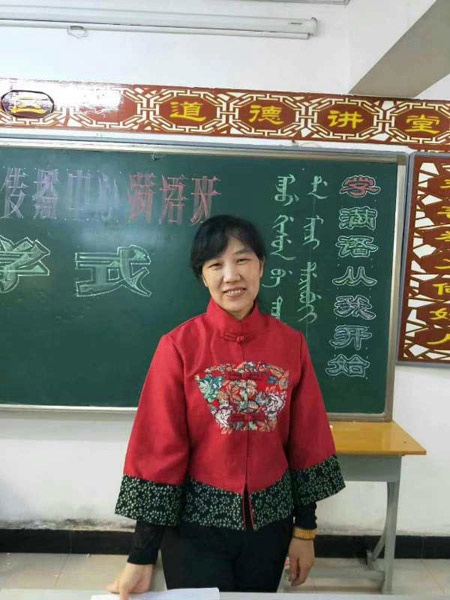
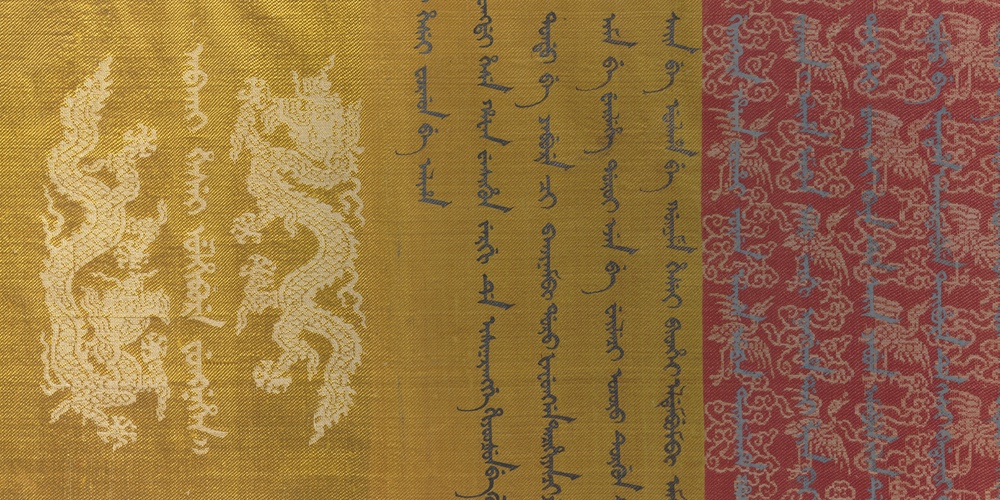
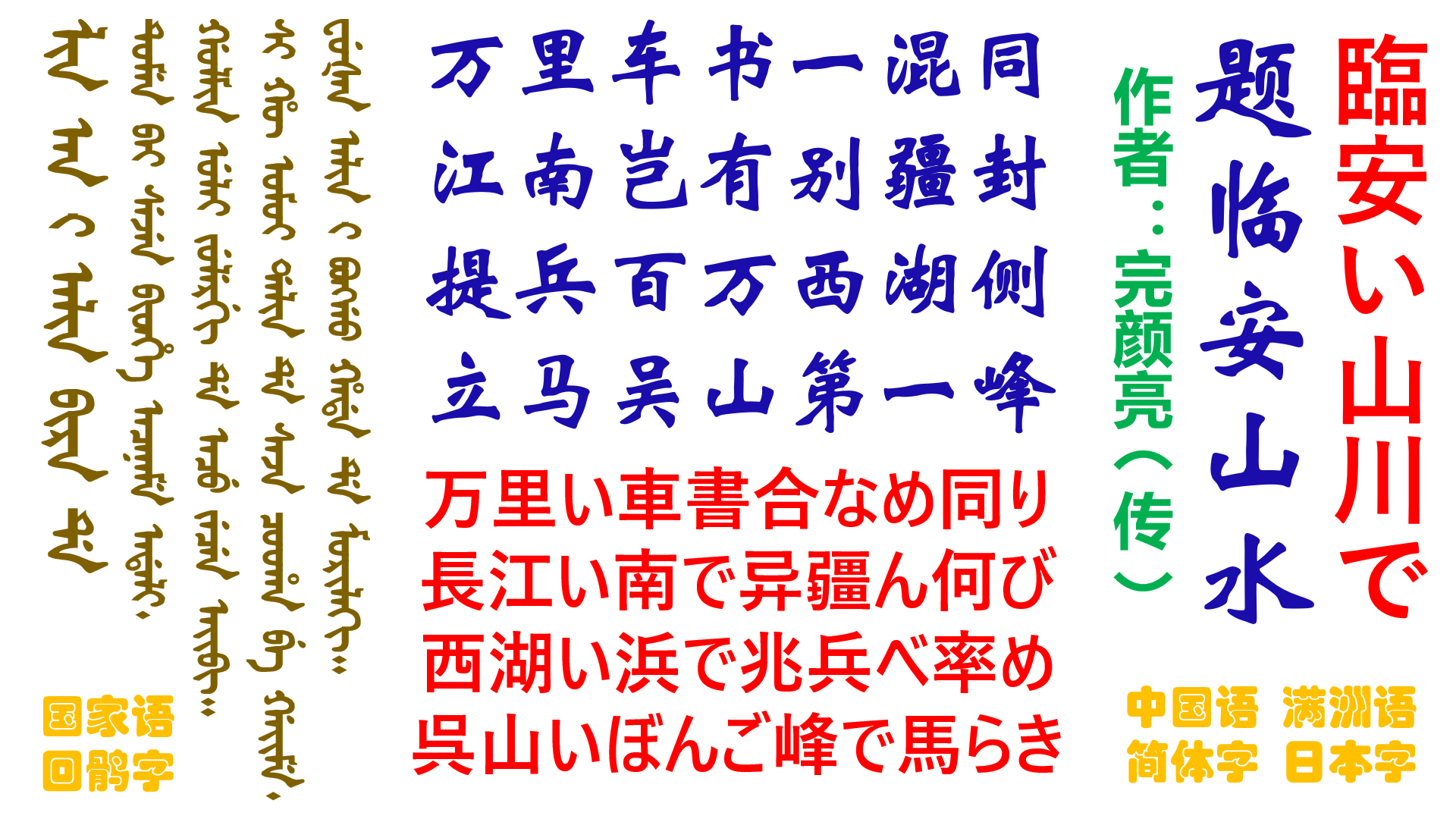
The Manchu language is alternatively known as the Man language. It was historically spoken by the Manchu people of Manchuria, once an official language of the Qing dynasty. Yet in 1995 fewer than 70 Manchu, all of whom being over 70, were believed to still speak Manchu. Its sibling dialect/language Xibe/Sibe/Sibo, however, is still spoken by a few thousand people in the Yili region of Xinjiang. Manchu has been written since the 17th century, and traditionally makes use of the Mongol script, writing from top to bottom. It has also been heavily influenced by Chinese and Mongolian.
The Manchu language uses vowel harmony, vowels being divided into two or three classes. We have “yin” syllables with front vowels, and “yang” syllables with back vowels. There is sound symbolism whereby front vowels align with feminine objects or ideas and back vowels with masculine ones. So we have, for example, hehe (woman) / haha (man) and eme (mother) / ama (father). Overall, there are three categories in the rules of Manchu vowel harmony: front vowels (e), back vowels (a, o, ū), and neutral vowels (u, i). Only certain vowels can thus appear together in the same word. Generally, front and back vowels may not coexist in the same word. Neutral vowels can go with both front and back vowels. The vowel in the first syllable of a word must be the same type as the vowel in the second syllable.

Manchu verbs do not distinguish between person or number, as in Chinese. Nor does Manchu have any relative pronouns. It instead expresses relative clauses with participles and gerunds, e.g. muse niyalma jalan de banjifi inenggidari jabošome seoleme, beye dubentele kiceme faššame dulekengge be amcame aliyara gosihon babi = we men (muse niyalma) having been born (banjifi, Past Gerund of banjimbi) into the world (jalan de), are daily (inenggidari) afflicted (jobošome, Gerund of jobošombi) and vexed (seoleme, Gerund of seolembi), till the end (dubentele) we fatigue (kiceme, Gerund of kicembi) and exert (faššame, Gerund of faššambi) ourselves (beye), expecting (aliy ara, Future Participle of aliyambi) again and again (amcame) that which is past (dulekengge be) we are really (babi) miserable (gosihon).
The mildly agglutinating Manchu language has five principal cases: nominative, accusative, genitive, dative-locative and ablative. Furthermore, generally speaking, a word in Manchu is positioned as preceding that by which it is governed. For example: as in boo i ejen (“master of the house”), the genitive (“of the house” = boo i) precedes the noun (ejen = “master”) on which it depends. So it’s like saying house-ite master = “master of the house”, perhaps… abkai ejen = “the Lord of Heaven, God”… irgen i urse = “those of the people”… urgun i doro = the ceremony of congratulation… suhe i = “with an axe”… fafun i = “legally”… (<-genitive case)
More words in Manchu…
- abka heaven
- muke water
- kesi favour
- olo hemp
- huncu sledge
- boo house
- buhū stag
- manju Manchu
- niyalma person
- inu yes
- waka no, not
- kesike cat
- indahūn dog
The Buzz-Concept front-running kept Manchu-speakers on their feet. They had a knack for staying on top of life experience. Indeed, the Tungusic languages are the Languages of Prowess and Manchu the Language of Perspective. Even the very grammatical structure of Manchu was moulded to facilitate this all. Mastering Manchu and related languages requires great precision, and is arguably like an intricate performance art or sorts. Speakers represent their culture very intimately and precisely as they communicate.

 The Buzz-Concept Project