Turkic culture is enrapturing. It always has been. Such was literally its very foundation.
Originally there was a separate Turkic race (“Turkique” as I have tentatively called it, for differentiating purposes). They emerged genetically from the same collective at the same time as another preliminary race I will call “Chacha”, now Indians. They were two of the last preliminary races to emerge, in fact, while we could keep up the tradition of pedigree-breeding – which was a very exacting and strenuous commitment. They didn’t like the Chachas and set up the premise of their primitive Proto-culture as intentionally discordant, FYI.


They did not look much like the Turkic peoples of today, who have since heavily “interbred”. Although, some individuals from certain genetic lines will still display notable likeness. But the essence of their legacy lives on.
The Origino-Turkiques spoke the Language of Aspiration, the very first “language of culture”. Turkic women have always been dreamers! Like all other “Original” Tongues, Origino-Turkique was related to Proto-Global.
The Origino-Turkique people established the very first superior culture which revolved, ironically yet strikingly, around sex. Sexual hype – or sensuality, through a gentle, discerning, tasteful lens. From their angle, sexuality was elevated to inspiring, transcendent force. It helped them develop healthy attitudes towards sexuality and human relations, and all the cohesion they enjoyed allowed them to remain in Africa for longer than others. The Turkics were the last non-African population to depart for Eurasia when the time came, let’s 30,000 years ago maximum.
When they figured out to develop their own new independent type of human language, they would cultivate instead the Language of Cohesion, or Pre-Turkic. It fostered cohesion to ensure they would never forget that humanity can never go wrong thus.
The Pre-Turkics were the Original Pinnaculars of the human population, thanks to their well-coordinated value system and corresponding wondrousness.
Eurasia. This is a region of the world I am obsessed with! I have been fascinated by Mongolian culture (although they are not a Turkic people, their histories are all very much intertwined), in particular, since I was a teenager. I had a dream some time ago… a dream that centred around this incredible, fantastical, sublime culture. It manifested itself inside my dormant head as a Central Eurasian culture: a blend of them all I have realised, with profoundly symbolic details. Most of Central Eurasia is Turkic-speaking; the Turkic languages are the Gracious Tongues. Turkic Buzz-Concepts range between the following concepts…
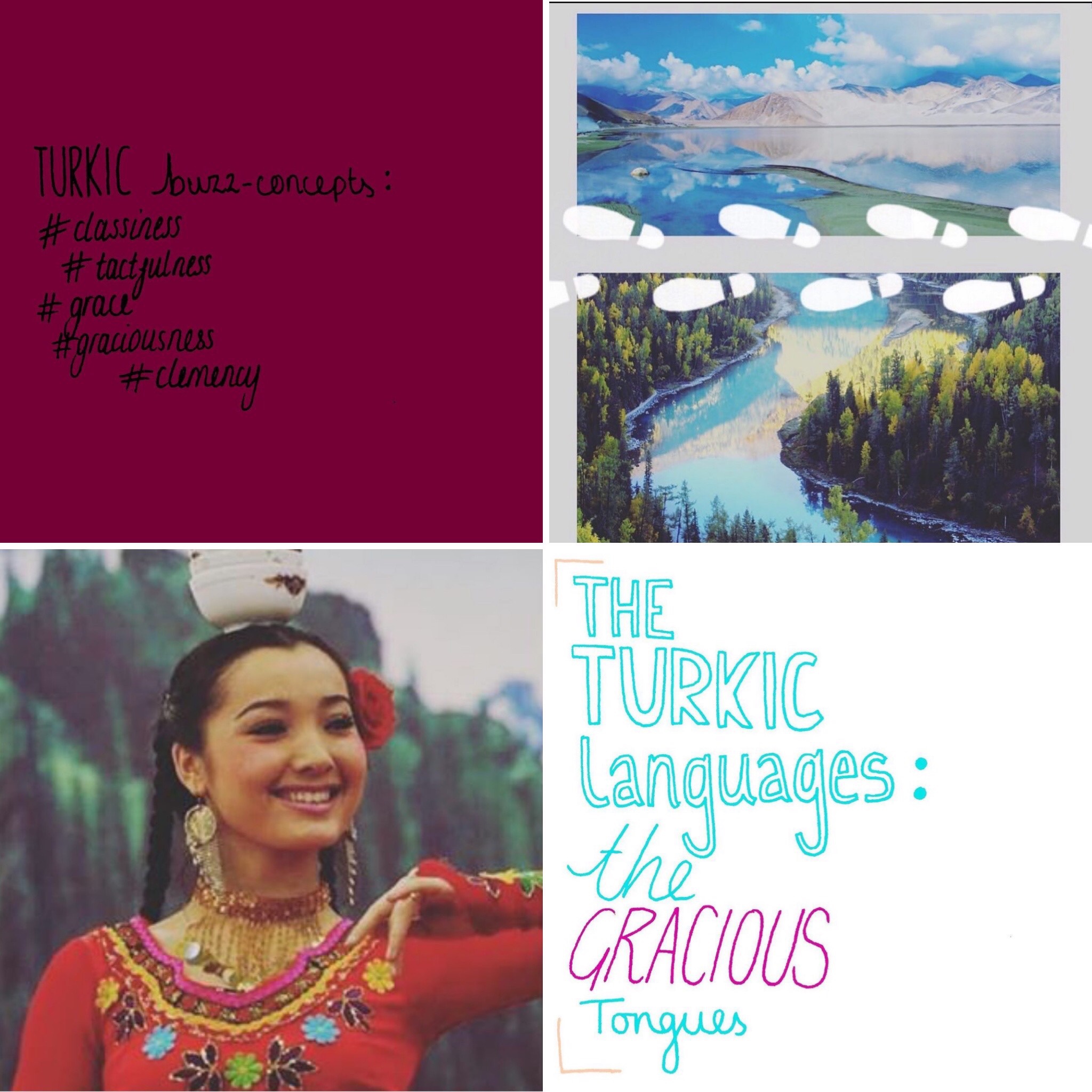
The Buzz-Concept GRACE (etc.) seeks to ensure satisfaction and fulfilment in life, along with cohesion. Adherents have a very particular way of going about attaining social cohesion, which involves giving their women dreaming rights & privileges – the resulting gratification then bleeding into everything else.
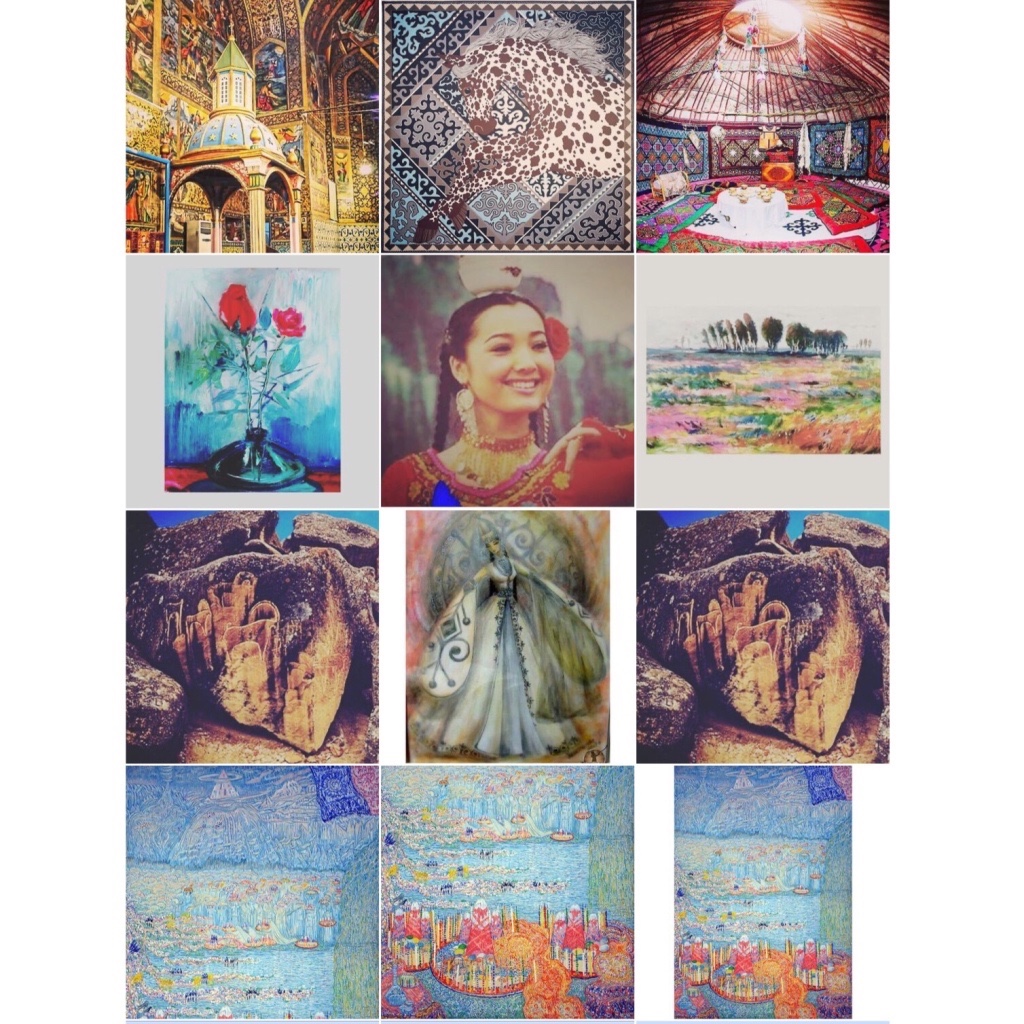
The “Turkicosphere” is an enchanting universe. This artwork by Azerbaijani artist (a country I randomly discovered a while ago that I am a raging “phile” of!) Sattar Bahlulzade should illustrate what the deal is here quite nicely…

Others are Francophiles, Anglophiles; I am an Azeriphile.
Azerbaijan…
Azerbaidzhan
Azärbayjan
Azərbaycan

… is a small country located on the fringes of Asia and Europe. It forms part of the Caucasus region, bordered by the Caspian Sea, Russia, Georgia, Armenia, Turkey and Iran. Its harbour is the apparently the best on the Caspian Sea. It is a Turkic-speaking region: Azerbaijani, or Azeri (Azərbaycanca in Azeri), belongs to the Western Oghuz branch of the Turkic primary language family. It has also been classified as a Southern Turkic language. Either way, it is an Oghuz/Southern Turkic language along with Turkish of Turkey and Turkmen of Turkmenistan. The Turkic languages have, however, been proposed to constitute part of a broader Altaic primary family which supposedly includes the Tungus languages and Mongolian. I of course think they are a separate primary language family.


Azerbaijan is an oil rich state. They are, incidentally, the extra Turkics. The Turkic languages are the Gracious Tongues, so the Azeris really stand out within the Turkic world as their sibling cultures are all characteristically discreet. Azerbaijan is home to a rich, inspiring culture. For centuries it has been fought over and occupied by other peoples: the Persians, Arabs, Mongols and Russians. Its versatility resonates very strongly with the creative mind.

Nine-tenths of the Azeri population are Azerbaijanis. There are also small minorities of Russians, Armenians and Lezgians dwelling within its borders. The original Azeri people arrived to populate this area with the Oghuz Seljuq migrations of the 11th century. Conflict over Nagorno-Karabakh, an ethnically Armenian region which is claimed by Azerbaijan, drove millions of Armenians and Azeris from their homeland and by the end of the 20th century there were around 13 million Azerbaijanis living abroad, predominantly in Iran. They are Muslim. They are 65% Shi’a and 35% Sunni, which also makes them unique as a Turkic people in that other Turkic peoples are Sunni Muslim. Azerbaijan has the second highest Shi’a Muslim population in the world, after Iran.

Nationalistic symbols for the Azerbaijanis include fire (Azerbaijan is also known as “the Land of Fire”) and pomegranates. Pomegranates regularly feature in Azeri art.

More on the “Turkicosphere”:
 The Buzz-Concept Project