
I remember reading about the assassination of Iran’s military mastermind General Qassem Suleimani / Qasem Soleimani, commander of the Quds force, in 2020. I began to wonder exactly why Iran is so resented in the West. What exactly is our problem with them? I wanted to know about the peculiarities of their role as an enemy of the West. So I conjured up my own answer through the Buzz-Concept Project…
Iran is a Middle Eastern nation which borders with Pakistan, Afghanistan, Turkmenistan, Azerbaijan, Armenia, Turkey and Iraq. The Iranians speak Farsi / Fārsi / فارسی / Persian, an Indo-European language very distantly related to Hindi, English and Spanish. Farsi belongs to the Indo-Iranian branch like Hindi, furthermore an Iranic/Iranian language alongside Pashto and Kurdish. Shia Islam is practised by the overwhelming majority of the population of the Islamic Republic of Iran. The ancient Persian Achaemenid Empire / 𐎧𐏁𐏂 / Xšāça / ‘The Empire’, ‘The Kingdom’ once stretched from the Balkans and Eastern Europe in the west to the Indus Valley in the east. In its time, it was the largest empire in history. It has endowed Iran with a rich, great culture that has valiantly resisted decay even in the 21st century.
Iranian culture is superior. Until recently, it was the world’s most superior culture, according to my measurements. To me, this raised a lot of questions about Islamophobia and whether or not we are actually heading down a dark path because of it. After all, if “superior cultures” are being troubled by it, it would appear to be a problem that really ought to be addressed forthwith. No, the world’s most superior culture until recently was not a Western nor a First World nation, but a Muslim antagonist of the West!
Paradoxically, everything that is great and most remarkable about the Islamic world is not enshrined within the Arabosphere but instead within the Persosphere/Iranosphere. The main weakness of Arab culture is that there is no limit to how low they can stoop – hence extremism. Conveniently, in the Persosphere, this shortcoming is mitigated and countered by their energy and their strong will. Indo-European flourish is consummately combined with Islamic profundity and intensity. The result has the power to utterly enchant.
Yet the overarching issue for us here in the West is that Iranian values, influence and power directly conflict with and indirectly impede the advancement and integrity of our own. To advance their own agenda they have to antagonise us, and the Western elite just won’t stand it. As far as Iran is concerned, there is no other option for them. At the height of this tension in the Middle East, they were to global politics as a creeper plant is to a beautiful landscaped garden. Whether or not this creeper is a weed is a matter of perspective, opinion and discernment.
Here we can see an interesting Buzz-Concept dynamic taking hold, one which will intrinsically influence the route of an enormous extent of the future trajectory of Middle Eastern politics.
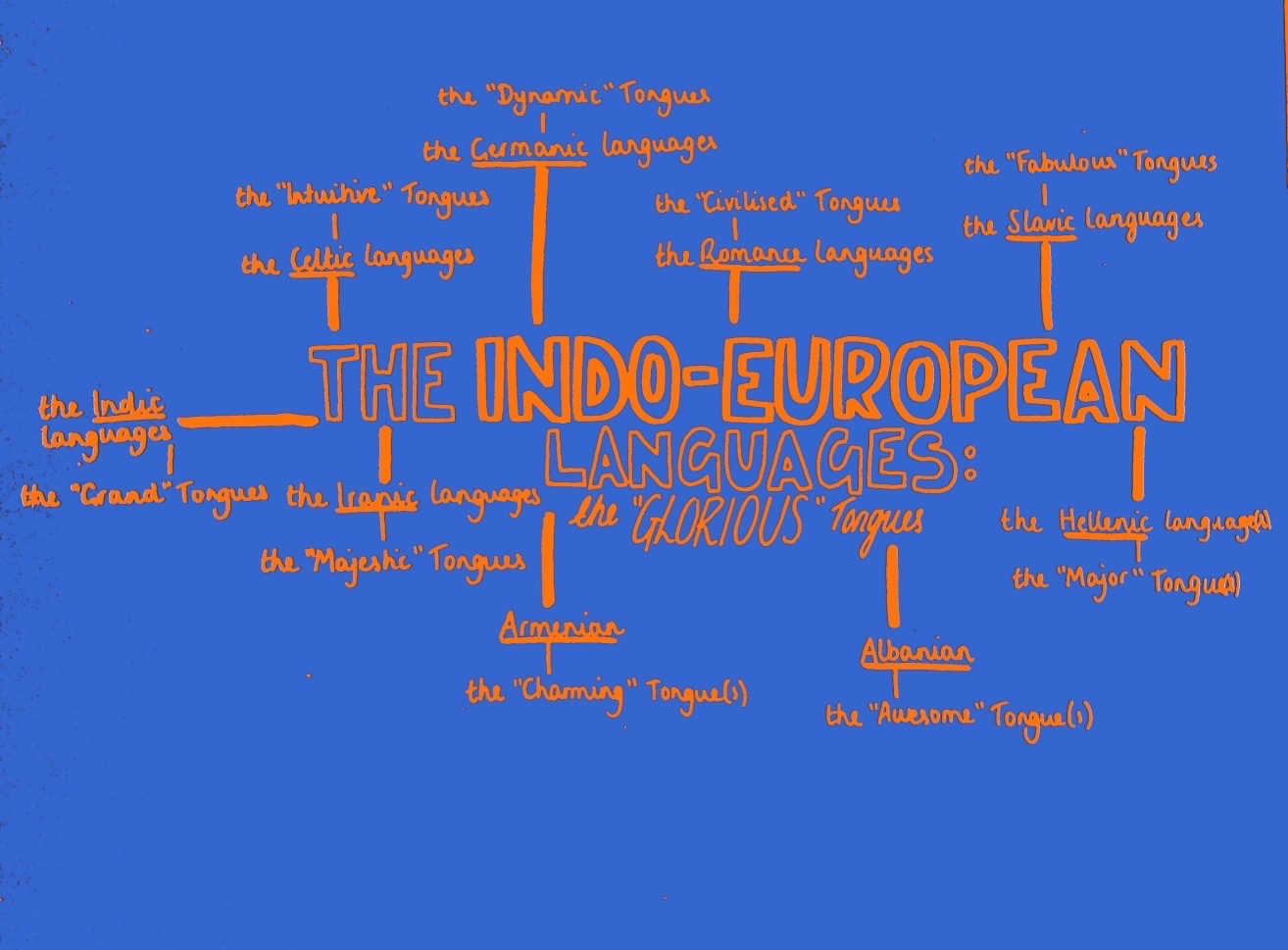
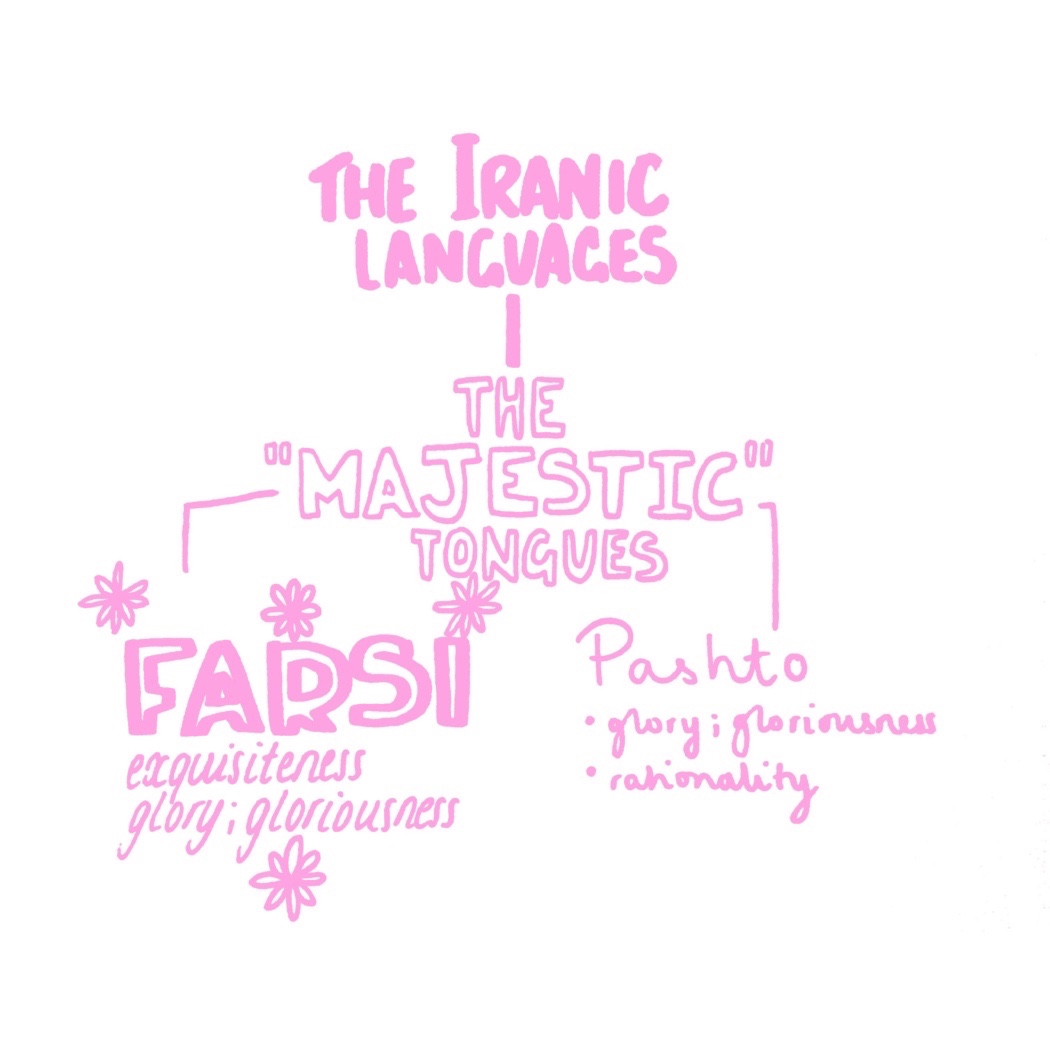
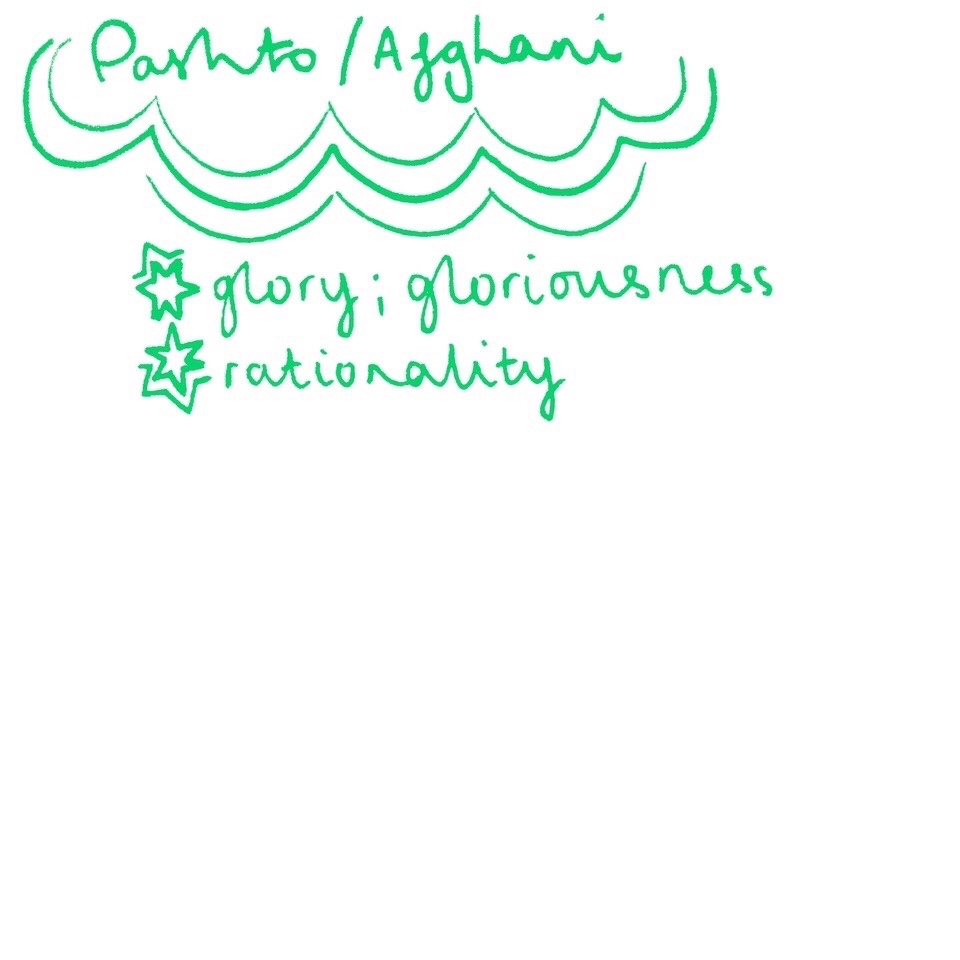
English is a Germanic/Teutonic language. The Germanic languages, like the Iranic languages, belong to the Indo-European primary language family. The Indo-European languages are the “Glorious” Tongues: the aspiration towards ascendancy and influence is coded for within each of the 3 billion of us native Indo-European language speakers, starting from the moment we learn our first words. This effect is achieved mostly through an interactive interface of orthography, nuance, structure and even “vibes”. So much of the glorious human world as we know it has been shaped thus. Within this language family, different branches have their own distinct, remarkable angles on the defining collective familial trait outlined above. The Germanic languages, for their part, are the “Dynamic” Tongues, all buzzing about success and promoting dynamism and productivity among the peoples who speak them. We are faithful to the label of Glorious Tongue-speakers through our proclivity for prosperity and affluence. For the Iranians, Afghans and Kurds meanwhile, things are lot more straightforward. The Iranic languages -including Farsi, Pashto and Kurdish- are the “Majestic” Tongues; the standard Iranic Buzz-Concept is glory or gloriousness. In terms of “ideological” essence, perhaps, the Iranic languages can thus arguably be considered as the “purest” Indo-European languages. Well, they certainly were, way back when in prehistoric times before Islam established itself in the region and the visceral essence of Arabic was thus transfused into this branch of the Indo-European bloodline. The Buzz-Concept glory doesn’t necessarily code for the trait of glory in a people, in and of itself: the “science of Buzz-Concept analysis” is inherently serpentine and convoluted, you see. It does code for majesty, however, which in turn often gives rise to glory – but in today’s world, at least, it never guarantees objective glory.
Understanding Iran’s relationship with Buzz-Concepts provides a convenient little shortcut when it comes to understanding Iran’s role as regional superpower within the Middle East and Islamic world and its role as a belligerent adversary to the US and the whole of the Western sphere. The Iranian agenda is incredibly, gloriously simple: they want to project and magnify their own power and influence. That’s it, though: they just want glory for its own sake. In fact, what they are seeking is not glory but -better- gloriousness. The welfare of their people – a factor which we now know in the First World to be essential for any nation to be categorised as definitively, characteristically, categorically “great” – is a lesser concern of theirs. The US and Iran have evolved in the modern world to despise each other down to the very foundations of one another’s cultures. Americans bleed augustness via economic prowess alone, while the Iranians were stumped from the outset in the modern world by the very process of overthinking the very theoretical fundaments of the very nature of the concept of glory in and of itself. It is this dynamic that means that American advancement can’t not vex the Iranians, and vice versa.
General Suleimani was universally respected and revered as a pivotal figure in Iran and the surrounding region. His death on 3 January 2020 sparked the commencement of a new era for Middle Eastern politics – an aftermath. It was exacted by US forces and ordered by Donald Trump, showing unruly extremists and their closeted supporters that they really don’t have anywhere (nice) to hide. Revenge was swiftly vowed. Million took to the streets to mourn his death in both Iran and Iraq the ensuing week. Three days after, Iran launched a retaliatory attack on US forces in Iraq, accidentally shooting down Ukraine International Airlines Flight 752, killing 176 civilians and triggering to nation-wide protests.
Sick of their parasitism, America had firmly committed itself to neutralising tension in the Middle East. The resulting quietness had allowed Iranians to become especially cocky and arrogant – characteristics they are otherwise prone to displaying via the Buzz-Concept glory. It makes people want to put them in their place, and they are aware of that. But this does not really deter them or make them afraid: instead they have committed themselves to a new strategy, abandoning open attack for covert operation and intricate tactical advancement. They really want their share of the glory. That is what they are up to. They really really want it, you see, but their elites don’t have the right value systems or attitudes. The gloomy end result is that they are have gone down in history as an iconic meddlesome, conniving mischief-maker of the 21st century, rather than the exceptionally strong-willed, purposeful, energetic, refined, discerning people that they otherwise are.


 The Buzz-Concept Project