
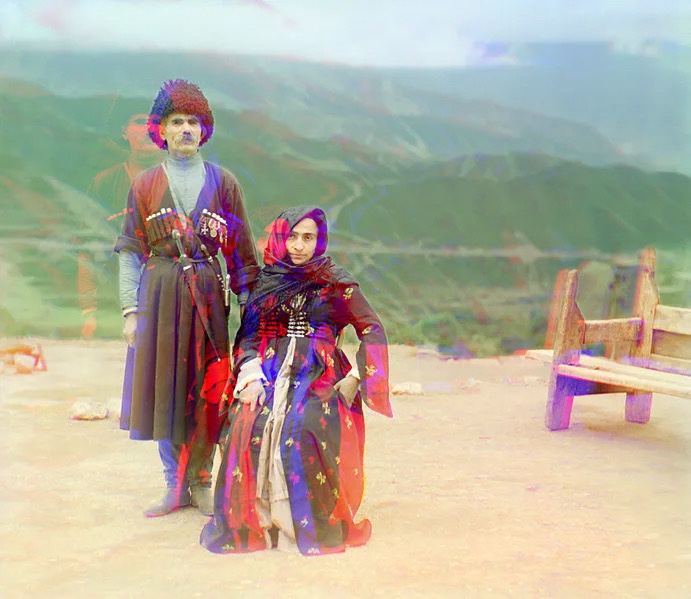
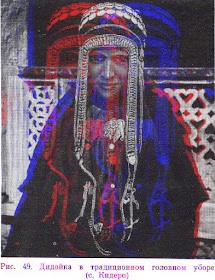
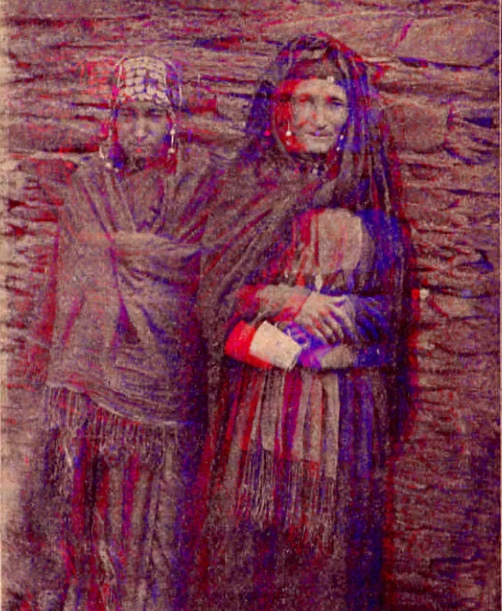
Tsez / Dido is a Northeast Caucasian language spoken the southwest of the Russian Federation, and in adjacent parts of Georgia. Within the Russian Federation, it is spoken in a number of villages in the Tsuntinsky district in the Republic of Dagestan. Within Georgia, it is spoken in Ibtsokhi village in the Kvareli district of the Kakheti region. In 2012 there were around 12,500 speakers of Tsez. In Tsez it is called цезйас мец / cezyas mec / tsezyas mets or цез мец / cez mec / tsez mets. It is also known as Cez / Didoi / Tsezy / Tsuntin. The Tsez people are Muslim. The name Tsez is said to derive from the Tsez word for “eagle”, although most likely a folk etymology. The name Dido, meanwhile, is derived from the Georgian word დიდი (didi), meaning “big”.
This is a Tsez tale written in the Asakh dialect using a Latin-based orthography.
Kʼetʼus Hunar / The Cat’s Feat
Zewnoƛax zewčʼeyƛax bˤeƛon bocʼin zirun qayno. Sidaquł šigoħno sadaqorno boyno ħukmu: yaqułtow begira bocʼi ħonƛʼār miƛʼeł xizāz xizyo rišʷa yoł. Bˤeƛā begirno qay łˤāł xizāz, bocʼin zirun regirno ħonƛʼār miƛʼeł xizāz. Ɣudod, žedi raynosi beƛʼez reqenyoxor, ziru boqno uhi-ehƛada buq boƛāxzāzarno boqno. Zirus uhi-ehi teqxoy, ɣʷaybi kʼoƛin elār, bocʼi buq bātuzāzarno boqno bikʼin reqenyoƛer, besurno ƛʼarayaw miƛʼi. Miƛʼin bisno bocʼin zirun xizor rutin qʼayƛʼār. Rizirno cʼidoƛʼor ƛoħon begirno łāƛʼor qay. Kikxogon zewno bočʼikʼxo kʼetʼu.
Once upon a time there were a pig, a wolf, a fox and a hare. One day they gathered together and decided that today they would send the wolf into the mountains for a sheep and they would eat. The pig sent the hare for water and sent the wolf and the fox into the mountain for a ram. At night, when they came to the flock of sheep, the fox began to moan from the eastern side. Since they heard the fox’s moaning, the dogs ran in that direction and the wolf went towards the flock from the west and found a fat ram. Having taken the ram, the wolf and the fox returned to the camp. They put the pan on the fire and sent the hare for water. At the spring the cat was freezing.
Qayir zewāčʼey rikʷayxo; nešuruxay nełor rikʷayxo zewčʼey. Kʼetʼu, ełor baynosi qay, boqno kʼekʼbikʼa. Kʼekʼbikʼni teqnosi, qay łikin rixerčʼeytow boxin xizor. Bˤeƛā esirno: “Šidā boxā rayirčʼey łin?” Elo didiyƛa žekʼu yoł-ƛin eƛin qayā. Aħugon rikʼin łāxor zirun qayno. Žedi raynosi kikxor žedā esirno kʼetuq: “Mi šebi?” Di žekʼu yoł-ƛin eƛin kʼetʼā. Šebi že debez ħiroƛʼ esirxo zirā. Tupi ƛin eƛix kʼetʼā. Dicce rˤuƛʼno zirun qayno, amma biyxoy kʼetʼu yāłru, xizyo łˤonon zenzi rikʼin raħira reƛ. Bˤeƛo buqełno bičin ažoz kʼodrexāzay, rołikʼno aħyabin kecno, kʼetʼu tataniłxo zewno cʼidox.
The hare couldn’t see; at night the hare couldn’t see. When the hare arrived there, the cat began to move. When he heard the movement, the hare ran back without taking any water. The pig asked: “Why did you run away without bringing water?” The hare said that there was some man there. Again the fox and the hare went to the water. When they came to the spring, they asked the cat: “What are you?” — “I am a man”, said the cat. “What is that on your shoulder?”, asks the fox. “A rifle”, says the cat. The fox and the hare were very frightened, but since they knew it was a cat, afterwards the three of them went together to cook meat. The pig hid behind a bunch of trees and, pushing out its ears, slept, and the cat was warming itself by the fire.
Bˤeƛā kʼekʼrikʼerxo zewno aħyabi. Že rikʷayxoy, kʼetʼuz rokʼƛʼor rayno, že elo aw ƛin, hudu betʼtʼun kʼoƛin elor. Dicce bˤuƛʼzāq bˤeƛqo regin ixiytʼatow qˤaƛubin, boxin ciqxār. Bocʼezno qayizno, ziruzno rokʼƛʼor rayno baysi bāsu ixiytow ħaywan šebin, nełoq že riqičʼey kʼiriłno roxin. Cʼikʼiy reƛ miƛes ƛexun kʼetʼur. ʕoƛiran ɣˤudeł kʼetʼu bišno, racʼno baɣʷace dawla bocʼesno zirusno.
The pig was moving its ears. Since the cat saw it, it thought it was a mouse and in a rush jumped there. The pig was very frightened and, emitting loud shouts, ran away to the forest. The wolf, the hare and the fox thought that a great animal or something was coming and, one running faster than the other, they ran away. All the ram’s meat was left to the cat. For seven days the cat ate, ate until it was full the spoils of the wolf and the fox.
Tsez is classified as a Northeast Caucasian language. These are also called the East Caucasian, Nakh-Dagestanian, North Caspian or Caspian (as opposed to Pontic for the Northwest Caucasian family) languages. They are spoken in the Russian republics of Dagestan, Chechnya and Ingushetia and in Northern Azerbaijan. The family’s seven proposed branches are:
- Avar-Andic, including Avar
- Dargic, Dargin
- Khinalug, Khinalig, Khinalugi, Xinalug(h), Xinaliq, Khinalugh
- Lak
- Lezgic, Lezgin including Lezgin/Lezgi/Lezgian/лезги чӏал/lezgi č’al
- Nakh, including Chechen and Ingush
- Tsezic, Didoic
The Avar-Andic languages are also often grouped together with the Tsezic languages.
The Northeast Caucasian languages have previously been divided into two principal branches, first: Nakh, encompassing only the Nakh languages, and then the rest as Dagestanian. An Avar–Andi–Dido branch was abandoned, but has been resurrected as the “New Type” languages in Schulze (2009, 2013)


Tsez is a West Tsezic language, alongside Khwarshi, and Hunzib – as opposed to an East Tsezic language like Hinukh, and Bezhta.

Also spoken in the Caucasus are the Northwest Caucasian / West Caucasian / Abkhazo-Adyghean / Abkhazo-Circassian / Circassic / North Pontic / Pontic, including Abkhaz of disputed region Abkhazia. There are also the Kartvelian / South Caucasian languages, including Georgian.
Some linguists such as Sergei Starostin propose a relationship between the Northeast and Northwest Caucasian languages, to make a wider North Caucasian family. This is due to shared vocabulary and typological features. The neighbouring Kartvelian languages are not usually included in this hypothesis, but I do think all three groupings (Northeast, Northwest & South) are indeed rather all related to each other as the Caucasian language family, the “Effervescent” Tongues. They then belong to my proposed Nostratic primary language family, which also includes the Indo-European macrofamily and the Uralic languages (inc. Finnish and Hungarian). The Nostratic languages are the “Transcendent” Tongues.
Some linguists such as Igor M. Diakonoff and Sergei Starostin have seen evidence of a relationship between the Northeast Caucasian languages and the Hurro-Urartian languages, historically spoken in the Fertile Crescent in the 3rd and 2nd millennia BC and consisting just of the two languages Urartian and Hurrian. Diakonoff has supplementarily proposed the name Alarodian for the union of Hurro-Urartian and Northeast Caucasian.

Etruscan and the related Tyrsenian languages are also included in the Alarodian grouping by Orel and Starostin in 1990, a proposal extended by Robertson in 2006. This is primarily on the basis of sound correspondences. The term Alarodian is derived from Greek Ἀλαρόδιοι (Alarodioi), the name of an ethnic group mentioned by Herodotus, which has frequently been equated with the people of the kingdom of Urartu. The term has been used to refer various proposals, beginning in 1880 when Sayce linked Urartian/Vannic to the Kartvelian languages (Georgian, Laz, Mingrelian and Svan). Fritz Hommel in 1884 further included all languages of the Caucasus and the ancient Near East which are not Indo-European, Semitic, Ural–Altaic, Elamite, Kassite. Later, he extended the Alarodian family to include the pre-Indo-European languages of Europe, such as Lemnian, Etruscan, Ligurian. Karel Oštir’s (1921) version of Alarodian included all the aforementioned languages, as well as Basque, Sumerian, Egyptian, the Cushitic and Berber languages.
I would readily corroborate at least some of these relationships within my proposed “MegaQuirky” i.e. “pre-Indo-European” branch of the Nostratic family, encompassing Uralic, Caucasian, Vasconic, Tyrsenian, Hurro-Urartian, and perhaps others.

Tsez does not have much of a written literary tradition, although it is written in a version of the Cyrillic alphabet based on Avar. This is used mainly to write folk tales. Tsez is also taught in the Latin alphabet in some primary schools in Dagestan. Most schools, however, teach Avar for the first five years, and in Russian thereafter. Avar is the literary language used by the Tsez people. Russian is also used thus. Tsez shows influences of Avar, Georgian, Arabic, Russian, and even Turkic.
Tsez phonology is remarkable for its use of quirky pharyngealisation [ˤ]. Striking also is the use of the alveolar lateral affricate [ƛ] /t͡ɬ/. Have a listen here.
Tsez is an agglutinative language with a highly complex morphology. It has been recorded as having 64 cases! These are locative (expressing location) and non-locative cases counted together. Overall, there are 8 syntactical cases, the rest being locative cases, divided into three categories: location, orientation and direction. Tsez is also an ergative-absolutive language, whereby it realises no distinction between the subject of an intransitive sentence and the object of a transitive one. It is a head-last/head-final language: modifiers precede the head noun (the head follows its complements):
- sideni • ʕaƛ-ā • b-iči-xosi • nesi-s • b-aqʼˤu • žuka-tʼa-ni • ʕagarłi
- another | village-in:ess | ipl-be-prsprt | he-gen1 | ipl-many | bad-distr–restr | relative <~ note: a head-last sentence – the numerous unpleasant relatives about whom we are talking don’t feature until the very end
- sideni ʕaƛā bičixosi nesis baqʼˤu žukatʼani ʕagarłi
- “his many unpleasant relatives who live in the next village”
The four layers of Tsez:
- lightness
- precision
- Getting Tsezy
- evocation


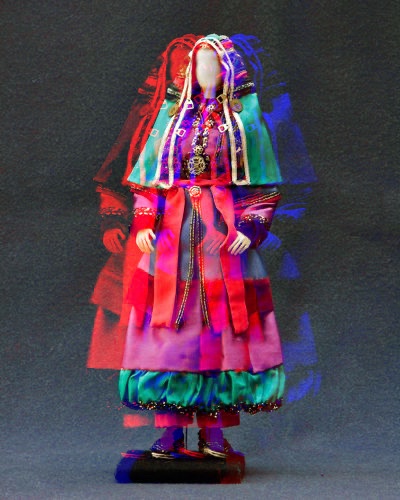
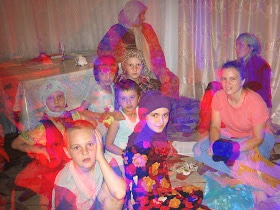
Words in Tsez:
- цез / cez / tsez = Tsez
- ˤuλ̶’ = to be afraid, pronounced a bit like [ukOUGHkkk.]
- kid = girl
- besuro = fish
- giri = tongue
- ɬi = water
- ɬidabi = waters
Is Tsez the world’s most complex language? I think so! The lightness of soul comes at a paradoxically hefty price, evidently!
Tsez also has four genders. There is a masculine and a feminine; although feminine includes not only human females, but also objects that are flat or pointed, like papers and pencils. There is another gender for animals, and another perplexing category on top of that. Gender markers are not attached to nouns, but to the verbs, adjectives, and adverbs that are associated with the noun. And the gender markers are left out, randomly, if the following word begins with a consonant. So… kid means girl in Tsez. kid y-iys = the girl knows. kid božizi yoq-xo = the girl believes. Note that the y- marker is left out in the second phrase because the following word begins with a consonant.
An example of ergativity in Tsez:
- kid y-iys = the girl knows
- kid-ba ged esay-si = the girl washes the dress
- ged esay-si = washes the dress
- kid-ba: –ba invokes ergativity to indicate that she is involved in vigorous activity, she is a subject who is really doing something, really affecting something
Since Tsez is an ergative language, it has two types of grammatical subject: one type when the subject is the single argument of an intransitive verb, and another when it is the agent of a transitive verb. When a subject performs an action upon an object, i.e. when it is the agent of a transitive verb, an additional suffix is used after the subject to mark it, as above. Why? Ergativity overall fosters unity. It does so by intensifying agency, to make resulting activity as vehement as can be, in order to foster resulting bonding. You’re more likely to take washing your dress seriously if you’re being singled out as an ergative agent, aren’t you?
 The Buzz-Concept Project