
German / Deutsch gets a lot of hate for being an ugly language which is jarring to the eye and harsh on the ears. Take “butterfly” 🦋: in French it’s papillon, in Italian farfalla, in Spanish mariposa, in Portuguese borboleta… well, in German it’s Schmetterling. Watch this video, which does contain a couple of small errors, but is amusing nonetheless.
German is also renowned for being a difficult language to learn. Speaking it authentically and harmoniously with the natives is widely acknowledged as being pretty much impossible. Access to the highest echelons of authentic German-speaking is truly unheard of among foreigners. In 1880 American author and humourist Mark Twain composed an essay of satirical observations about the German language (see above), observing that “some German words are so long that they have a perspective” – examples:
- Freundschaftsbezeigungen – demonstrations of friendship
- Dilettantenaufdringlichkeiten – the importunities of dilettantes
- Stadtverordnetenversammlungen – meetings of the legislature
“These things are not words, they are alphabetical processions. And they are not rare; one can open a German newspaper at any time and see them marching majestically across the page….”
“My philological studies have satisfied me that a gifted person ought to learn English (barring spelling and pronouncing) in thirty hours, French in thirty days, and German in thirty years.
It seems manifest, then, that the latter tongue ought to be trimmed down and repaired.
If it is to remain as it is, it ought to be gently and reverently set aside among the dead languages, for only the dead have time to learn it.“
He denigrates the perplexing peculiarities of German grammar, also picking apart its…
- case system and declining of nouns its nouns, articles, pronouns and adjectives into four grammatical cases (nominative, accusative, dative and genitive): “would rather decline two drinks than one German adjective.”
- splitting of verbs
- placement of verbs at the end of sentences: “An average sentence, in a German newspaper, is a sublime and impressive curiosity; it occupies a quarter of a column; it contains all the ten parts of speech … ; it is built mainly of compound words constructed by the writer on the spot … ; it treats of fourteen or fifteen different subjects, each enclosed in a parenthesis of its own … one of which is placed in the first line of the majestic sentence and the other in the middle of the last line of it — after which comes the verb, and you find out for the first time what the man has been talking about.”
- Noun genders: “In German, a young lady has no sex, while a turnip has. Think what overwrought reverence that shows for the turnip, and what callous disrespect for the girl.”

One other major obstacle to the foreigner looking to cultivate an authentic grasp of spoken German is the heavy dependence of natives on fillers, including (in modern German) doch, mal, bloß, denn, eben, schon, ja, halt and eigentlich, authentic understanding of which evades even the most scientifically precise translator.
Meanwhile, it is obvious is that people tend to favour the sounds of languages with musical flow, and the appearance of languages with acutely refined, well-balanced morphology. The world’s most beautiful languages to you? English? French? Italian? Spanish? They would probably feature on most such lists. What they have in common? Latin heritage. The Romance languages are universally renowned for their beauty, all descending from ancient Latin spoken by the Romans and spread through the Roman Empire; English is not a Romance language but a Germanic language, but boasts a strong vein of French and thus Latin influence through Norman French as introduced in medieval Norman England. German is related somewhat closely to English as another language pertaining to the West Germanic branch of the Germanic family, in turn a branch of Western Indo-European languages. For your information: the West Germanic languages are the “Principal(istic) Tongues; the Germanic languages the “Dynamic” Tongues, and the Indo-European languages the “Glorious” Tongues. In fact, the Modern English language is descended from Anglo-Saxon, also called Old English / Ænglisc, an amalgamation of the languages spoken by the Angles, Saxons and Jutes who travelled from Germany to populate England from the 5th century, displacing the previously settled Celts to the fringes of the British Isles. While the English language has since been somewhat Celticised and heavily Frenchified and thus Latinised, the process of Frenchification giving rise to Middle English, Anglo-Saxon was actually THE Germanic language.


English and German are also related to Dutch within the West Germanic group. The other two branches of Germanic languages are North Germanic (Nordic & Scandinavian: Icelandic, Faroese, Danish, Norwegian, Swedish) and East Germanic (Gothic, Burgundian, Vandalic). THE Germanics were the East Germanic peoples, now extinct along with their languages, but having left traces of their patrimony throughout Europe, many modern continental European nations laying claim to some East Germanic heritage. The North Germanic languages descend from the Old Norse language / norrœnt mál “northern language” / of the Norsemen i.e. Vikings. The North Germanic peoples are the sophisticated Germanics.
German, as we can see, shares its name with the wider Germanic language family. Yet Germans themselves call their language Deutsch [dɔʏtʃ] and their country Deutschland. Germany is not the only German-speaking country, the populations of Austria / Österreich, Liechtenstein and Switzerland / Schweiz also predominantly German-speaking, and German additionally held as an official language (at least on a regional level) in Belgium, Luxembourg and Italy. German is also known in French as allemand (like Spanish alemán – Germany: Allemagne/Alemania) and in Italian as tedesco (while Germany = Germania). This corresponds with the variety of ancient Germanic ethnicities that converged to create the modern German nationality, including the Franks, Frisians, Saxons, Thuringii, Alemanni and Baiuvarii/Bavarians. Upon the emergence of a German ethnic identity during the Early Medieval Period, these peoples came to be referred to in High German (from which modern German descends) as diutisc, meaning “ethnic” or “relating to the people”, from which the German endonym Deutsche is derived. Alternative forms include deudsch, deütsch, teutsch, teütsch, teutsch, deutsh. They are derived from Middle High German diutisch, diutsch, tiutsch, from Old High German diutisk (“popular, vernacular”), from Proto-West Germanic *þiudisk, from Proto-Germanic *þiudiskaz (“of the people, popular”), adjective from Proto-Germanic *þeudō (“people”, whence Old English þeod, Icelandic þjóð), from Proto-Indo-European *tewtéh₂. It is thus a cognate with Dutch Duits and Diets, Low German düütsch, English Dutch, Danish tysk. It also corresponds with the Latin terms theodiscus (theotiscus, thioticus – whence the Italian tedesco) and teutonicus (from Teutonēs, Teutonī “the Teutons”, ancient Germanic tribe), synonyms of germānicus “Germanic”. The Germanic languages were also previously alternatively known as the Teutonic languages. While the name for German differs quite substantially between languages, the technical terming of the Germanic languages is very consistent – as in English (Germanic), Spanish (germánico vs. alemán), German (germanisch vs. deutsch), French (germanique vs. allemand), Italian (germanico vs. tedesco), Dutch (Germaans vs. Duits), Danish (germansk vs. tysk), Russian (германский germanskiy vs. немецкий nemetskiy). The English Germanic, German and Germany derive from the Latin Germania, perhaps of Gaulish origin, related to Old Irish gair “neighbours” and Celtic gairm – referring to Germanic war cries i.e. “the neighbours” or “the screamers”. Don’t be fooled: the Germans are not THE Germanics, but the sensual Germanics – the English being the exquisite Germanics and the Dutch the discreet Germanics.
The four layers of Proto-Germanic:
- Libertarianism
- Productivity
- Germanicness
- Sovereignty

However, German differs from its surviving relatives in having conserved the case system from Proto-Germanic. Icelandic has also maintained a case system. English, Dutch, Danish, Norwegian and Swedish, meanwhile, have lost it.


The rough, cold, dark northern fringes of Europe have long been inhabited by Germanic peoples, such modern Germanic-speaking countries including England, Norway, Sweden, Denmark, the Netherlands and Germany. Historically, the Germanic peoples were notorious for having antagonised the Romans, as described in Tacitus’ the Germania…


The civilised ancient Romans dismissed the Germanic peoples as “barbarians”, and while it is true that the Graeco-Roman model of civilisation hadn’t yet been imparted unto other peoples prior to the fall of Western Rome in the 5th century, meaning necessarily of course that ancient Germanic peoples were uncivilised and therefore barbarous, the Romans clearly did miss the point in assessing the Germanic peoples. How so? Well, the Graeco-Romans had their civilised savoir-faire, which the Germanic peoples indeed did not have – but which they really wanted in on. The Germanic peoples were then barbarian but extremely keen to upgrade themselves. They were fiercely dynamic, perhaps more so than the Romans, but simply didn’t have the know-how or the refinement. Archaeological evidence shows that the Germanic way of life was portrayed by Roman sources as more primitive than was the case. Evidence of a complex society and economy throughout the region of Germania has been uncovered. The Romans skipped over this all, only to be burned with the truth upon the fall of the Western Roman Empire, which allowed Germanic peoples to infringe the Roman frontier and establish their own kingdoms in Roman territory. Germanic incursions and general antagonism had intensified from the conquest of Gaul (now France, named after the Franks) in the 1st century CE, culminating in the onset of the Migration Period from 375-568, during which numerous barbarous Germanic tribes invaded the Roman Empire and established new independent kingdoms within its boundaries. The Migration Period ended with the Lombards’ invasion of Italy in 568. Prior to this, the Germanic barbarian king Odoacer (likely of East Germanic descent) deposed the last emperor of the Western Roman Empire in Italy, Romulus Augustulus, in 476. The Western Empire had faltered and would never regain its standing, while retaining its legitimacy for some centuries thereafter and engendering a degree of cultural influence that endures today. The Eastern Roman or Byzantine Empire would survive for centuries hence in the Eastern Mediterranean. The Romans also made the mistake of assuming that they themselves had been THE people of ancient Europe, when it was actually their Germanic enemies.
After the collapse of Western Roman rule, the Franks would accumulate power, conquering many of the other kingdoms, leading to the coronation of the Frankish king Charlemagne (🏛 Carolus Magnus “Charles the Great” 🇩🇪 Karl der Große) under the imposed title of Roman emperor in 800. This marked the founding of the so-called Holy Roman Empire (🏛 Sacrum Romanum Imperium 🇩🇪 Heiliges Römisches Reich), which would become the most powerful monarchy in Europe from the accession of Otto I until the 12th century. Andrew Holt describes it as “perhaps the most powerful European state of the Middle Age”. The Holy Roman Empire existed from 800-1806, until its dissolution during the Napoleonic Wars. Pope Leo III commenced this era of European history upon crowning Charlemagne on 25 December 800, over three centuries after the fall of Western Rome. The Emperor’s legitimacy rested on the concept of translatio imperii, the notion that he held supreme power inherited from Ancient Rome, even though the name “Holy Roman Empire” itself was not used until the 13th century. The Holy Roman Empire commenced a new stage for European history and progress, coordinated around the absolute authority of this monarchy especially and whichever others understood to be of holy standing, while also paradoxically supposedly entailing the ideological continuation of ancient Roman power. While viewed as legitimate by the Roman Catholic papacy in Italy, the Holy Roman Empire was in reality a Germanic entity – indeed, following the Diet of Cologne in 1512, the name was changed to the Holy Roman Empire of the German Nation (German: Heiliges Römisches Reich Deutscher Nation, Latin: Sacrum Imperium Romanum Nationis Germanicæ). This was after the empire had lost most of its territories in Italy and Burgundy to the south and west by the late 15th century. Its capital was Vienna / Wien from the 1550s to 1583, and from 1612 to its fall in 1806. French political philosopher Voltaire famously made this assessment: “This body which was called and which still calls itself the Holy Roman Empire was in no way holy, nor Roman, nor an empire.” The reality was such that Holy Roman influence constituted a mechanism by which the Germanic world, spearheaded by the Franks upon its birth and the Habsburgs i.e. Austrians upon its demise, strove and succeeded to translate ancient Roman power, culture and prestige into their own hands. So the Germanic peoples are now civilised, and also now hold the upper hand in European politics once dominated by the Romans!
It is believed that the Proto-Germanic language (Beurgys) developed in southern Scandinavia (Denmark, south Sweden and southern Norway), the Urheimat (original home) of the Germanic tribes, according to Musset (1965). This is the language from which all modern Germanic languages descend. The Proto-Germanic people spoke the Language of Advancement and of Brio, which had buzzed about (1) libertarianism and (2) productivity. They were the Indo-European freestylers and the Western Indo-European representers. They derived the inspiration for their forward-looking culture and the rough contours of their languages from the mountains and landscapes of their Urheimat.
The Germanic languages, in turn, belong to the Indo-European mega-family. I have personally identified three major overarching sub-branches within the Indo-European family, these being West, East, and what I have tentatively called “Groundbreaking” (now extinct). The Western Indo-European groupings are Germanic, Italo-Celtic (Italic/Romance, Celtic), Hellenic, Slavic and Albanian. The Eastern Indo-European groupings are Armenian and Indo-Iranian. The extinct “Groundbreaking” groups include Anatolian and Tocharian. Beyond this, I have proposed that the Indo-European languages constitute a branch of a Nostratic primary family, originally of Caucasoid/Caucasian/Europid peoples, also encompassing the likes of Uralic, Vasconic, Caucasian, Tyrsenian, Hurro-Urartian.


Nostratic languages are characterised by refined morphology, rich lexicology, astute phonetics and organised semantics, and are best employed to achieve a transcendent state of prosperity within a population. THE Nostratic people are the Slavs of Eastern Europe, and since modern Germany borders the Slavic-speaking states of Poland and the Czech Republic, the German language has been undoubtedly yet lightly influenced by them. German has been in contact with West Slavic languages, notably Polish and Czech, for more than 1000 years. There isn’t much Slavic influence immediately visible in the German language, but its acute grammatical and semantic complexity is surely a product of this relationship, since the Slavic languages buzz about persnickety perfection. It is through this peculiar subverted lens that it is possible to discern a facet of haunting beauty in the German language, with its sharp, clean pronunciation and form, reflecting the cultural conscientiousness of the Germans themselves.
The four layers of German / Deutsch:
- Erfolg = success
- Fähigkeit = ability
- Deutschtum / Europäität
- Sexualität = sexuality
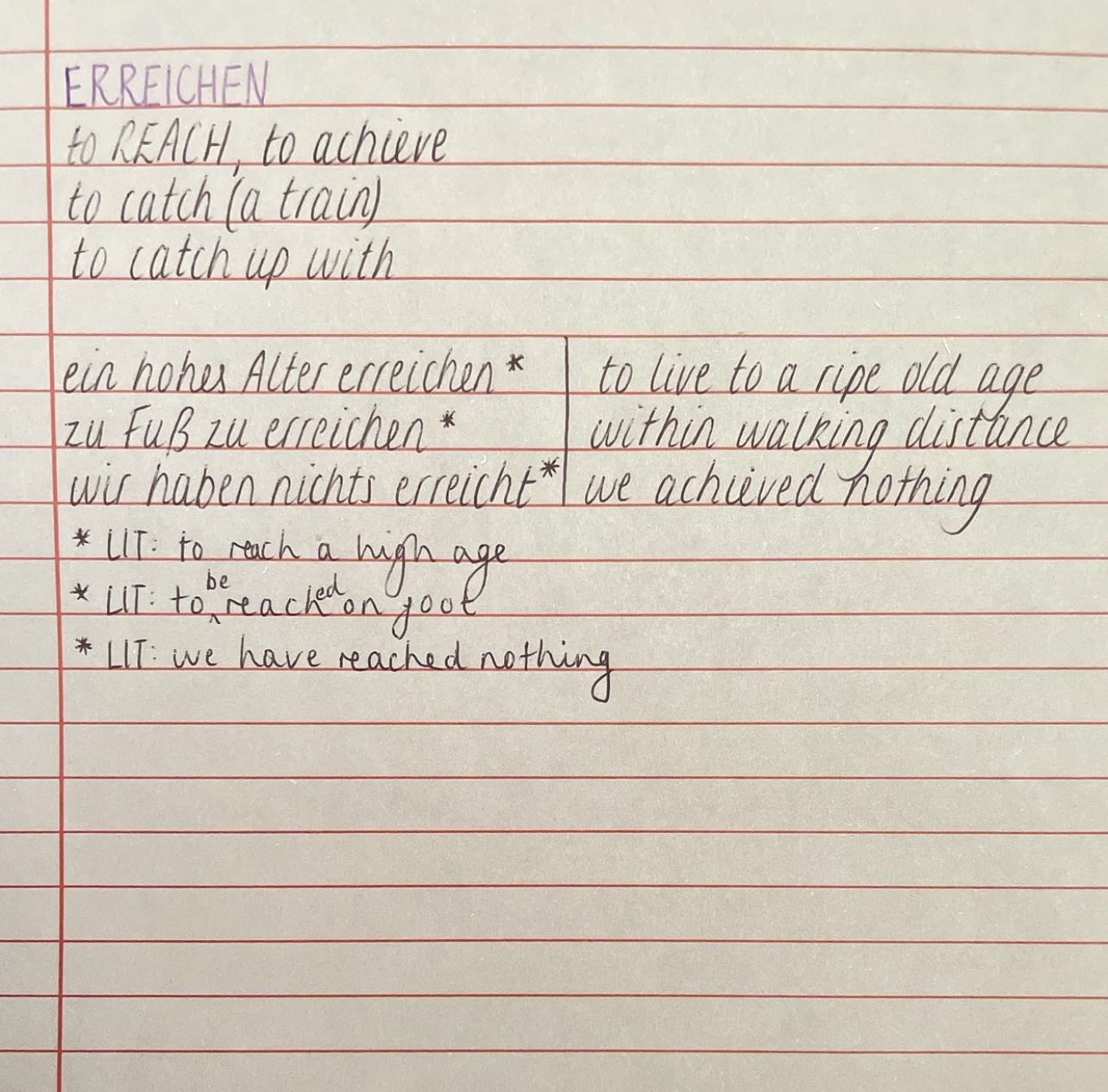
German Words by Tamsin:


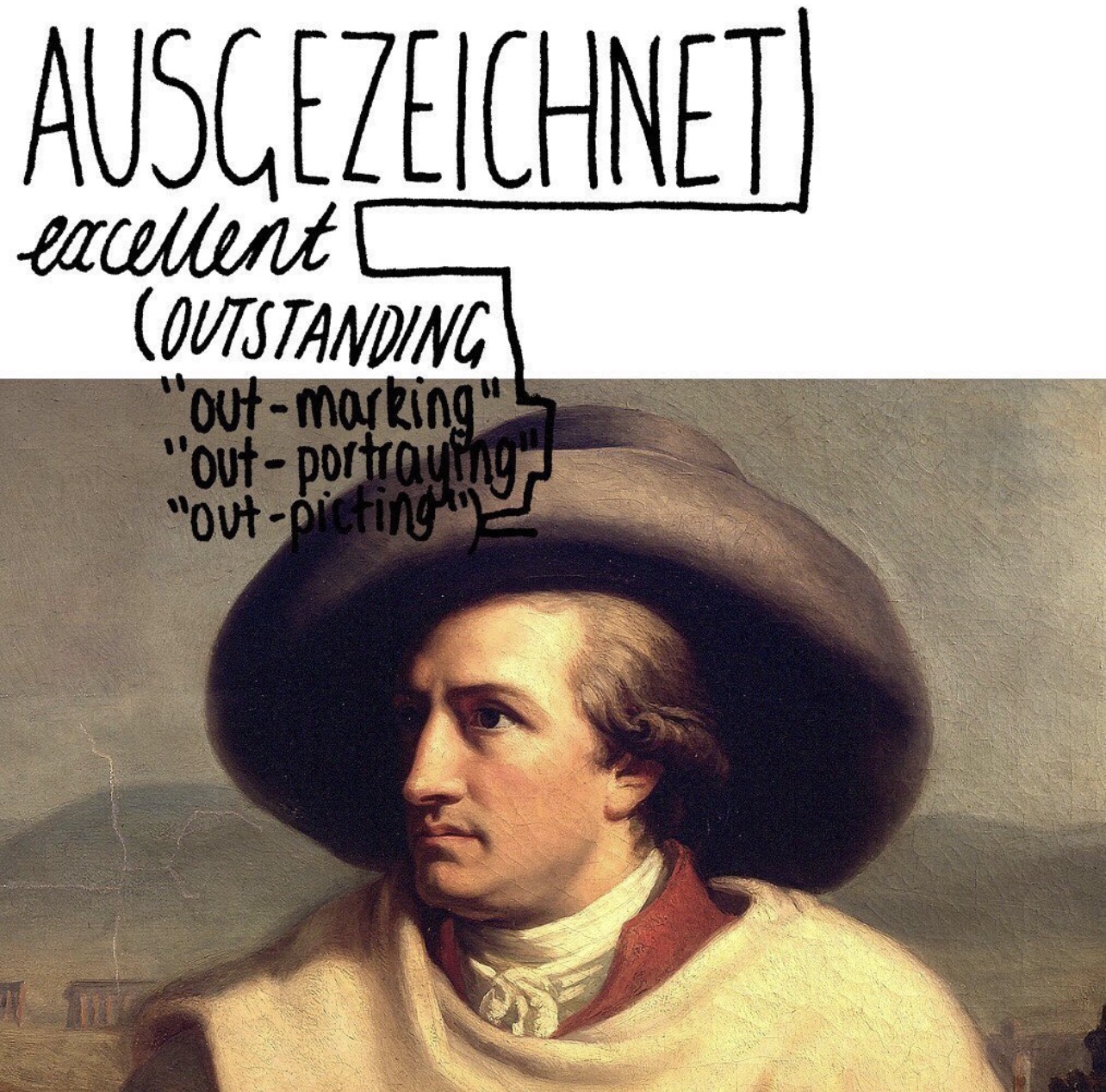
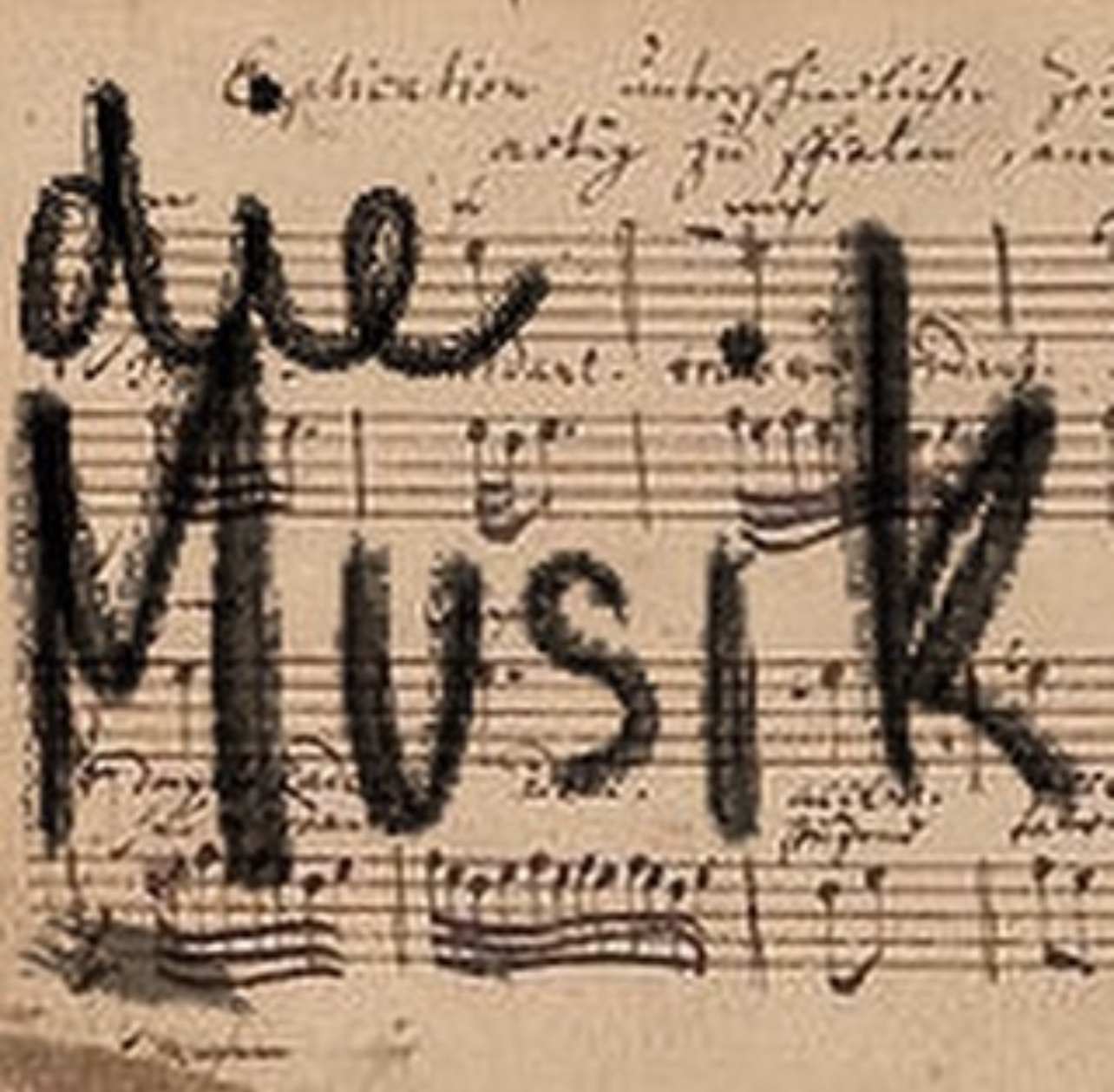

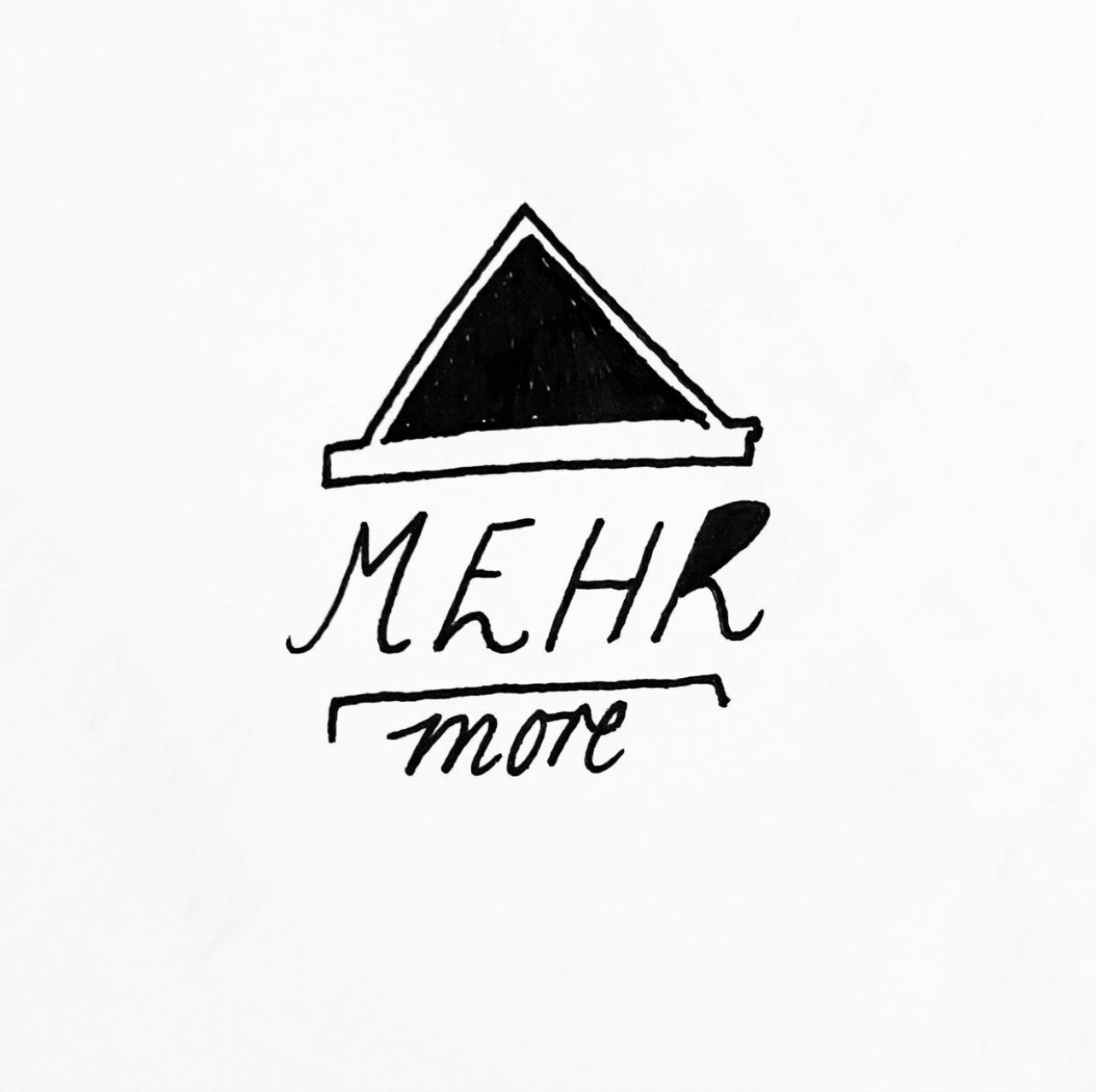
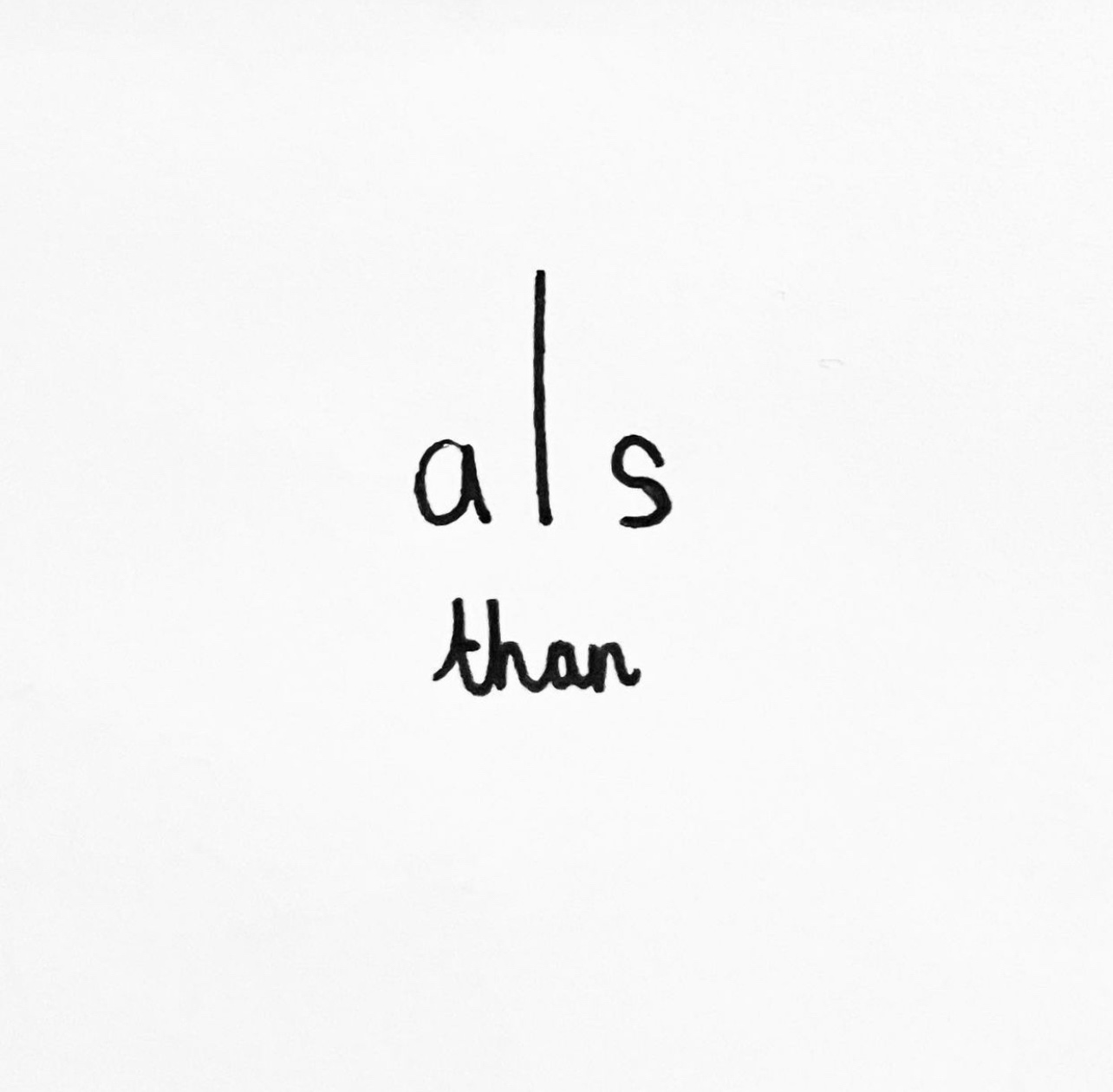



 The Buzz-Concept Project