I first dabbled with the Tongva language, a shrewdly and sharply galvanic Uto-Aztecan/Uto-Aztekan/Uto-Nahuan language historically spoken in spoken in Southern California around Los Angeles (Yaanga) and on Santa Catalina Island around a year-and-a-half ago when I first began to tackle Amerindian philology.
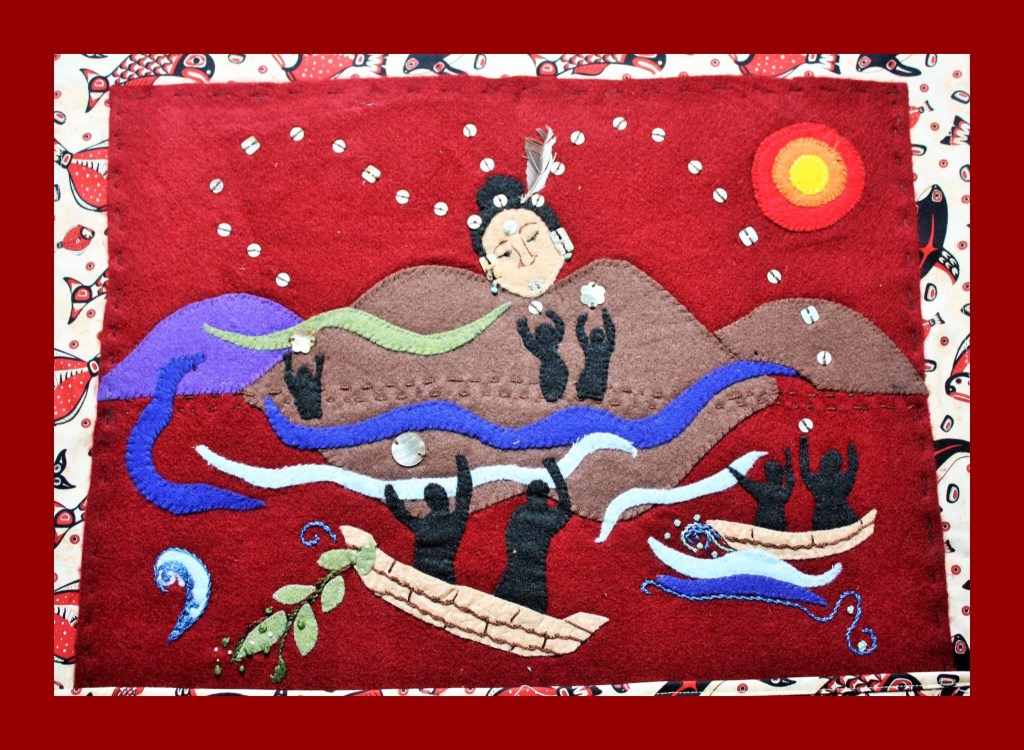

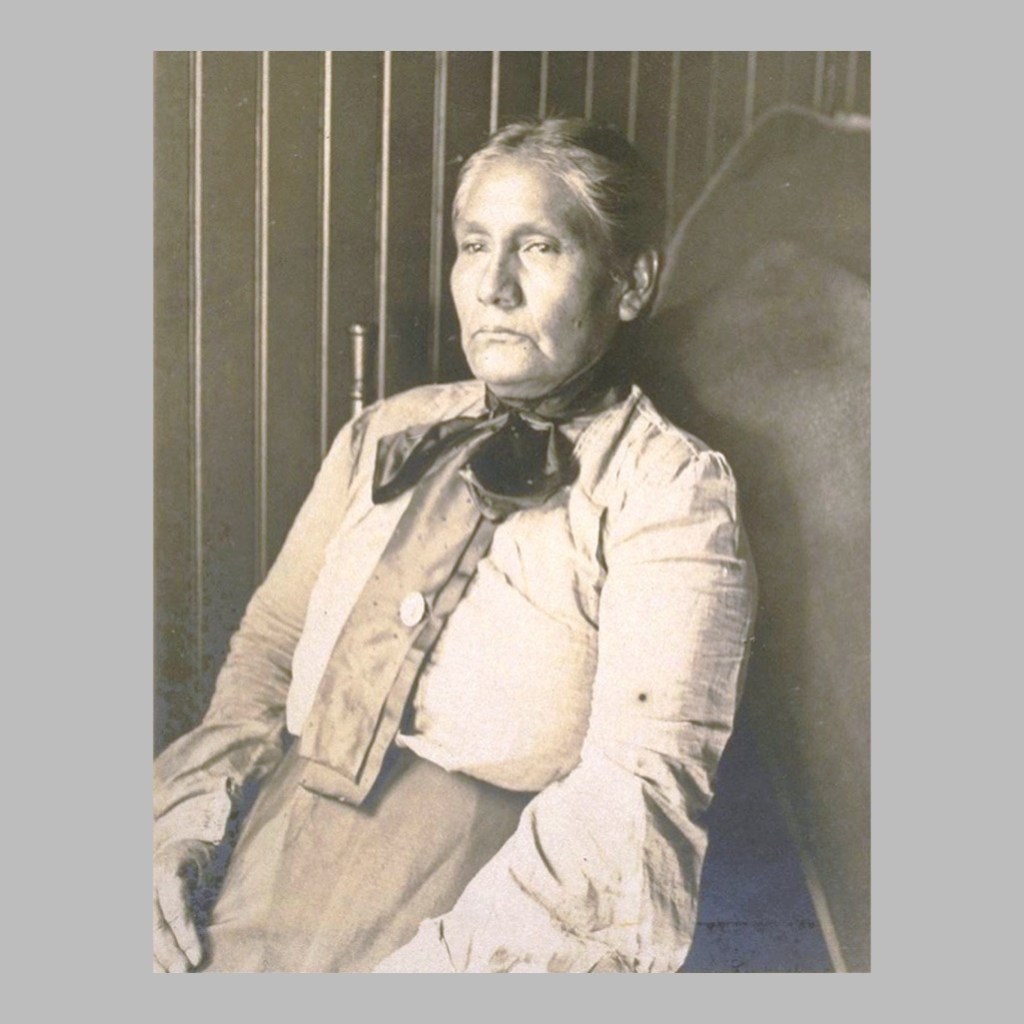
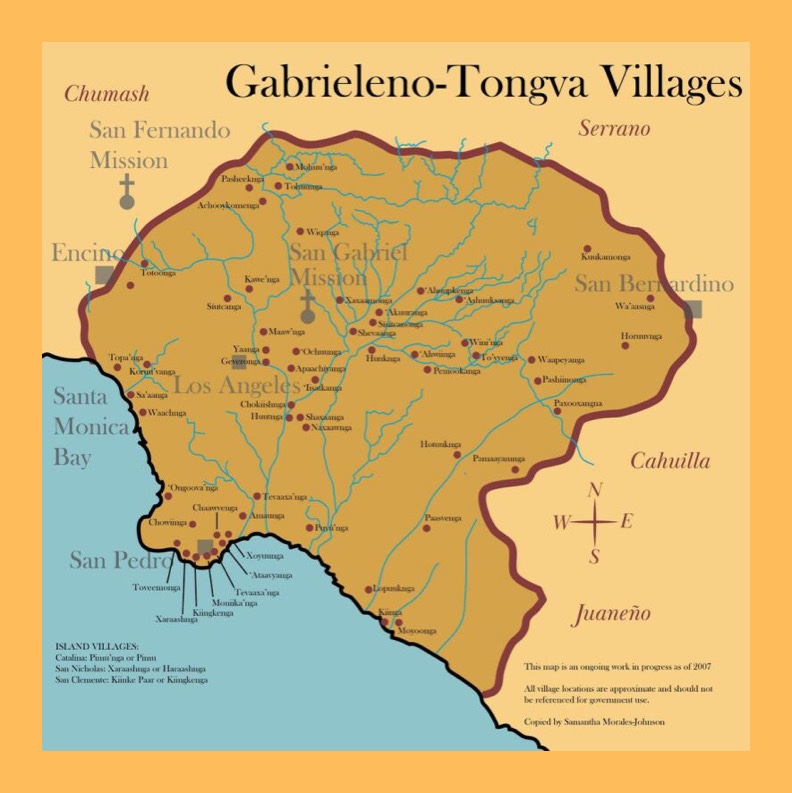
Tongva has not been used in the context of everyday conversation since the 1940s. The last native speakers are understood to have died around 1900, yet the Tongva effervescence and its cultural relevance relating to Los Angeles buzz and popular culture have continually aroused notable external intrigue and interest -including fruitful academic interest- in the language and its legacy.
The Tongva language, also known as Gabrieleño and even Gabrielino (and Kizh), was extensively documented by John Peabody Harrington (1884-1961), a linguist and ethnologist specialising in the indigenous languages and peoples of California. His work with Tongva was not published, but was collected from his massive volume of documentary output for which he was known by the Smithsonian Museum’s Bureau of American Ethnology. His stunning approximately 6,000 pages of notes on the Tongva language, called the “J.P. Harrington Project”, were coded for documentation by a Tongva indigene with the Smithsonian overseeing the pertinent endeavour through UC Davis (the University of California, Davis). The task took 3 years to complete.
The revitalisation work of UCLA (University of California, Los Angeles) linguist Pamela Munro with *”the first language of Los Angeles” has also been highlighted by the Los Angeles Times. She has come so far as to provide monthly Tongva language classes to adults and children, entailing pronunciation practice, mastership of grammatical particles, and even singing songs and playing word games! Moreover, Munro has compiled a Tongva dictionary consisting of over 1,000 words, as well as maintaining a Facebook page for posting Tongva words, phrases and songs.
* Thomas Curwen, L.A. Times (May 9 2019 4 AM PT)


Pamela Munro records on her website that she has done fieldwork with or published on a huge number of languages, all Native American of a range of families including Uto-Aztecan (of course) and Muskogean, except for Wolof which is a Niger-Kordofanian language spoken in Senegal and Gambia in West Africa. Her technical focus revolves her devout belief that that it is “vital to make linguistic findings available to native speakers and other interested laymen through accurate, accessible descriptive and pedagogical materials, including dictionaries. I am particularly interested in working out better ways to make dictionaries, since I feel that this process generally illuminates most aspects of grammar.” Beyond this -beyond the arguable trap of meniality and mundanity her role slips into- she is a noteworthy linguist for her contributions -highly specialised but ultimately visionary- towards the building of certain bridges between Amerindian peoples and language families; between dimensions of the Amerindian world, life, existence; between the American elite, especially the intelligentsia, and the original Americans i.e. Natives, and also between hypothetical select groupings of outsiders whose input might be conveniently complementary. Her aforementioned Gabrielino / Tongva / Fernandeño dictionary is based upon notes first made by J.P. Harrington and others. Otherwise, she teaches Linguistics enthusiastically at UCLA.

Children in the 4th grade (aged 9-10) in Los Angeles study Californian Indians as part of their curriculum, and thereby learn that original language of Los Angeles is Tongva, which was once spoken in villages all around the L.A. Basin. Local place names like “Tujunga” (from Tongva Tuhuunga “place of the old woman”) and “Cahuenga” (from Kawee’nga “place of the fox”) were derived thence. Today, of course, the language is very palpably dead, not having been spoken for more than 50 years, while still garnering significant interest among local Natives and linguists like Pam, who recalls in an article for TIME first encountering Tongva “shortly after I began teaching at UCLA 40 years ago, when my mentor, the late Professor William Bright, introduced me to the field notes of J. P. Harrington, an ethnographer and linguist who worked with Tongva speakers during the early 20th century.” She was frustrated by the fact that even though these notes constitute the single best resource on the Tongva, the “records are often inconsistent and maddeningly incomplete” as well as inappropriately esoteric and inaccessible in unsettling discordance with the transcendent relevance of the Tongva legacy within the Los Angeles buzz. She became compelled to add some consistent academic openness and warmth to the Tongva sphere. Her career has spanned decades and presided over a remarkable emergence of interest, led by the Tongva tribal council, in the revival of the Tongva language. Efforts began in 2012; since then, they have set up classes, a Tongva Facebook page, and the Tongva-Gabrielino committee has also created. A central desire among interested Tongvans is to be able to pray in their ancestral language, showing us the importance of Tongva spirituality – and incidentally shedding enlightenment as to the destined role of the linguist as communicator/translator/liaison between sprachraums, individuals, even realms of the human experience.


Use of the Tongva language faded not thanks to any lack of value as held by the natives. Rather, it faded into the darkness of genocide and racism at the hands of European settlers. Maintaining touch with their authentic Amerindian tradition was too much for the Tongvans, who, like most other Natives, just couldn’t withstand the harsh visceral intensity of the cultural memories and flashbacks. Yet they never stopped caring and have managed to regain the spark to fight. “California on the eve of contact with Europeans was an exuberant clamor of Native American economies, languages, tribes and individuals,” according to Benjamin Madley as written in “An American Genocide: The United States and the California Indian Catastrophe.” From 1840 to 1873, it is estimated that around 80% of the Californian Indian population died due to settling incursion. Before the arrival of the Spanish in 1769, California was supposedly one of the most linguistically diverse places on Earth. Most of these languages have been reduced to extinction.
At the time of European arrival, the Tongva were the most influential people in the area along with the neighbouring Chumashan-speaking Chumash. They had presided over an extensive trade network -that had poignantly been flourishing- through te’aats (plank-built boats), and a vibrant food and material culture that centred around an Indigenous Amerindian worldview that considered humans as one part of a web of life and not the pinnacle of creation. The Tongva lived well, and their economic exploits cast highly valuable and consequential echoes among Los Angeles locals of all ethnicities even today. Yes, one of the world’s richest locales is still learning from the quirky tribal customs of its local Amerindians.
On October 7 of 1542, the explorer Juan Rodriguez Cabrillo came to be the first European to make contact with the Tongva. The expedition reached Santa Catalina in the Channel Islands, whereupon the ships were greeted by Tongva in a canoe. They were later assigned the name Gabrieleño, from the local Christian mission. The explorers then entered a large bay on the mainland, which they called Baya de los Fumos “Bay of Smokes” thanks to the abundance of smoke fires they noticed there. The Amerindian lifeway was starkly primitive to Europeans, but the community vibes -particularly in this instance- were so majestic and arresting and that the Tongva and Amerindians were allowed subversively to leave their distinguishing marks in the development of modern white American culture — the Spaniards, while brilliant and urbane, were rather deemed unforgiveably repugnant from the other side in an idiosyncratic reverse emotional dynamic that persists today. This bay is believed to be that of San Pedro, where Pamela Munro gives her classes today!
The authentically intricate Tongva society and lifeways soon collapsed as imperious Christian missions and aggressive colonisers resorted to enslavement, forced relocation, also exposing the Natives to Old World diseases they couldn’t weather. There were rebellions and resistance in retaliation, without much success up against the twisted orthodoxy of their colonisers. Famously, Nicolás José and female chief/ medicine woman Toypurina. In 1821, the region was passed over from Spanish to newly independent Mexican hands. In 1848, Mexico would cede California to the United States following the stresses of the Mexican-American War. The memory of the insensitivity with which the Tongva were treated by Europeans persists, indelible from a humanitarian view, their precious land repeatedly stripped and passed around soullessly and wretchedly.
The Tongva are said to understand time to be nonlinear, and communicate in constant reciprocity with their ancestors. Humans were placed within a reciprocal relationship of mutual respect with plants, animals and the land by their creation stories. The majority of Tongva territory was situated in the “Sonoran life zone” -adjacent to the desert- which boasted rich ecological resources of acorn, pine nut, small game, deer, and -by the sea- shellfish, sea mammals and fish.

The local Tongva identity is still very strong, subdued only by practical obstacles of proportional representation up against the contemporary global influence of Los Angeles -and Hollywood- in popular culture and especially entertainment. In August of 2021, seven provocative billboards seeded by the NDN Collective’s Radical Imagination grant programme were set up in the Los Angeles area to assist recognition and promotion of social justice for the local Tongva people -whose cultural legacy sits firmly and indelibly yet poignantly and awkwardly at the searing effervescent centre of Los Angeles’ acute modern relevance- reminding residents that “It’s Tongva land” that they also get to call home.


The corresponding Tongva Uto-Aztecan verve has indeed dazzlingly survived the impacts of gruesome genocide; in 1800, the Indigenous population of California is estimated to have numbered over 200,000, yet by 1900 genocide executed by white settlers had reduced them to perhaps 15,000. As artist-photographer Cara Romero boldly underlined: “We are still here,” although “Most Californians do not know this history, and do not understand modern Native struggles for recognition and cultural landscape preservation… We are literally invisible.”

Modern Tongvans have nonetheless admittedly been detached within the Los Angeles buzz from their ancestors’ authentic traditions. But still, their grounded, rationalised, consistent, sound sense of belonging and entitlement have -circumspectly- not been surrendered.
“There are places where the waters bubble up from the Earth that have been flowing for thousands of years and where Tongva descendants can come and feel closeness with their ancestors… These places are rightfully theirs… We came to visit the springs [at Kuruvungna] and took the day to play in the waters and commune with the place. In many Native cultures, it is the women who hold the power to commune with Mother Earth and heal and keep the spaces.” (- Cara Romero)


The Lord’s Prayer in Tongva:
/ The Lord’s Prayer is called ‘Eyoonak in Tongva: /
‘Eyoonak
‘Eyoonak, ‘eyooken tokuupanga’e xaa;
hoyuuykoy motwaanyan;
moxariin mokiimen tokuupra;
maay mo’wiishme meyii ‘ooxor ‘eyaa tokuupar.
Hamaare, ‘eyoone’ maxaare’ ‘wee taamet,
koy ‘oovonre’ ‘eyoomamaayntar momoohaysh, miyii ‘eyaare
‘oovonax ‘eyoohiino ‘eyooyha’;
koy xaare’ maayn ‘iitam momoohaysh,
koy xaa mohuu’esh.
‘Wee menee’ xaa’e.
Tongva numbers, collected by C. Hart Merriam (1903) | Alexander Taylor (1860) | Dr. Oscar Loew (1875) | (Charles Wilkes, 1838-42):
- 1. Po-koo, po-koo, pu-gu’, (pukū)
- 2. Wěh-hā, wa-hay, ve-he’, (wehē)
- 3. Pah-hā, pa-hey, pa’-hi, (pāhe)
- 4. Wah-chah, wat-sa, va-tcha’, (watsā)
- 5. Mah-har, mahar, maha’r
- 6. Pah-vah-hā, pawahe, pa-va’he
- 7. Wah-chah-kav-e-ah, wat-sa-kabiya, vatcha’-kabya’
- 8. Wa-ha’s-wah-chah, wa-hish-watchsa, vehesh-vatcha’
- 9. Mah-ha’hr-kav-e-ah, mahar-cabearka, mahar-kabya’
- 10. Wa-hās-mah-hah’r, wa-hish-mar, vehes-mahar
- 11. Wa-hā’s-mah-hah’r-koi-po-koo, (–), puku-hurura
- 12. Wa-hā’s-mah-hah’r-koi-wěh-hā, (–), vehe-hurura
\ According to Taylor, the Tongva “do not count further than ten.” \
Sample Tongva expressions:
Mopuushtenpo xaa mochoova! ~ May your strength be with you!
Yaraarkomokre’e ~ I remember you
Totaara’e piik ~ He is throwing the rock
Paararne xaa ~ I’m thirsty
‘Aweeshkone xaa, ‘ekwaa’a xaa! ~ I’m happy you’re here!
Heniike’am mohiin tameevngey? ~ How old are you?
… nehiin tameevngey ~ I’m … years old
Tomii’aa! ~ Be quiet!
Courtesy of the LA Times:
Tovaangar [To-VAA-ngar] (ng as in “singer” not “finger”) — “Tongvaland”!!! … literally meaning “the world” – “this hill and everything around it, as seen through the eyes of the Tongva, the first residents of the land… This world was theirs before it belonged to anyone else, before strangers arrived and began to bend the region to their will and Tovaangar disappeared… Smoke no longer rose from signal fires, chewee’et chaavot. The tall grass, mamaahar, vanished. Rivers, papaaxayt, changed course, and stars, shushuu’ram, faded from the sky.” **

Wereechey chinuuho ‘epeekmok she’iinga. = The itsy bitsy spider climbed the tule stalk.
hyoonax = know
pavaaynax = give water to
‘ashuuynak = bathe
/ The yn of pavaaynax/‘ashuuynak etc. is causative. Hyoonax = “know”, but: “If we create a word for ‘to cause to know’, we would need to put a yn in it.”*** Hence… /
hyoonayn‘ar = teacher (i.e. someone who causes people to know things by teaching them)

pakiishar = hawk

naavot = prickly pear cactus
Naavot xaa maneema’. = This is a prickly pear cactus.
paa’or = sage
sheveer = sycamore
woshii’ = dog
paaxarengar cheyuu’ = golfinch, “the sunflower bird”
Taamet pakook. = The sun is rising.
Huunar kii. = The bear is coming.


** Thomas Curwen “Finding Tovaangar” (May 9, 2019)
*** Pamela Munro (1947-), UCLA
🐻 huunar = bear
yayaayt = bird 🕊🐦🐥
🌻 paaxar = sunflower
taamet = sun 🌞☀️🌅
🌳 wiit = oak (tree)
shu’iit = jackrabbit 🐇🐰🐒
🦌 shukaat = deer
paxaayt = river 🏞💙〰️
🦎 chiruuko’ = lizard
kakaar = quail 🪶🕊♤
ꙮ ‘ochuur = wild rose
naavot = prickly pear cactus 🧩🌵🍐
🦮 woshii’ = dog
moomat = ocean 🌊🌎🐳
🦪 ‘aapo’ = abalone
kavuukar = island 🗾🏝🗺
🐋 kyoot = whale
shuur = star 🌟 💫🌌
🔥 chaavot = fire
pakiishar chinuuy = nighthawk 🐦🌃🦅
🐺 ‘iitar = coyote
muuhut = owl🦉🧙🏻♀️👁🗨
🌝 mwaar = moon

I wonder where Los Angeles natives get their trademark effervescence from!


paara’ = water
kwaakwa’ = red❤️💔❤️🔥❤️🩹❣️❌🛑🔴🟥
payuuhuwi’ = yellow💛🔅🔆〽️⚠️🚸🟡🟨
takaapi’ = green💚♻️✅🟢🟩
saakaska’ = blue💙🌐🌀🅿️🚹⚧🔵🟦
shushuu’ram = stars (plural)
tovanger, tovangar, tovaangar = world
Wiishmenokre / ‘Wiishmenokre = I love you; «|I express my love for you|»☑️
xaayy = mountain
Miyiiha’s = Hello (literally: “say what?”)
kihaayy = fiesta; ceremonial house; church
naxaakwax = listen to, hear
Tokoor naxaakwax worooyta. = The woman listens to the man.
Xaay naxaakwax tokoora worooyt. = The man doesn’t listen to the woman.
xaay = no
Xaayne hyoonax. = I don’t know. – xaay not; -ne I; hyoonax know ~ Me, yeah, hi – no, no clue, no
‘wee = all
Shishiinamokne Toongve. = I am speaking in Tongva.
maaynok = make, do
- Hitaaha’a maaynok? What are you doing? What are you making?
- Maayrone. = I’m going to do it. I’m going to make it.
- maay- verb stem
- -nok verb class ending
- -ro- future ending
- -ne I
‘aa- = gather, harvest
- ‘Aarone. = I will gather it.
- -ro- future ending
- -ne I
- maaxay- = gather greens
- Maaxayrone. = I will gather greens.
xongiit = squirrel

- ‘Aweeshkone xaa. = I am happy.
- ‘aweeshko = happy
- ne = I
- xaa = be
Topaa’ve Tuhuung’aro = from Topanga to Tujunga
Chongaa’aa kukuume’a! = Wash the dishes!
Yaara’ shiraaw’ax ‘eyooshiraaw’a = Now you’re speaking our language (the name of Pam Munro & Julia Bogany’s dictionary)


#Tongvanity: the Philological Economics
Well, from a philological standing: Tongva is so intriguingly an Orientalesque (Amurian/Mongoloid) language, making it related –albeit very, very distantly– to Chinese! The “O/A/M” languages (the “Conceptual-Abstract” Tongues) are characterised by “abstract lexicology, sharp phonology, innovative morphology… and efficacious ideologies” (click immediately preceding link). The OAM primary language family contains Amerindian-Siberian, Mongolic, Sino-Tibetan, and Korean–Japanese. The Amerindian-Siberian languages, including all -yes, all- the indigenous languages of the Americas plus the Paleo-Siberian geographical grouping of Russia’s Far East, can be viewed as the “Boundless” Tongues – all buzzing about infinity or something derivative. The rest of OAM, meanwhile, can be grouped together as the Oriental languages – the “Efficient” Tongues, buzzing about things connected to efficiency.
As classified by me, Southern Amerindian languages include Quechua, Mayan, Guarani, and Nahuatl/Aztec. The Northern Amerindian language grouping (spoken above Uto-Aztecan land and across Beringia into Siberia) includes Trans-Siberian-American -as I propose- which includes Muskogean (Choctaw, Chickasaw, Muskogee/Creek, Alabama, Appalachee…), Na-Dené (Navajo, Apache, Koyukon, Eyak, Tlingit…), Eskimo-Aleut (Inuit, Yupik, Aleut) within North America; related Paleo-Siberian languages of Siberia, currently grouped geographically for pragmatic ends, include Nivkh(ic), Ainu(ic), Chukotko-Kamchatkan (Chukchi, Kamchatic/Kamchadal/Itelmen), Yukaghir (Yukaghir, Kolyma…), Yeniseian (Ket…). Also in Russia’s Far East and parts of China’s Amur borderlands, we have the Tungusic languages (Manchu, Xibe, Ewenki/Tungus, Even, Oroqen/Elunchun, Nanai/Goldi/Hezhen, Orok/Uilta). The Tungusic languages are often linked to the Turkic and Mongolic languages, and sometimes others still, within the proposed Altaic family – which I disagree with. Some other Northern Amerindian languages you may well have heard of are Cree, Ojibwe, Sioux, Cherokee, Mohawk, Tshimshian, and Tuscarora.
OAM languages hold infinite technical fascination for linguists and other specialists from psycholinguistic (psychological), cognitive, and neurolinguistic (neurological) perspectives – and perhaps beyond, as per the flow of inspiration. They have all been judiciously moulded by the generations after successive generations of OAM peoples to enhance the capacity for reason, sapience, sensitivity, perception, perspective – as well as to foster efficacious, efficient, effective customs of communication, thinking and activity. The world’s tech industry hinges off the innermost workings of the cycles of “Orientalescence” as I call it -exploratively- and indeed, notice that the world’s front-running “tech nationalities” have OAM affiliation – the USA, China, Japan, (South) Korea (oh no, North Korea is not excluded from the action, from a subversive angle), Singapore…
Key European players tap in to the lucrative flow through their alliance with the United States, but also through the historic intellectual intertwinement of the trajectories of “Nostraticism” or even “Western-ness”, and “Orientalescence” – and vice versa from an Orientalist standing. China versus the USA? Orientalism vs. Occidentalism? East vs. West? Them vs. us? Us vs. them? The rest vs. the West? Left vs. right? (Social) conservativism vs. (economism) liberalism? Socialism vs. capitalism? (Hypocritical) egalitarianism vs. (earnest) elitism? Asceticism vs. liberty? Life vs. Uncle Sam? A prissy, tightly-wound Columbia vs. a spreadeagle, confused Uncle Sam? Yellow vs. white? The Mongoloids vs. the Caucasians? Orientalescence vs. Nostraticism? And who wins exactly – really? And is it a { rightful, definitive, theoretical, technical, subversive, groundless, ambiguous, evolutionary… } sort of win? Veeery interesting to contemplate – have a think if you aren’t already, because the answer is certainly not straightforward, with implications so extreme as to qualify -beyond the social, economic and political- as biological, even cellular, and philosophical, even metaphysical! The all-important pivot is materialising right here, right now, at this contemporaneous point in world history – having imperatively contoured our fates in the solemn era/years since the despair of the Middle East met the Credit Crunch.
Probing further still, within the Southern Amerindian languages, Tongva / ‘eyooshiraaw‘ is an Uto-Aztecan language of the Northern > Californian > Serran sub-branches as recorded by Glottolog, making it most closely related to Serrano / Maarrênga’twich of inland Southern California. “SoCal”, the ever-topical meridional portion of the sparkling, populous, state of California (a.k.a. the 🔱Golden✨ State, so-called by no means just because they live so well) is set strongly apart within the United States because of the overwhelmingly Uto-Aztecan and therefore Southern Amerindian flavour of the Native quiddity aligned with this highly populated and intensely influential region. The Uto-Aztecan peoples are also the vibrant Amerindians, and ~THE~ Amerindians. Why is California just so interminably buzzy and fearlessly independent-spirited?
The Uto-Aztecan language family is one of the Americas’ largest in terms of number of speakers, number of languages, and geographic extension. Ethnologue’s count of the total number of languages in the family is given at 61. For number of speakers, 1,900,412 were recorded in 2014. Four-fifths of these are speakers of Nahuatl (alternatively previously known as Aztec or Mexicano). Sources such as Glottolog present the family as divided between Northern and Southern groupings, the former encompassing all such languages spoken in the USA and the latter those across the border in Hispanophone Mexico / México / Mexko / Meejiko / Ñuu Koꞌyo / Mꞌonda. Whether or not the division is legitimately genetic or pragmatically geographical is ambiguous and still up for discussion. Below this, meanwhile, the classification of the main branches is accepted thus: Numic (Northern – including Comanche Nʉmʉ Tekwapʉ̲ [ˈnɨmɨ ˈtekʷapɨ̥] and Shoshoni Sosoni’ ta̲i̲kwappe, Neme ta̲i̲kwappeh), Takic (now standardly termed Californian, also Northern, including Cahuilla Ivilyuat [ʔivɪʎʊʔat] and Luiseño / Chamꞌteela, alongside Tongva and Serrano), Hopi, Tübatalabal, Tepiman (now into the proposed Southern zone – including O’odham ʼOʼodham ha-ñeʼokĭ, ʼOʼodham ñiʼokĭ, Oʼodham ñiok and Tepehuán O’otham), Tarahumaran (including Raramuri/Tarahumara Rarámuri/Ralámuli ra’ícha “people language” and Guarijio/Guarijío/Huarijio/Huarijío/Varihío/Warihío), Cahitan (including Yaqui/Hiaki/Yoeme/Yoem Noki and Mayo, Yorem Nokki), Coracholan (including Cora naáyarite and Huichol Wixárika, Wixárika Niukiyari), and the Nahuan languages (including not just Nahuatl, but also Pipil/Nāwat and the extinct Pochutec / Pochutla). The northernmost Uto-Aztecan language is Shoshoni, spoken as far north as Salmon, Idaho (pretty close to the Canadian border, in fact), while its southernmost counterpart is Pipil of El Salvador.


TONGVA: the world’s most evocative language?
“Orientalescence” being what it is, the Uto-Aztecans are no particularly outstanding trailblazers within the family. All around the world, many sprachraums have found themselves as compelled -like the Russians, the nuances whose language are characteristically and exceptionally evocative, and their Slavonic forebears- and often more compelled -as among the world’s OAMs- by the ingrained feature of vigorous sensorial evocation as by that of the fabulous refinement exemplified by Europe’s great cultures and literary tongues. It is the enhanced acuity and sensibility of the “Orientalescence” in its ultra-refined form within the Tongva language that make it the world’s most evocative -thinking somewhat more scientifically than poetically- as it was historically authentically spoken — alongside its painstakingly discerned Serran nuances and naturalistically reconciled signifier-signified parallels, remarkable within the Amerindian world which eschews strained, artificial, affected orderliness and its elemental day-by-day, quotidian, ~circadian• restrictions, and contrived engineering of momentaneous fate.


Another noteworthy figure in Tongva studies is that of Alfred Louis Kroeber (1876-1960). A. L. Kroeber had been called “the dean of American anthropology”, a founder of the American Anthropological Association in 1902 (president 1917–18), president of the American Folklore Society (1906), and a founder of the Linguistic Society of America (president 1940). Much of his work was devoted to California’s Indian peoples, although he had an amazing range. Kroeber’s prodigious mind sought to find patterns, dynamics, processes, preferences of culture; culture was extremely precious to him. According to some students and subsequent colleagues of his: (Robert Heizer, George Foster, and Theodore McCown 1962) “[Kroeber’s] search for cultural patterns obtrudes in papers on such diverse subjects as changes in women’s fashions, prehistoric South American art styles, Mohave epic tales, classificatory systems of relationship, [types of] arrow release […], basketry techniques and designs, aboriginal American Religious [movements], [and] Romance languages.” It was the unique, subversive, renegade, isolated patterns or dynamics or substance of Amerindian (OAM) culture, and the corresponding lurking consequences for Western tradition, that concerned Kroeber. He saw strange parallels between the mechanics of Amerindian culture and his own. He fixated on “the probabilistic reconstruction of connections between cultural forms both temporally and spatially” (1981), which led him over the course of this career to evaluate phenomena such as arts (California basketry, Peruvian pottery, for example), ceremonies, rituals, complex traits, which in seeking to identify directions and processes of mutation he deemed markedly “developed”.
Kroeber obtained his PhD from Columbia in 1901, the first doctorate in anthropology ever awarded by the institution. His dissertation was a study of Arapaho decorative symbolism and was based on fieldwork carried out in Wyoming and Oklahoma. He gained a highly valuable universal insight into the Amerindian world from the study of just that one Algic people. In the same year he was hired by the University of California at Berkeley to set up a department and a museum of anthropology and remained with them until retiring from the department in 1946 at the age of 70. The Californian Indians he became immediately fascinated by were American Indians -adhered to the Buzz-Concept infinity– like he was used to, but in California things were different, for some ineffable reason he sought to elucidate – which I can now clarify is due to divergence between language families. The Californian effervescence fascinated him endlessly, leading him down an illustrious path. To Kroeber, nonetheless, the preservation of perceived lowly Amerindian culture was always a sacred task. “When he first visited California in 1900, the California Indians were little known and of little interest to anthropologists. At the time of his death probably no comparable area of the world had such a large anthropological literature, a substantial portion written by Kroeber himself” (Beals 1968). The intellectual details of the mission he faced -to pave the way for contemporary Amerindian intellectual discourse- proved gruelling and tedious; it was the complementary liberal Californian verve that persuaded him to commit. Although Californian Indians are, unfortunately, a peculiar case within North America, especially from a linguistic/philological standing, and it shows in Kroeber’s output. Nonetheless, his anthropological contribution is stunning. On a routine level, he busied himself over his career challenging rampant ethnocentrism, prejudice, and racism against California’s charismatic Natives, and to set the standard for organising knowledge about them. His major work was entitled Handbook of the Indians of California; published in 1925, it contained 995 pages, 419 illustrations, 40 maps, 26 pages of bibliography, and extensive annotation – as well as the fullest possible descriptions of “some 50 little nations”.

A. L. Kroeber was known as a cultural anthropologist, but made major seminal contributions to linguistics, having been very influential in the genetic classifcation of Native American languages in North America – particularly, being responsible alongside Roland B. Dixon for theoretical groupings such as Penutian and Hokan.


All being said and done, these Native American peoples were utterly loved by the academics who have studied them. Why? For the shortcuts or by-routes their alliance affords with regard to pop and gloablised culture! The evocative potency of Tongva was surely key in attracting this attention.
J.P. Harrington, as mentioned previously, is the best known such academic, whose records on more than ninety languages of North America contain almost a million pages of language material alone, filling over a thousand archival boxes. His “pursuit of linguistic data” is characterised as “relentless” by Cassidy Foxcroft (Reference Intern @ National Anthropological Archives). By the end of his life, he apparently spoke 9 international languages and 18 Native American languages fluently. He was so totally devoted to his work that he adopted an official-minded approach, taking on secret informants and coding his notes to deter other academics from meddling. Accuracy was key and holy to him, and it was this predilection that made for such a resounding match with the vigorous yet paradoxically open Tongva. The arch-perfectionist found great solace from the relations he established with such Amerindians.

Harrington’s work with Tongva is sadly not readily accessible. Analytical information on the Tongva language is thus scarce. I can tell you that it is an agglutinative language, where words use suffixes and multiple morphemes for a variety of purposes, which is common in the Amerindian family with their evident love of extravagant and innovative morphology.
 The Buzz-Concept Project