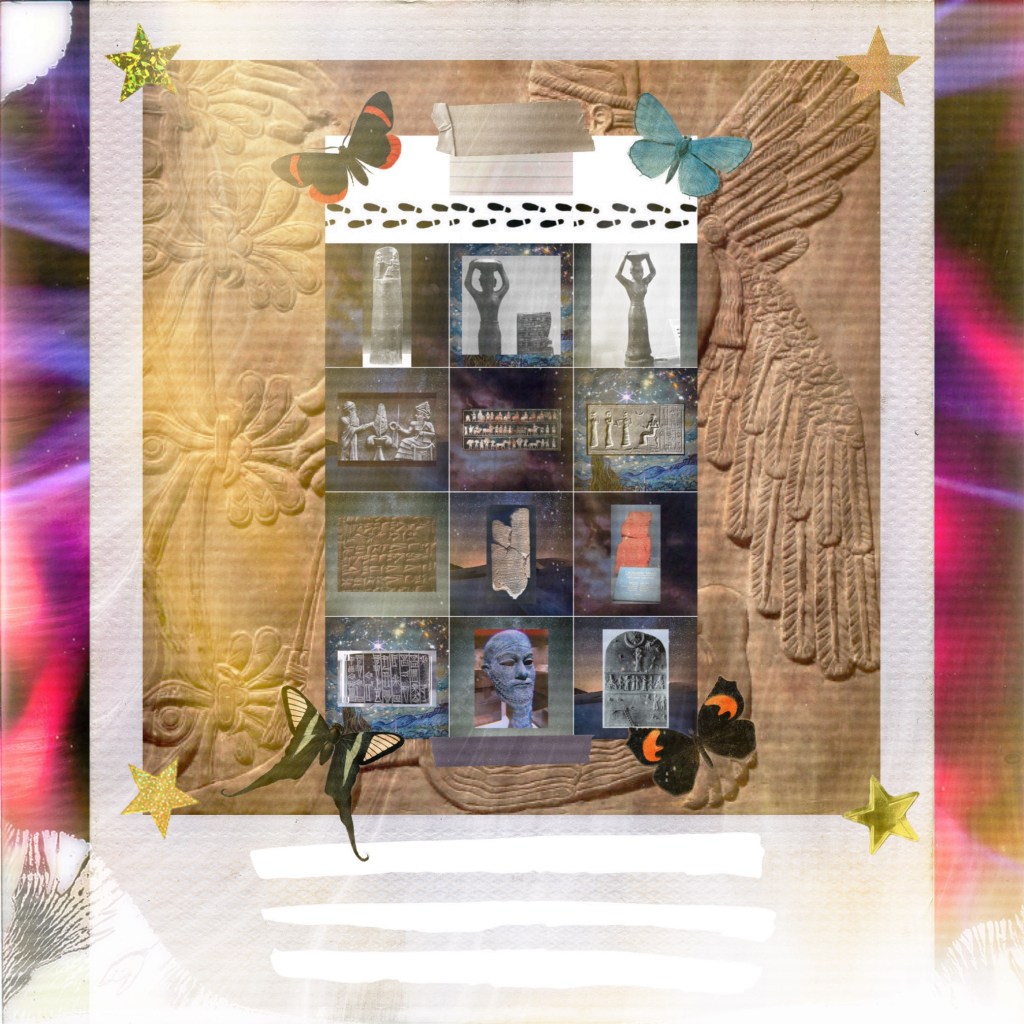


The Code of Ur-Nammu is the oldest known law code surviving today.

It is from Mesopotamia and is written on clay tablets, in the Sumerian language c. 2100–2050 BCE.

The reign of Ur-Nammu is generally regarded to have been peaceful and prosperous.

The Code of Ur-Nammu may be divided into two parts, the first is the prologue and the second is the laws themselves. In the prologue, the deities for Ur-Nammu’s kingship, Nanna and Utu, are invoked, whereupon the king is proclaimed to have established equity in the land, banishing malediction, violence, strife, as well as ensuring the protection of society’s weakest individuals.

The laws in the Code of Ur-Nammu follow a set pattern, i.e. If (insert crime), then (insert punishment).

Presenting himself as the father of his people, Ur-Nammu encouraged his subjects to think of themselves as one transcendently large family of sorts and of his laws as the rules of a home.

… picking the reins of Mesopotamian civilisation up from war, he revitalised the land through policies including public parks, irrigated orchards and city gardens, and sponsorship of the arts. Not to mention restoration of the economy. Marc van de Mieroop: (79) “Since the state’s assets were so enormous, including fields, fishing grounds, manufacturing workshops, and so on, the demand for manpower was very high. The Ur III state was not a totalitarian regime whose inhabitants were fully subjected to the bureaucracy, so labor had to be recruited by offering sufficient compensation. Many of the texts we have record the issuing of rations, which had to be taken from the state’s central resources.” Building projects multiplied and Sumer’s city-states flourished. Ur-Nammu instituted his law code to secure these developments in place.

Remarkably, Ur-Nammu recognised the power of individual will and responsibility – but really interpreted as the power of religious beliefs to affect personal behavior and so presented his laws as having been received from the gods. He seems to have ensured people understood the king was merely administrator, and when someone broke the law, they were rebelling against the divine will.

Materialised in cuneiform script, Ur-Nammu’s law code existed some three centuries prior to Babylonian king Hammurabi’s famous Code of Hammurabi.
 The Buzz-Concept Project