
I expend so much effort here at the Buzz-Concept Project on bigging up “Orientalescence” and the futuristic capabilities for technological advancement etc. it carries. But the world’s largest -and our front-running- Orientalesque country is a developing one without the streamlined culture to develop this strength to full capacity as has happened with stunning effect in Japan and South Korea (and the USA, even though Native Americans are sidelined within their ancestral homeland they still make their marks). This morning I found an article by Debora Mackenzie of The New Scientist about the historic role rice has played in Chinese culture, entitled How your ancestors’ farms shaped your thinking. Such a refreshing new angle for me to consider Chinese culture from, rice actually being the missing puzzle piece in my previous contemplations of China’s position!
Although we are not conscious of it, this is something we Westerners have in common with these emerging Chinese geopolitical players who are so devoutly standing behind their dissonant Orientalist view of the world: we owe so much of our cultural power to the historic role of farming. For China, the development from farming efficiency to economic power has unfolded much more recently and it’s all so much fresher. For us in the West, it first started perhaps over 10,000 years ago with Proto-Indo-European pastoralists in the Pontic-Caspian steppe, when we instituted the cultural custom of glorification after idly noticing how prosperity accumulated alongside hyper-productive agriculturalism. What we have since achieved was all built on top of that agricultural foundation of Western civilisation. In China, the same basic economic epiphany is happening right now – as we start to introspect and turn cynical regarding the whole shebang. That all-important connection between wealth and growth so central in economics is only really being established now in China.


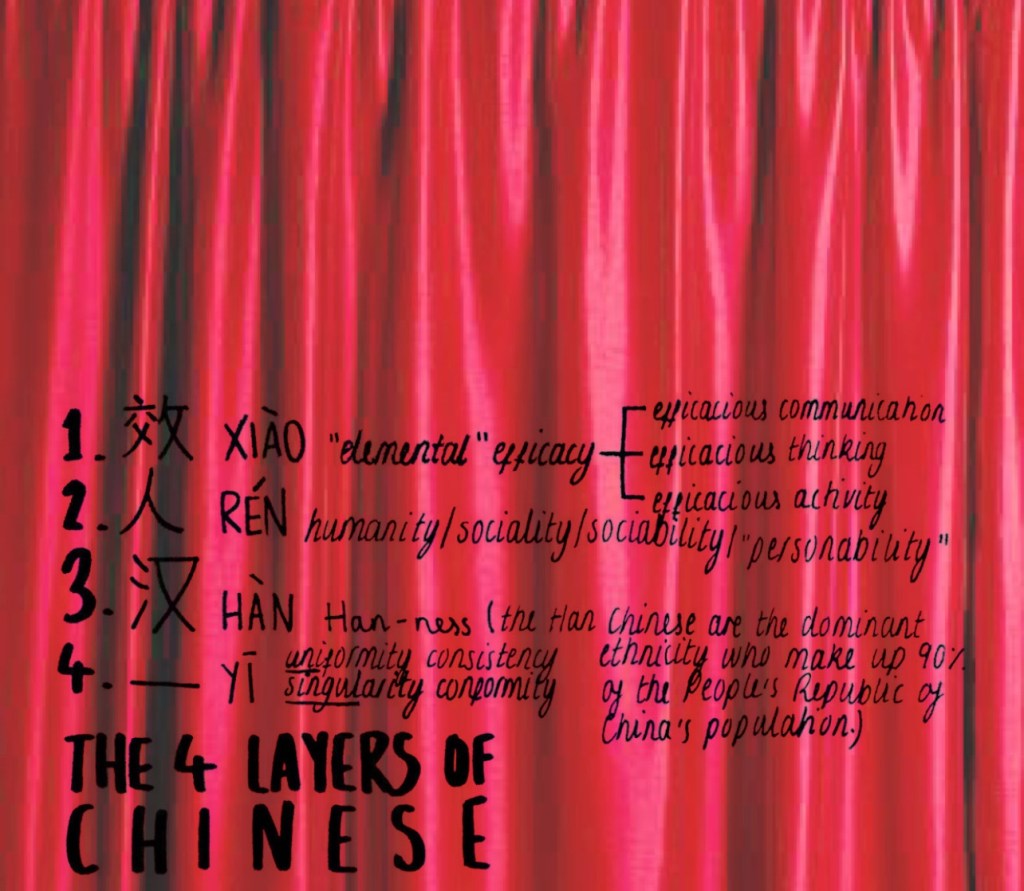
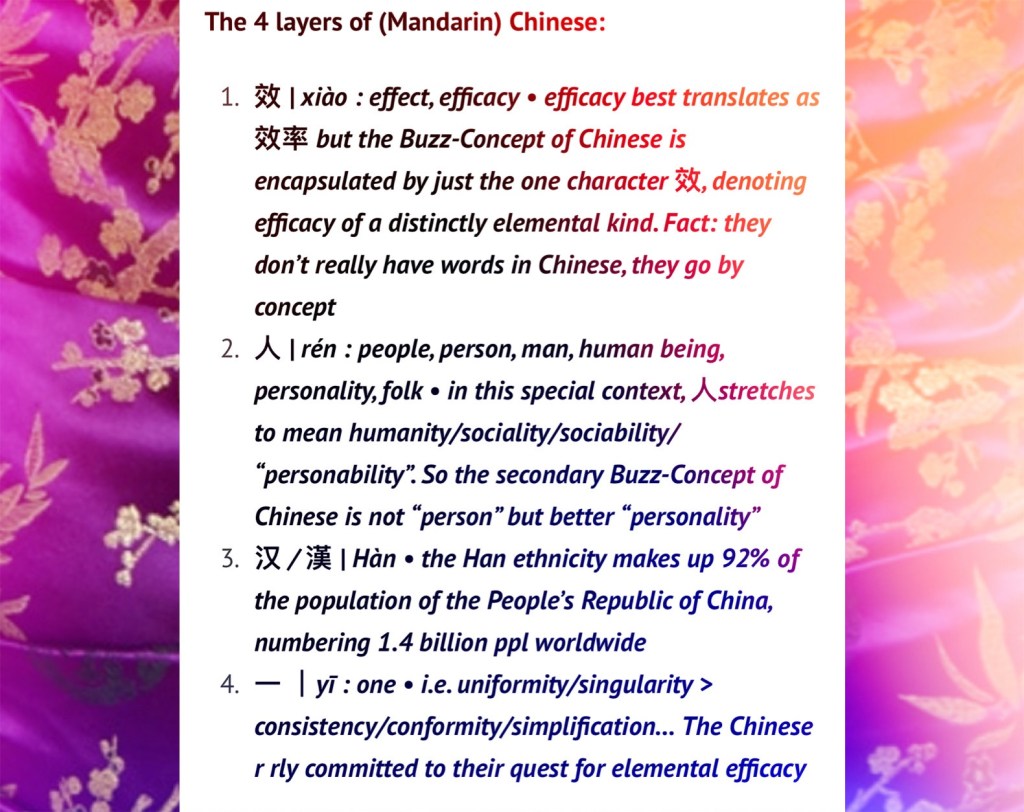
But while wheat farming seems to have propagated individualism here in the West, rice farming which requires “long-term team work” has promoted “collective thinking” in China – as reflected in the four layers of Chinese:

Thomas Talhelm of the University of Virginia in Charlottesville put these ideas to the test. With some colleagues in China, they administered standardised tests for cognitive style, individualism, and in-group loyalty to 1162 Han Chinese students in six cities across China, in wheat or rice-growing areas. Many differences were found. Students from areas where only wheat is cultivated were 56 per cent more likely to think analytically than students from all-rice areas. Rice-growing areas also have fewer patents, reflecting lower capacity for innovation, and fewer divorces, indicating higher conformity, than wheat regions.
Read the article here.
More from me on the Linguistics of China’s Power here.
 The Buzz-Concept Project