Danish / dansk / [ˈdanˀsɡ] 🇩🇰 is a North Germanic language.
Another North Germanic language is Icelandic: Read The treasured case system of Icelandic &/or Ah, Iceland (good vibes!)

It is spoken -mainly- in Denmark / Danmark, by upwards of 5 million. There are also a few thousand Danish speakers in Greenland / Grønland, controlled by Denmark, as well as approx. 1.5 thousand in the Faroe Islands – all three constituent countries of the Kingdom of Denmark / Danmarks Rige. In addition, there are also 39,500 Danish speakers living in Sweden, 28,300 in the USA, 24,900 in Schleswig-Holstein in northern Germany, 21,000 in Norway, 12,600 in Canada, 10,000 in the UK, and smaller numbers in other countries.
Fascinating works by indigenous Greenlandic artist and criminology student Camilla Sejberg (from the sidelines – I am most passionate about Amerindian linguistics…!):


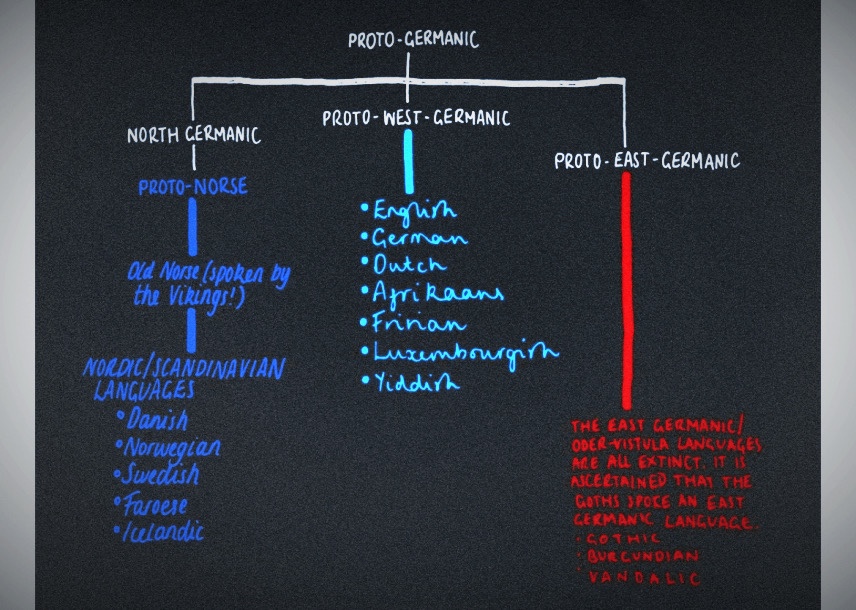
My classification: Nostratic > Indo-European > Western Indo-European > Germanic > North Germanic > East Scandinavian / Continental Scandinavian
The best way to classify the North Germanic languages is between Continental Scandinavian, including Danish, Norwegian and Swedish, and then Insular Nordic, including Faroese, Icelandic, Norn and Greenlandic Norse.
Extinct Norn was spoken in the northerly regions of Orkney, Shetland and Caithness in what is now Scotland until the 19th century. Extinct Greenlandic Norse was spoken in the Norse settlements of Greenland until the late 15th century.
Otherwise, in historical linguistics, the North Germanic family tree is divided into the two main branches of West Scandinavian (Norwegian, Faroese and Icelandic) and East Scandinavian (Danish and Swedish), along with various dialects and varieties. The two branches are understood to derive from the western and eastern dialect groups of Old Norse respectively. There was also a small isolated (Old) Gutnish branch spoken on the Swedish island of Gotland. The continental Scandinavian languages (Swedish, Norwegian and Danish), meanwhile, were heavily influenced by Middle Low German or Middle Saxon during the period of Hanseatic expansion. Due to the long historic political union between Norway and Denmark, Norwegian Bokmål shares most of the Danish vocabulary and grammar.


Bokmål was nearly identical to written Danish until the spelling reform of 1907. It is for this reason that Bokmål and its unofficial, more conservative variant Riksmål are sometimes considered East Scandinavian, while Nynorsk is classed as West Scandinavian via the aforementioned west–east division.
The Danish language is of course the official language of Denmark. In the Faroe Islands, it is co-official with Faroese. It is the statutory national working language in Greenland, and the statutory language of provincial identity in Schleswig-Holstein, Germany. It was also an official language of Norway until around 1830, within the realm of Denmark-Norway, as well as Iceland until 1944. Danish having been an official language in Iceland until 1944, it is today still widely learnt as a second foreign language after English. It is taught compulsorily in Faroese primary schools.
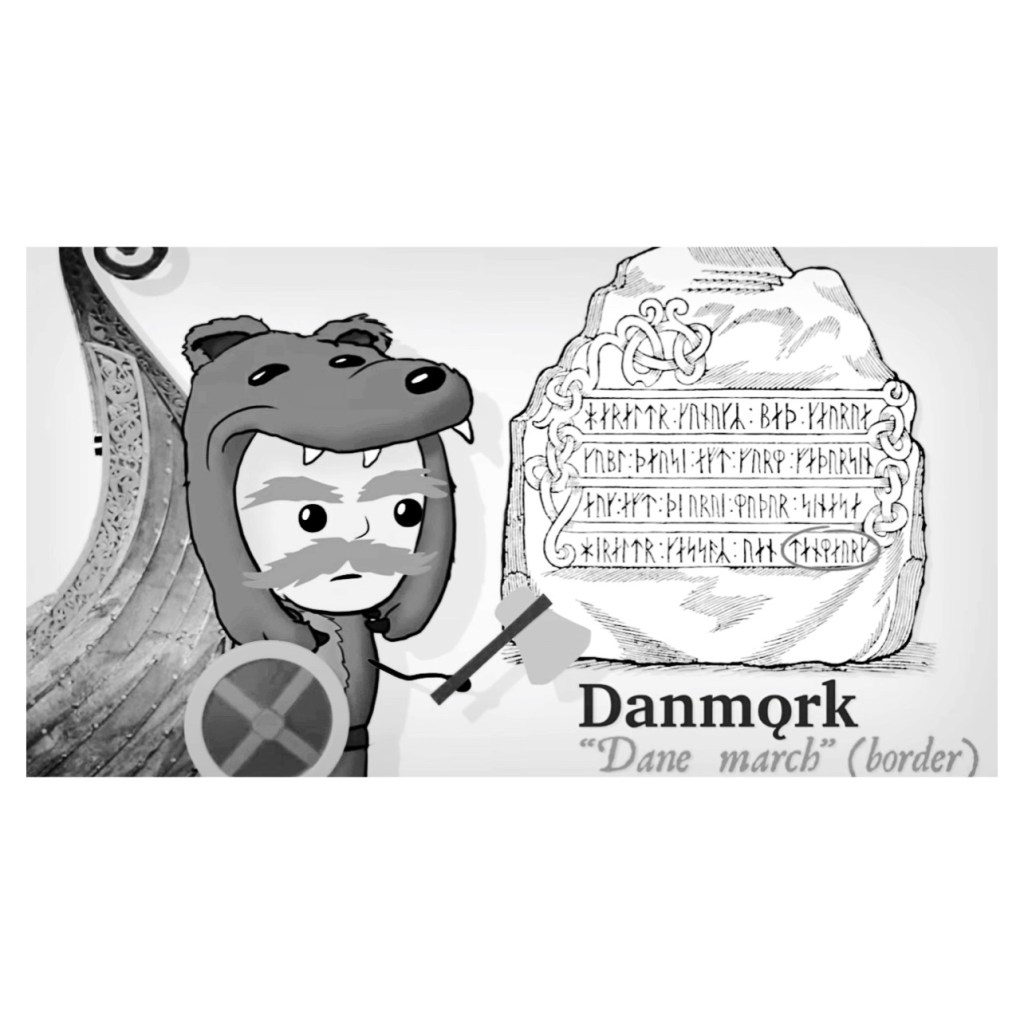
Danish began to emerge from Old East Norse during the 9th century AD, around the same time the Romance languages were being birthed from Vulgar Latin, as a striking parallel. The early forms of Danish are known as Old Danish, and can be divided into Runic Danish/Swedish (800-1100 AD), Early Middle Danish (1100-1350) and Late Middle Danish (1350-1525). Runic Danish/Swedish, used in Denmark and Sweden, was written with the Runic alphabet native to Germanic peoples.
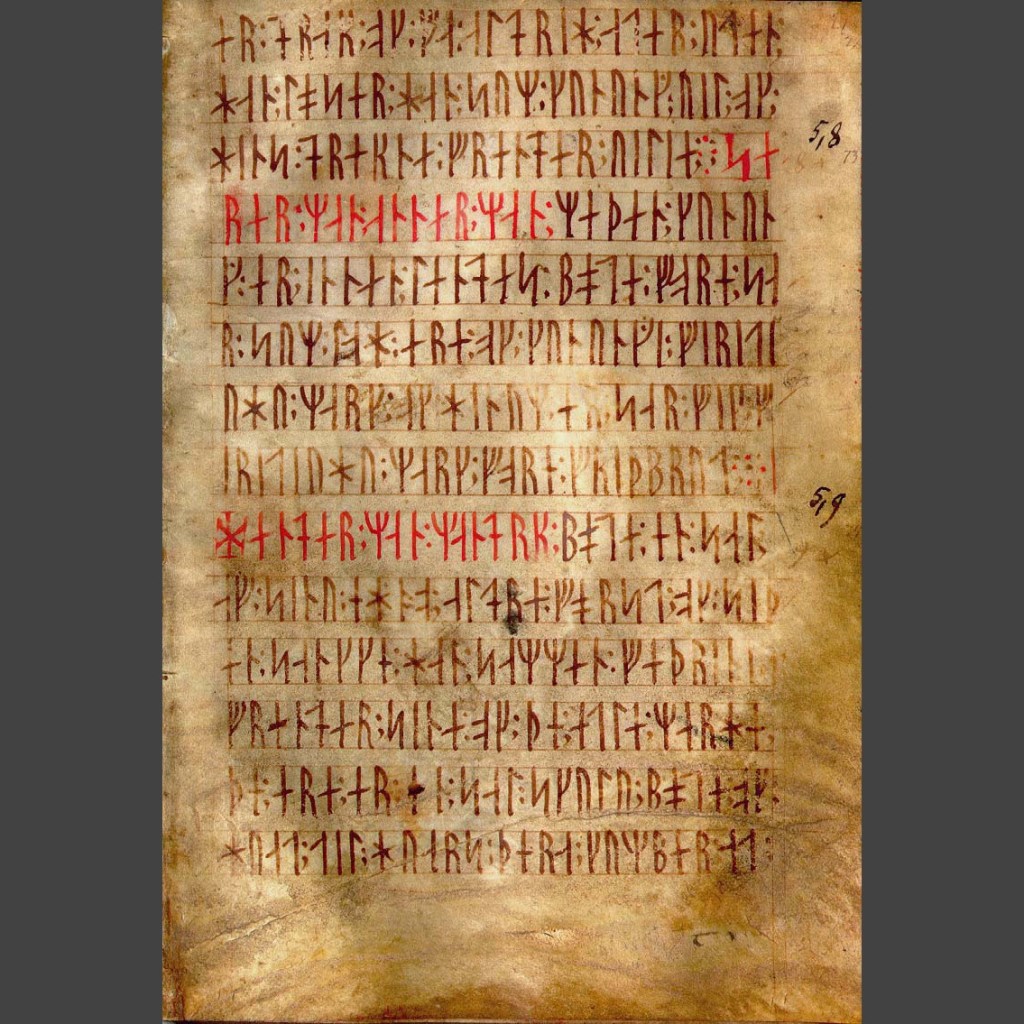
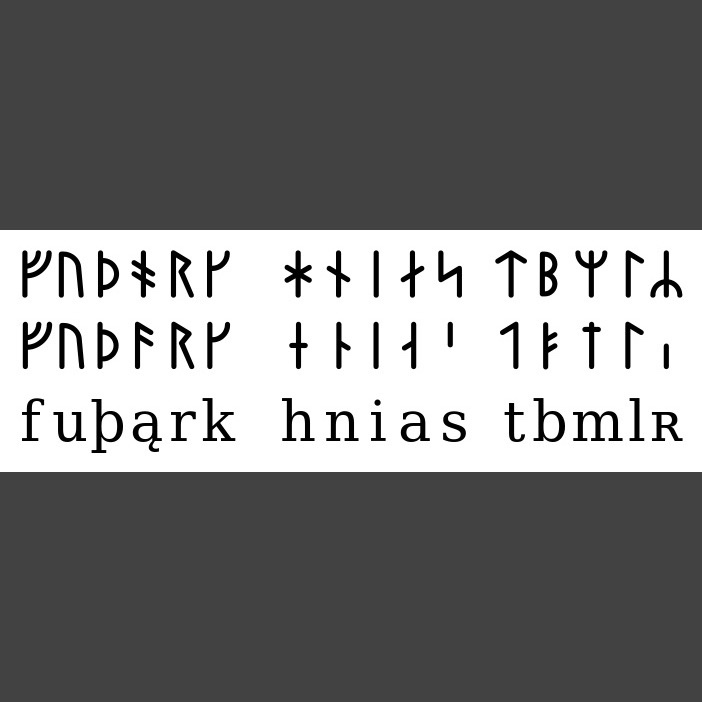
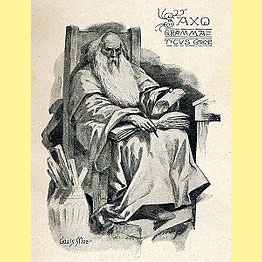
Runic Danish/Swedish started to become different languages from about 1100. Vernacular Danish started to appear in texts written in the Latin alphabet from the early 13th century, previously having been written with a version of the Runic alphabet known as Younger Futhark. The first Danish written work of literature was the Gesta Danorum (History of the Danes), composed in Latin in about 1200 by Saxo Grammaticus. The History of the Danes recounts the history of Denmark up to 1186 and includes Christianised Danish versions of Scandinavian myths and sagas, including the earliest version of the tale of Hamlet. Danish was adopted as a language of administration in Scandinavia during the 14th century, whereby it absorbed much from Low German. The 16th century would see Danish displace Latin as the language of religion. From the 17th century Danish adopted many French loanwords. From the 19th century, it has absorbed many words from English.
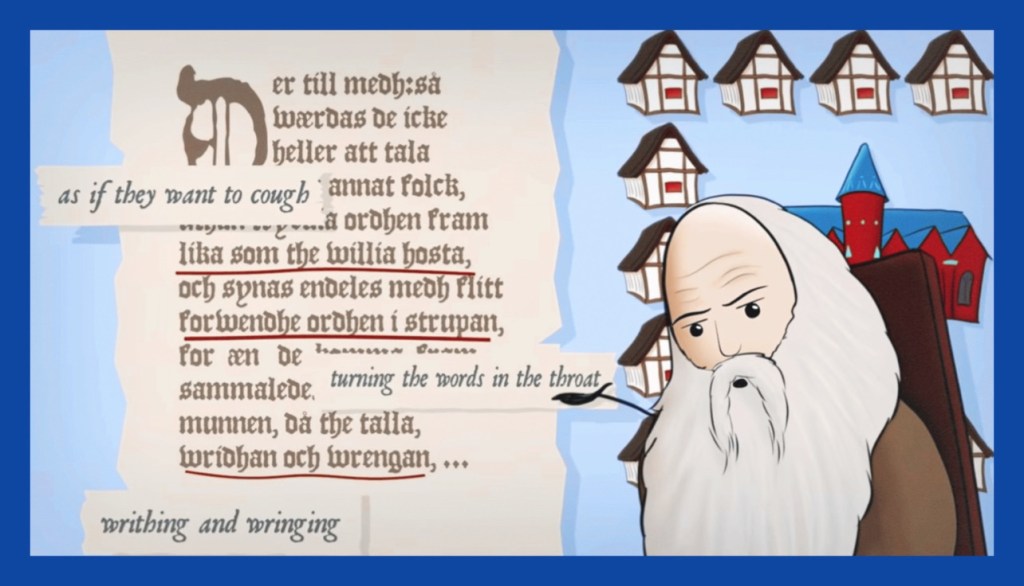
Gesta Danorum (“Deeds of the Danes”) was written in Latin by Saxo Grammaticus (“Saxo the Literate”, literally “the Grammarian”) in the 12th century, to become the earliest written work of Danish literature. Meanwhile, the first book to be printed in the Danish language was Rimkrøniken (the Rhyming Chronicle), a history of Danish kings in rhymed verse format published in 1495 – probably by the Cisterican monastery in Sorø. Danish began to be used as a formal literary language during the 16th century. In 1514 Christian Pedersen published a Danish-language version of Gesta Danorum, which proved highly influential on subsequent Danish literature. Pedersen also realised the first Danish translation of the New Testament in 1531, followed by a full translation of the Bible in 1550. The orthography used in these publications became the foundation for standard written Danish of today.



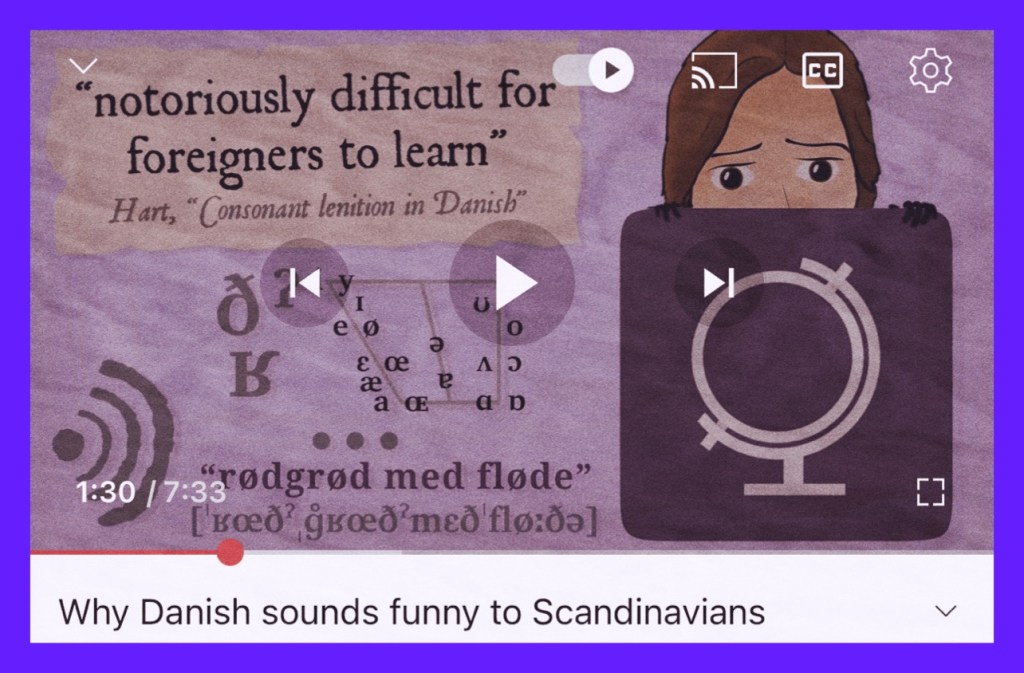
In fact, through their conscientious endeavours to transfer the Germanic vernacular into literary format, and from bridging Runic to Latin, thus providing a technical pathway to open up Latinate literacy to foreign -and in particular discordant- cultures, the Danes have played a foremost role in the development of global literacy. These days, Denmark boasts an extremely successful state which provides its citizens with equally high quality of life and standards of living. They are also making great waves in the world of modern arts and even high fashion. What next for this small Northern European country with an unpronounceable language?
Henrik Vibskov art


Henrik Vibskov SS23 @ Copenhagen Fashion Week


Danish Words by Tamsin:


Alle mennesker er født frie og lige i værdighed og rettigheder. De er udstyret med fornuft og samvittighed, og de bør handle mod hverandre i en broderskabets ånd.
All human beings are born free and equal in dignity and rights. They are endowed with reason and conscience and should act towards one another in a spirit of brotherhood.
(Article 1 of the Universal Declaration of Human Rights)
 The Buzz-Concept Project