
Turkish:
Bütün insanlar hür, haysiyet ve haklar bakımından eşit doğarlar. Akıl ve vicdana sahiptirler ve birbirlerine karşı kardeşlik zihniyeti ile hareket etmelidirler.
Azerbaijani:
Bütün insanlar ləyaqət və hüquqlarına görə azad bərabər doğulurlar. Onarın şüuralrı və vicdanları var və bir-birlərinə münasibətdə qardaşlıq runhunda davranmalıdırlar.
Kazakh:
Barlıq adamdar twmısınan azat jäne qadir-qasïyeti men quqıqtarı teñ bolıp dünïyege keledi. Adamdarğa aqıl-parasat, ar-ojdan berilgen, sondıqtan olar bir-birimen twıstıq, bawırmaldıq qarım-qatınas jasawları tïis.
Kyrgyz:
Bardık adamdar öz bedelinde jana ukuktarında érkin jana teñ ukuktuu bolup jaralat. Alardın añ-sezimi menen abiyiri bar jana biri-birine bir tuugandık mamile kıluuga tiyiş.
Uyghur:
H̡əmmə adəm zatidinla ərkin, izzət-h̡ɵrmət wə hok̡uk̡ta babbarawər bolup tuƣulƣan. Ular ək̡ilƣə wə wijdanƣa igə h̡əmdə bir-birigə k̡erindaxlik̡ munasiwitigə hax roh bilən mu’amilə k̡ilixi kerək.
Uzbek:
Barça odamlar erkin, qadr-qimmat va huquqlarda teng bólib tuǵiladilar. Ular aql va vijdon sohibidirlar va bir-birlari ila birodarlarça muomala qilişlari zarur.

Coptic:
ⲥⲟⲩⲙⲟⲥⲉ ⲣⲱⲙⲉ ⲛⲓⲙ ⲉⲩϣⲏϣ ⲉ ⲛⲉⲩⲉⲣⲏⲩ ϩⲛ ⲟⲩⲇⲓⲕⲁⲓⲟⲥⲩⲛⲏ. ⲟⲩⲛ ϭⲟⲙ ⲙⲙⲟⲩ ⲉⲧⲣⲉⲩⲙⲉⲉⲩⲉ ⲁⲩⲱ ϣϣⲉ ⲉⲧⲣⲉⲩⲣ-ⲙⲛⲧⲙⲁⲓⲥⲟⲛ.
(Transliteration) soumose rôme nim eušêš e neuerêu hn oudikaiosunê. oun com mmou etreumeeue auô šše etreur-mntmaison.
Ancient Egyptian:

Tamazight Berber:

Imdanen, akken ma llan ttlalen d ilelliyen msawan di lḥweṛma d yizerfan-ghur sen tamsakwit d lâquel u yessefk ad-tili tegmatt gar asen.


English:
All human beings are born free and equal in dignity and rights. They are endowed with reason and conscience and should act towards one another in a spirit of brotherhood.
Burushaski:
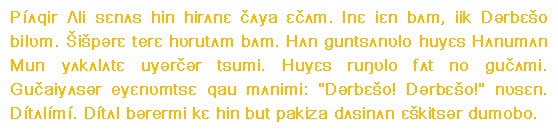
I shall tell the story of a man called Faqir Ali. He had a son, his name was Derbesho. He was staying at the Shishper grazing ground. One day he took the goats off to graze in the direction of Hunumun Mun. Leaving the goats in the pasture, he laid himself down. When he had lain down and had gone to sleep, a call came: “Derbesho! Derbesho!” He woke up. On waking up he saw that a beautiful maiden had come up to his head.
Ancient Egyptian again:

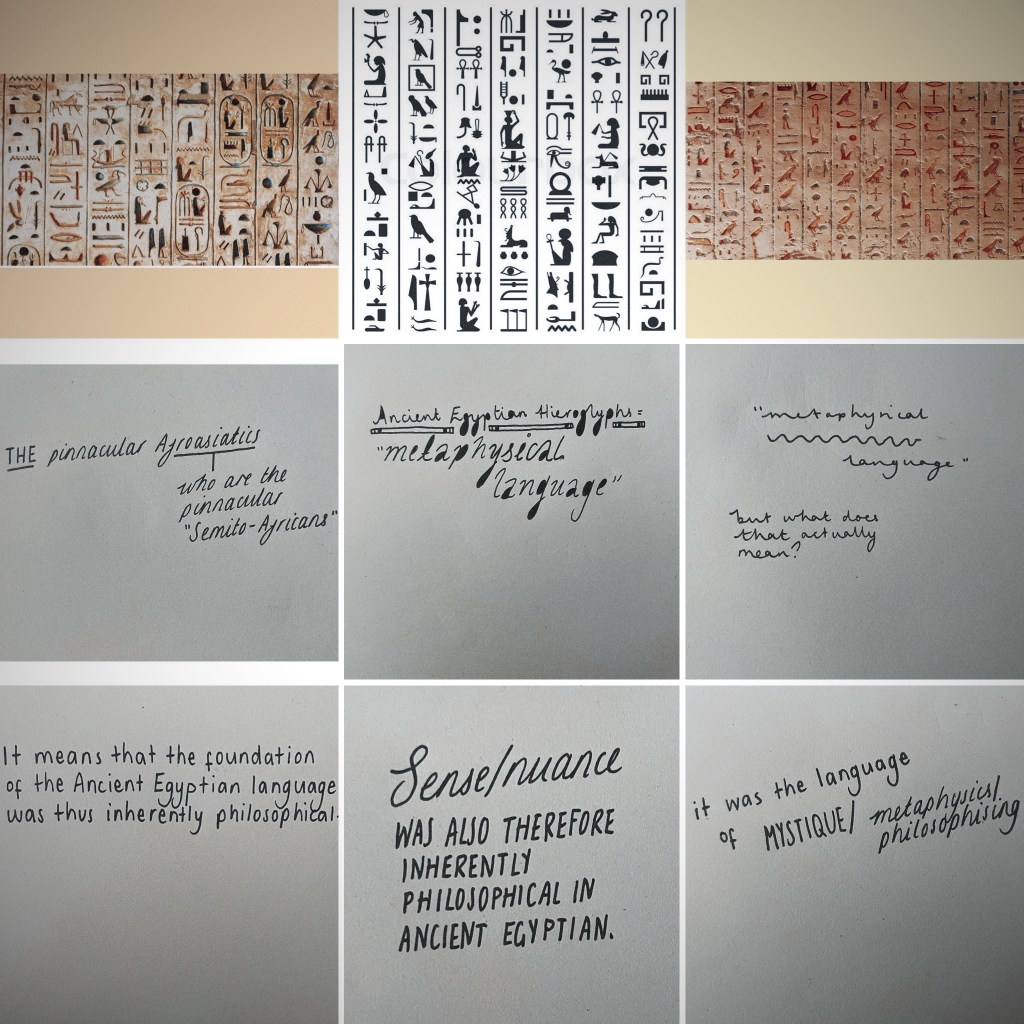
Transliteration: iw wnm msh nsw, this means “The crocodile eats the king”.
Above is a selection of the world’s Turkiqueified / Absolutistly Neurologised languages!
Burushaski of Gilgit-Baltistan in Pakistan’s diverse extreme North enhances mentality and lifestyle among speakers to promote longevity – indeed being the Language of Longevity, buzzing elementally about cognition. The wellbeing and longevity of the Burusho and Hunza people are consistently praised, accordingly.

More:
The Turkic peoples speak languages which buzz about tactfulness, class, grace or something related. They notably don’t ever suffer from problems relating to cohesion and sense of unity. Community spirit radiates from their traditional lifeways. They have rich inner experiences, with women even afforded dreaming rights or privileges, and their strength in cognitive reserve is reflected by their highly distinctive, eye-catching, ornate, mesmerising artistic style.
More:


The Afroasiatic-speaking Egyptians and Berbers have radiant, strong traditions of cultural innovation, revolving around the ideal of the stimulated mind…
More:


These consistencies within the global cultural family tree are the result of prehistoric relations with Palaeo-Turkique peoples, speakers of “Languages of Absolutist Neurologisation” from North Africa to the Himalayas. They display their hereditary Absolutist Neurologisation in very different ways, these days.
What do you think about this tradition?
 The Buzz-Concept Project