A personal favourite designer of mine showing at Milan Fashion Week is Antonio Marras, who was born in Alghero, Sardinia and designs his eponymous line with a distinctive Sardinian ethos which he swears by for producing these dreamy looks.


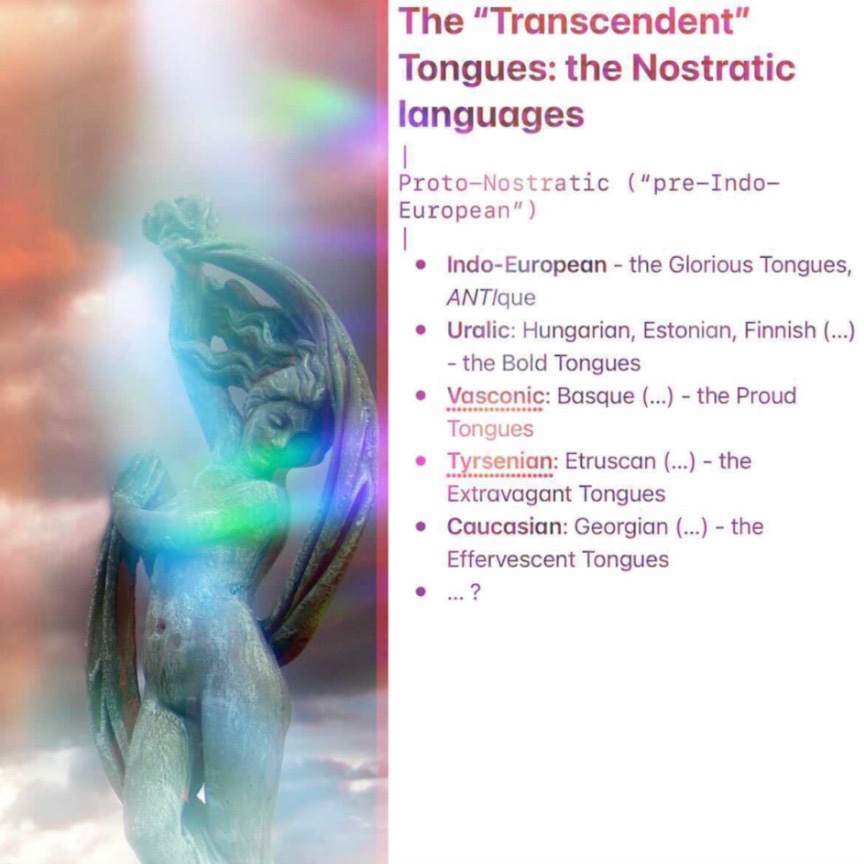
While Sardinia is Italian-speaking, also home to its own Sardinian language –both Romance* (Italic < Italo-Celtic < Indo-European < Nostratic) languages– and Palestine is Arabic-speaking, a Semitic language alongside Hebrew of Israel, one can’t help but notice some mysterious yet distinct parallels between the two traditional cultures. It’s in their subversive attitude towards splendour and their wondrous attitudes towards productivity and activity in general, far beyond the aesthetics of their traditional costumes.
*See Romantic Words


And that something is philology.

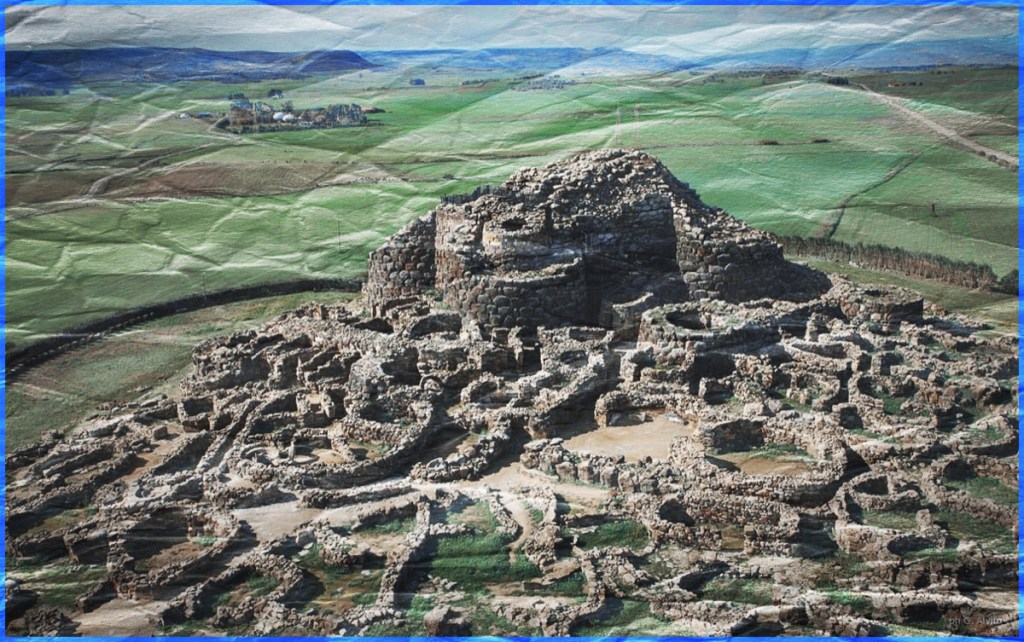
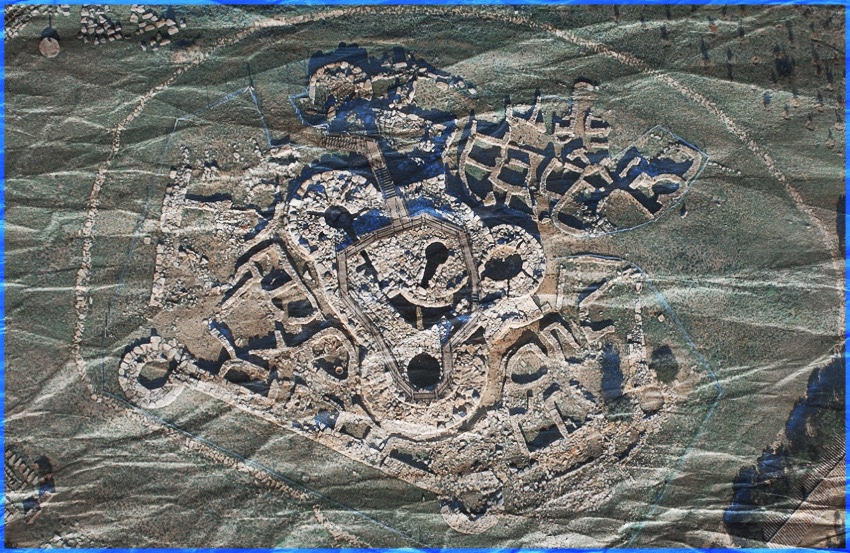
The landscapes of Sardinia are dotted with peculiar ancient structures called nuraghi. The nuraghe (Sardinian: [nuˈɾaɣɛ], Italian: [nuˈraːɡe]; plural: Logudorese Sardinian nuraghes, Campidanese Sardinian nuraxis [nuˈɾaʒizi], Italian nuraghi) is a megalithic edifice, constructed with larger stones, that originated during the Nuragic Age between 1900 and 730 B.C. More than 7,000 nuraghi have been found, and experts believe there were originally over 10,000 on the island. The corresponding culture is known as the Nuragic civilisation.


The etymology of the term nuraghe is debated. The name is perhaps related to the Sardinian place names Nurra, Nurri, Nurru, and to Sardinian nurra ‘heap of stones, cavity in earth’. A connection with the Semitic base of Arabic nūr ‘light, fire, etc.’ was previously put forward. It may be related to Latin murus ‘wall’: murus–*muraghe–nuraghe. A Proto-Basque origin has been suggested through term *nur (stone) with the common -ak plural ending, linked to the Paleo-Sardinian suffix –ake, also found in some Indo-European languages such as Latin and Greek. Another theory is that the term nuraghe derives from the name of the Iberian mythological hero Norax, and the root *nur thus being a variation of the Indo-European root *nor.
The people of Sardinia today, called the Sards, are mainly Romance. Prior to the Romans claiming Sardinia as a province of theirs in 238BC, Sardinia was settled by Carthage from the late 6th century BC, the Phoenicians from the 8th or 9th century BC -who adopted the name Šardana and established the trading post of Karaly / 🏛 Caralis / 🇮🇹 Cagliari / 🧙♀️ Casteddu– and whichever people built the nuraghes. Not much is known about the Nuragic people of the Nuragic civilisation, but technically their language is termed Proto-Sardinian or Paleo-Sardinian – or Nuragic.
It is believed that the Nuragic civilisation and the nuraghes may have belonged to one of the Sea Peoples. The name Sardinia / 🇮🇹 Sardegna / 🧙♀️ Sardigna / Sardínnia is of debated origin. It is quite possible that Sardinia gets its name from the Sherden / Shardana / šrdn 🇪🇬, a Sea People who fought in Egypt in the 13th and 12th centuries BC. Another theory is that the name Sardinia comes from the legendary woman Sardṓ (Σαρδώ), born in Sardis (Σάρδεις), capital of the ancient Anatolian Kingdom of Lydia. It is also suggested that the name Sardinia had a religious association with the ancient Sardinian mythological hero-god Sardus Pater (“Sardinian Father” or “Father of the Sardinians”).
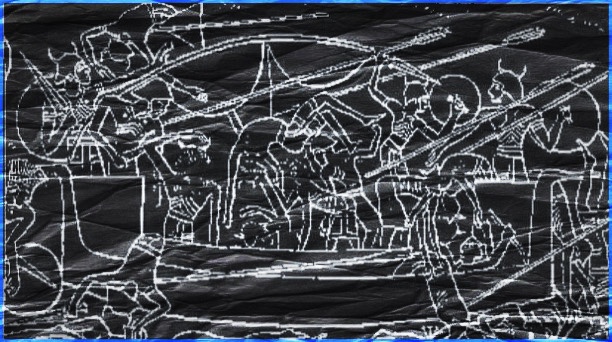
The Levant has astoundingly diverse heritage. I have previously written about the defects within the Syrian national identity due to the multiciplicitous strands of its heritage and its resulting awkward artificiality, and this is a struggle shared by other Middle Eastern nations, to an extent. Levantine nationalities like Palestine and Lebanon were created in the wake of foreign imperial legacies of peoples including the Brits, the French, the Ottomans, the Romans and the Greeks. And of course the Arabs. And Jewish Zionists. They didn’t form organically, according to the enthusiastic will of citizens as in other cases. One other interesting strand of Palestinian heritage concerns the Philistines, from whom some believe the name Palestine / 🇵🇸 Filasṭīn / فلسطين derives. The Philistines are known for having antagonised the Israelites in the Bible, living on the south coast of Canaan from the 12th century BC to the 7th century BC, thence being subsumed by foreign empires.
Philistine and Nuragic are long extinct and their classifications therefore mysterious and unknown. My belief is that they were both Indo-European, of my third proposed principal branch –alongside Western/centum i.e. Italo-Celtic, Germanic, Slavic, Hellenic, Albanian and Eastern/satem i.e. Armenian, Indo-Iranian– which I have but preemptively nicknamed “Groundbreaking“, also containing Anatolian (inc. Hittite) and Tocharian.


The Philistines are known for antagonising the Israelites in the Bible. They later lent their name to the modern term “philistine”, defined as “a person who is hostile or indifferent to culture and the arts”. The Nuragic people of Paleo-Sardinia, meanwhile, a fellow Sea People, were likely no less subversive and even disruptive by intrinsic disposition. The adjective “sardonic”, as in, to be “grimly mocking or cynical” is indeed believed to be connected to Sardinia – according to Vladimir Propp’s Theory and History of Folklore, it was supposedly customary to kill old people while laughing loudly among the Sardi or Sardoni, the ancient people of Sardinia. A very profound parallel. Both Proto-Sardinian and Philistine are unattested and we must therefore rely on contextual speculation like this to reach meaningful conclusions.
What d’you think?
 The Buzz-Concept Project