


Israeli efforts to censor the Palestinian identity raise questions of what this conflict is really even ultimately about. Palestinians have protested against extensive human rights abuses, but it’s surely not a straightforward case of thirst for blood as the exasperated Palestinian rhetoric indicates, given Israel and the Jewish world’s dark history of the Holocaust. Prudent Israeli politicians obviously know better. Anyway, this is a bitter territorial dispute whose significance harks back thousands of years, and resounds at the core of who we are here in the West, too.
Why? It involves the Holy Land, a Levantine territory on the Eastern Mediterranean coast regarded indeed as holy by all three major Abrahamic faiths, Christianity, Judaism and Islam.
• Terra Sancta •
The historic region of Palestine is generally seen as the birthplace, or the cradle, of Christianity. Its association with the life and resurrection of Jesus Christ, the Savior or Messiah, is why it is considered holy today within the Christian faith. Christianity broke off from Judaism in the Roman province of Judaea in the first century. It would go on to flourish elsewhere, mainly in Europe, becoming the world’s largest religion with around 2.5 billion followers. It is a destination for pilgrimage for Christians, once the centre of the Crusades fought by European Christians looking to win back the Holy Land from Muslims.
Christianity was founded in the Roman province of Judaea, and it was through the Roman Empire that it would go on to spread on a global scale. The predominance of the Roman Catholic branch of the Christian faith, with 1.3 billion followers, means that as most people are to be concerned Latin occupies the most central role as language of the church so to speak. Latin, the splendid ancient Italic language of the Romans, indeed holds such iconic status in this context too, but in reality Christianity is practised in a vast number of different languages.
However, the people among whom Christianity first took off were Aramaic-speakers who dwelled along the Mediterranean coast. Jesus himself was allegedly an Aramaic-speaking Jew. Although he was most likely multilingual. The Aramaic language of the Arameans was the common language of the Roman province of Judea, within the Holy Land / Land of Israel /Palestine. It originated among the Arameans in the ancient country of Aram around the late 11th century BC. Nowadays, Neo-Aramaic languages are all considered endangered and spoken only by small populations in the Middle East, mainly by communities of Assyrians and Chaldean Christians in Iraq and Syria nowadays. Aramaic Arāmāyā אַרָמָיָא 𐡀𐡓𐡌𐡉𐡀 𐤀𐤓𐤌𐤉𐤀 ܐܪܡܝܐ is a Semitic language alongside Hebrew and Arabic. The Semitic languages are the “Visceral” Tongues, and belong to the broader Afroasiatic family which contains the “Uniting” Tongues; most Afroasiatic languages buzz about unity. The Arameans were the honourable, forward-looking Semites, speaking the Language of Unity itself. Aramaic-speakers slay over the visceral substance of skin; all Christians are obsessed with skin. They were remarkably softly, measuredly spoken people, contrary to the Semitic norm, which produces typically fervid speech.


• אֶרֶץ הַקּוֹדֶשׁ Eretz HaKodesh •
Judaism is the oldest Abrahamic religion, dating back to the Bronze Age. Jerusalem is the holiest city to Judaism. The Tanakh scriptures assert that the Holy Land, the Land of Israel, the “promised land”, was given to the Israelites by God.
The Israelites / בְּנֵי יִשְׂרָאֵל / Bnei Yīsrāʾēl / ‘Children of Israel/Jacob’ were the ancestors of modern Jews and Samaritans. They inhabited a part of Canaan during the Iron Age, and were the sophisticated Semites. The Twelve Tribes of Israel / שִׁבְטֵי־יִשְׂרָאֵל / Šīḇṭēy Yīsrāʾēl / ‘Tribes of Israel’ as mentioned in the Hebrew scriptures were the descendants of the patriarch Jacob / יַעֲקֹב / Yaʿaqōv, later given the name Israel / יִשְׂרָאֵל / Yīsraʾel. Jacob had twelve sons who formed the Israelite nation. The twelve tribes were: Reuben, Simeon, Judah, Issachar, Zebulun, Benjamin, Dan, Naphtali, Gad, Asher, Ephraim and Manasseh. The terms “Hebrews”, “Israelites” and “Jews” are not strictly fully interchangeable. “Israelites” (Yisraelim) means the direct descendants of Jacob’s sons. Collectively as a people of the world, Jacob’s descendants are called “Israel”. “Hebrews” (ʿIvrim), the sophisticated Semites, means the immediate forebears of the Israelites who occupied the land of Canaan, the Israelites themselves, and the Israelites’ ancient and modern descendants including Jews and Samaritans. “Jews” (Yehudim) means the descendants of the Israelites who coalesced when the Tribe of Judah absorbed the remnants of northern Israelite tribes.
Hebrew / עִבְרִית / ʿĪvrīt is the language of Judaism and the modern state of Israel. It is the Language of Depth. Hebrew is a Canaanite language along with Phoenician / Dabarīm kanaʿnīm / 𐤃𐤁𐤓𐤉𐤌 𐤊𐤍𐤏𐤍𐤉𐤌 , belonging then to the Northwest Semitic branch of the Afroasiatic language family.

Jews divide up into three overall types: the Ashkenazim / יְהוּדֵי אַשְׁכְּנַז / Yehudei Ashkenaz / “Jews of the German Lands”, the Sephardim / יהדות ספרד / Yahadut Sefarad / “Jews of the Sefarad” / Hispanic Jews and the Mizrahim / Edot HaMizrach / עֲדוֹת-הַמִּזְרָח / '[Jewish] Communities of the [Middle] East’. The Jews were of course the sophisticated Semites. The Ashkenazim were then THE Europeans; the Sephardim THE Jews, and the Mizrahim THE Semites. Mizrahim refers to Middle Eastern Jews, or the Oriental Jews, the Jews of the holy region. The full-blooded, whole-hearted Jews who stayed to hold up the holy fort in the Middle East. Most Jewish blood today, however, is descended from those who decided to leave the holy region and go off to explore, hoping to spread the word. The Ashkenazim, the European Jews of Central & Eastern Europe (Germany, Austria, Hungary, Czechoslovakia, Poland, Ukraine, Romania, Moldova, Russia, Belarus, Bulgaria, Lithuania and Latvia), were targeted by Nazis in the Holocaust. Most American and Western Jews are now Ashkenazi. They were the open-minded, forward-thinking, dynamic, élitist Jews who settled in Europe in the Middle Ages. They quickly spread out into Eastern Europe thanks to persecution. They spoke Yiddish, a Germanic language derived mainly from High German, although written in the Hebrew “aleph-bet” and sharing elements of Hebrew, Aramaic and Slavic languages. THE Jews are actually the Sephardim: the Sephardic Jews, a.k.a. Jews of the Sefarad or Hispanic/Iberian Jews, were historically from the Iberian peninsula. They were the intense Jews, THE Jews, who settled in the Iberian peninsula – originally after leaving the holy region. They were expelled by the Reyes Católicos in the Spanish Inquisition in 1492, whereupon they relocated to places like France, the Ottoman Empire, and North Africa. They spoke Ladino / Judaeo-Spanish / Judesmo / Judezmo / Djudezmo.
The visceral substance Hebrew-speakers slay over is bone(s).


• الأرض المقدسة Al-Arḍ Al-Muqaddasah •
The ‘Blessed’ lands of the Levant were conquered by Arab Muslims in the 7th century. Islam is the world’s second-largest religion after Christianity with two billion followers. Islam originated in the Arabian Peninsula, in Mecca, in the 7th century CE. The Muslim world would go on to flourish, made up by the majority populations of 49 countries today.
Arabic-speakers slay over blood. The Arabic script even resembles blood flow/splatter, especially of throat-slitting. Arabic / اَلْعَرَبِيَّةُ / al-ʿarabiyyah, like the languages of the other Abrahamic religions, is a Semitic language. The Language of Devotion and Viscerality, it first emerged in the 1st to 4th centuries CE. It is now the lingua franca of the Arab world and the liturgical language of Islam. The liturgical language of the 1.9 billion Muslims, Arabic is one of the six official languages of the United Nations. The Arabs are the hyper-intense, profound, thorough, sensual Semites.
The region of Palestine / فلسطين / Filasṭīn was the birthplace of Judaism and Christianity, while also holding spiritual value to Muslims. Canaanites inhabited the region in the Bronze Age, giving rise to the two related Israelite kingdoms Israel and Judah who were established there over the Iron Age. It came under control of Assyrians, Babylonians, Persians and Greeks before being incorporated into the Roman Empire. Ending Roman Byzantine rule, the Rashidun Caliphate conquered it in the 7th century, with Palestine successively coming under the rule of the Umayyad, Abbasid and Fatimid Caliphates too. Following the Crusades, Palestine became predominantly Muslim. It became part of the Mamluk Sultanate in the 13th century and of the Ottoman Empire in 1516. The United Kingdom seized the territory from the Ottomans in World War I, ruling it under mandate from the United Nations until 1948. Since then, Palestine has been the subject of a bitter ongoing territorial dispute with Israel.


Since World War II, the territory of Palestine has been hotly disputed between Palestinian Arabs and Israeli Jews. The Zionist immigration of Jews back to the Land of Israel took off while World War II and the Holocaust were bubbling, leading to the establishment of the State of Israel as declared in 1948. The Jews had been forced out of the homeland due to persecution, living as international diasporas for much of their history. When that plan failed, millions of them chose to return the the Holy Land, claimed as their “promised land”, rightfully theirs by default as the cultivated, refined, sophisticated Semites. With Western help, Israeli sovereignty was carved out, at the expense of the alienated Palestinian Arabs who had constituted the dominant majority before then: Palestinian Christians and Muslims constituted 90% of the population of Palestine in 1919. The 1947 UN Partition Plan for Palestine saw the Holy Land / Canaan / the Land of Israel / Palestine divided up between area assigned for a Jewish state and area assigned for an Arab Palestinian state, with the plan duly rejected by the Arabs and accepted by the Jews. The day after the State of Israel was formally established on 14 May 1948, neighbouring Arab states invaded the territories. Since this aggression, Israel has been closing on Palestine:

The Israel v Palestine issue is a supremely contentious one, instigating terrorism from the Arab side and human rights infringement from the Israeli front. It continues to cause a great deal of controversy around the world, acutely dividing opinion. The West has traditionally been supporting Israel out of loyalty to it as a Western-centric, democratic country where freedom of religion is overwhelmingly supported.
Israel is the Jewish State, which nonetheless has a supplementary sidelined population of 20% Arabs today. Jewish attachment to this region dates back beyond the inception of the Jewish religion, and well beyond the inception of Islam. The sense of its holiness is also much, much stronger for Jews than for Arabs. That said, for the past millennium the Arabs had predominated in the region’s population, now being somewhat brutally displaced.
Part of Israel’s identity is furthermore founded upon the reconstruction of the Jewish world in the aftermath of the Holocaust. Survivors migrated there seeking solace in the hardline concept of the State of Israel, and people of Jewish ancestry everywhere derive a sense of comfort from the knowledge of its thriving, stable, vigorous existence. Israeli forces arguably are simply choosing to rise to these expectations in antagonising the Palestinian minority to this degree. Such was the scale of the tragedy of the Holocaust that it is hard to pursue a moral case against the tortured Jews of Israel in defence of Palestine. Israel is a staunch democracy but errs on the side of aggression in many geopolitical predicaments because of their anti-Semitic torture. This aggression is physical towards Palestine, but purely psychological and very subtle towards the outside world. Is it okay? No. Is it inexcusable? Absolutely not.
Palestinian Arabs are being horrifically oppressed and even slaughtered by Israeli forces in order to achieve the end of renewal for the Jewish people, historically too passive as they were with such tragic consequences. Rebuilding the foundations of the Jewish sphere is a fundamental, ongoing role of the Israeli government within Israeli society and the wider world. Can they be blamed for going that bit too far, frustrated at what surely used to be Palestinian insensitivity, and at the gradual fading of Holocaust awareness as the rest of us start to move on? Israel can most certainly be accused of coasting on the guilt experienced by the outside world regarding the indelible wounds & contorted insides from the horrors of the Holocaust, as well as of all the anti-Semitic persecution that went on even before then. But again: are the Palestinians right about what their plight means Israel stands for, insisting their Jewish oppressors are nasty bloodthirsty brutes who are conversely due a severe identity-quashing themselves? Of course not. I assume, in light of their own hereditary insights, having learnt the hardest way, that Israel doesn’t particularly like behaving this way. So why do they do it? Out of heartbreak about Palestinian naivety. What I am seeking to reiterate here is that, whoever you side with, the poignantly complex Israeli perspective cannot be pigeonholed with superficial moralising. So don’t bother. Once upon a time, it was the other way round and it was the Arabs conquering the Jews to take over the Land of Israel in the 7th century.
As it all gets more heartbreaking and nuanced for both sides, the geopolitical diplomatic weight the issue bears only gets heavier. Are you a flagrant hypocrite who saw an accusation of human rights abuses leveraged at Israel and instantly sided with Palestine for the social media ammunition? Are you a passively pro-Israel Pharisee blinded by an outdated rhetoric of Western hegemony and missing the whole Visceral basis of this conflict? Is your perspective all but shrouded by the confusion of the messy geographic territorial division itself, preventing opinion from even being formed in the first place? Or are you someone who valiantly pushed through and succeeded in forming an educated opinion on the matter as it actually currently manifests itself? What’s it to be? Because the world needs answers about the Holy Land, since over half of its population adheres to an Abrahamic religion.
I admit it would be inappropriate for the Jews to explicitly cite the legacy of the Holocaust as shelter from reprimand in their contemporary persecution of the Palestinian ethnicity. A simple fact of the matter is indeed that contemporaneously innocent Palestinians are being exploited for the purposes of soothing the wounds from a horror they had nothing to do with. But just don’t gloss over Israel’s reverse plight because the Holocaust, in which 6 million Jews were methodically exterminated by Nazi Germany between 1941 and 1945, was really that awful.
We know that the Jews were the sophisticated Semites. And that Arabs are the hyper-instense, profound, thorough, sensual Semites. But there are so many Arab states in the world, aren’t there? 22, to be exact, the 5 most populous being Egypt (~100,000,000), Algeria (~40,000,000), Sudan (~40,000,000), Iraq (~40,000,000), and then Morocco (~35,000,000). In at number 6 we have the big daddy Saudi Arabia, closely following Morocco with around 35,000,000 inhabitants, being home of course to THE Arabs. Fact: Saudi Arabian women would be “the world’s sexiest” if it weren’t for their conservativism and for Western opposition. Seriously: as I have said, the Saudis are THE Arabs, and Arabs are the sensual Semites. Collectively speaking, it would be a trait shared by all the Semito-African-speaking regions of Africa and the Semitic world. Extra: beyond that, who it would would be if it weren’t racism is Namibian women, with the southern African country of Namibia home to the Khoisan cultures, descendants of the original human cultures. This is an important fact when it comes to shedding light on the reality of Saudi Arabia’s position in the world. Everything is not as it seems. Ever wondered what Saudi Arabian women are conservating under those burkas?
The Palestinians constitute their own independent Arab population, ethnicity and entity. The claimed State of Palestine, encompassing the two isolated territories of the West Bank and the Gaza Strip, is home to an estimated 5 million or so Palestinian Arabs. Palestinian culture is a Levantine culture, closely related to those of Lebanon, Syria, Jordan, and the wider Arab World. Palestinian culture is very versatile, reflecting the region’s history as having been under the influence of many different peoples. The Greeks called the region Palaistínē / Παλαιστίνη, which derives from the Arabic Filasṭīn / فلسطين. The Ancient Egyptians called it Peleset/Purusati, conjectured to refer to the “Sea Peoples”, particularly the Philistines. With regard to other Semitic languages, the Akkadian Palaštu/Pilištu was used of 7th-century Philistia. And we have Biblical Hebrew’s cognate Plištim, usually translated as Philistines.

The Philistines, for their part, were antagonists of the Israelites in the Bible. They lived on the south coast of Canaan from the 12th century BC to the 7th century BC, in due course being subjugated to different empires. The Philistine language is long extinct, so its exact classification is unknown. It has been identified as a Canaanite dialect similar to Phoenician and Hebrew. Possible relations to Indo-European languages, even Mycenaean Greek, have been proposed. This aligns with the theory that the Philistines originated as immigrant “Sea Peoples”.
The Philistines were a tricky bunch, known for their biblical conflict with the Israelites. They strongly resisted cultural assimilation under Neo-Assyrian and Neo-Babylonian empires, until finally losing their distinct ethnic identity under the Persian Empire, disappearing from the record by the 5th century BC. They accordingly later lent their name to the modern term “philistine”, defined as “a person who is hostile or indifferent to culture and the arts”. This may well suggest that the Philistines were indeed brooding, cynical, subversive, humble Semites, Canaanite-speaking like the Jews and the Phoenicians. But I like the idea that they were Indo-European, speaking the Philistine language i.e. the Language of Supremacy, being sparky, sceptical Indo-Europeans. The Philistine minority supposedly descended from the “Sea Peoples” was assumed to have been assimilated by the native Canaanite population by the 10th century BCE, although they are known to have retained their autonomy up until Assyrian domination. The refined Canaanites probably tried and failed to assimilate the sceptical Philistines. The Philistine soul hardened to total impenetrability, and notoriety came thence, in the Bible and far beyond. However ironic, something about it all definitely abhorred the Philistines, and they certainly weren’t flippant and unthinking as you would assume. They were just contrarians, at the end of the day, obviously not much more to it than that. But Semitic contrarians or Indo-European contrarians? These are the questions of life…


This pottery looks Indo-European to me. Regardless, the Indo-European-speaking Philistines will have been highly Semiticised, to the extent that their strand of Indo-European heritage clearly grew to exist in complete symbiosis with the Semites. So much so that the harmonisation tortured them, leading them to become contrarian cynics. Indeed, genetic evidence from a Philistine cemetery near Ashkelon, Israel indicates that the Iron Age Philistine gene pool was derived mostly from the local Semitic-speaking Levantine population. However, the early Iron Age population was shown to be genetically distinct due to a European-related admixture, which was not detected in the later Iron Age population. So, the Philistines started out as zesty Indo-Europeans who mingled with the pre-existing populations of Canaan, giving rise to a profoundly hybridised culture and ethnicity. The elusive Philistines went off the record from the late 5th century BC. I have thus come to think that the original Philistines were definitely Indo-Europeans, but not Greek. Yet modern theory proposes an Aegean origin for the Philistines. They are said in the Bible to descend from the Casluhites of ancient Egypt. The Hebrew Bible has them as originating from a place called Caphtor. The Septuagint connects them to the Caphtorim and Cherethites and Pelethites. Meanwhile, a Walistina is mentioned in Anatolian Luwian texts, variantly spelled Falistina and Palistina. Palistin was an early Syro-Hittite kingdom located in what is now northwestern Syria and southeastern Turkey from the 11th century BC to the 9th century BC. Relation between Palistin and the Philistines is much debated, but Hittitologist John David Hawkins hypothesises a connection between the Syro-Hittite Palistin and the Philistines, corroborated by other experts. Were the Philistine “Sea Peoples” already Semiticised in their Syro-Hittite foundation phase (Syro-Semitic-Aramean being ofc a Semitic language and Luwian-Hittite being Indo-European)? Probably. After the collapse of the Hittite Empire in c.1180 BCE, a bunch of small states appeared in northern Syria and southwestern Anatolia. These have been assigned the label of the Syro-Hittite/Neo-Hittite/Luwian-Aramean states. The northern states were Luwian and the southern states Aramean, existing in experimental open mutual Indo-EuropeanXSemitic symbiosis with each other. The original, original Philistines will have broken off from this symbiosis, from the Syro-Hittite state of Palistin. Well, from its forebears.
The Philistines possessed a mesmerising quality in their continual quest for glorious subversion. They were among the Israelites’ most dangerous enemies but everyone was obsessed with them. Their memory thus swirls on subliminally.
Their cultural legacy lives on in traces, remarkable for its uniqueness…
The 4 layers of Philistine:
- Glorification
- Subversion
- Philistinism
- Unity

The Palestinians are the dazzling/amazing/wondrous/goals Arabs. Don’t see it? Well, the Palestinians dwelling in the claimed Palestinian territories of the West Bank and the Gaza Strip have after all been stripped of things like free movement and the right to vote. The point being that oppression does funny things to you. They were supposed to be, anyway… To be Palestinian is to be a machine at promoting the elemental exquisiteness of life itself…!

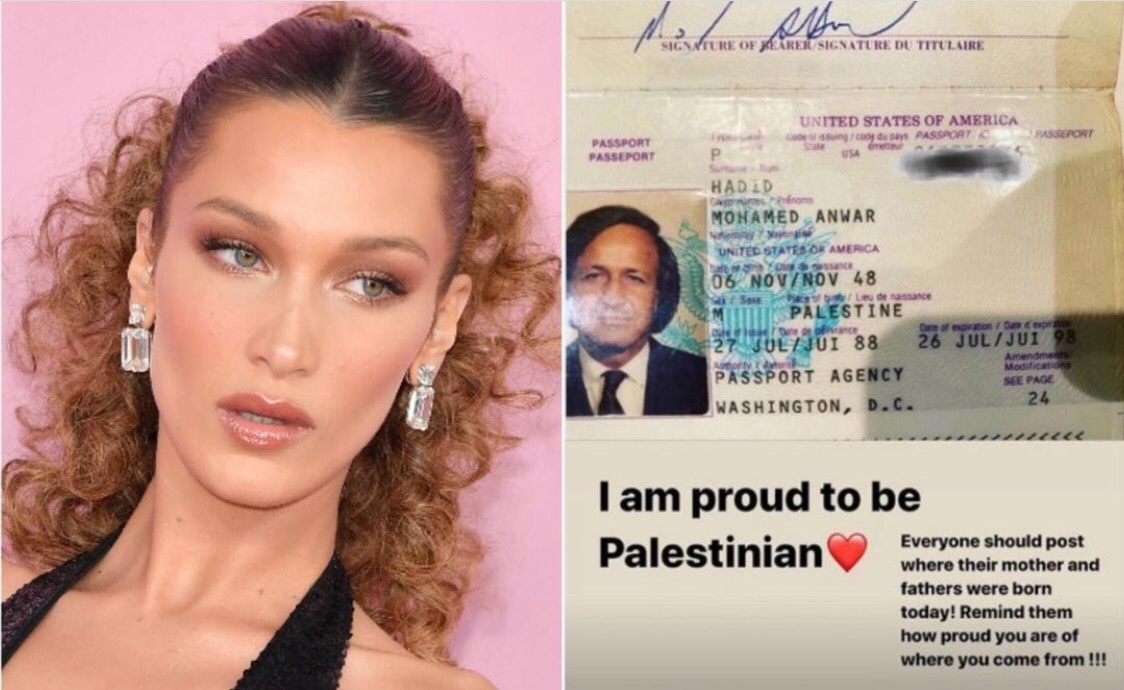



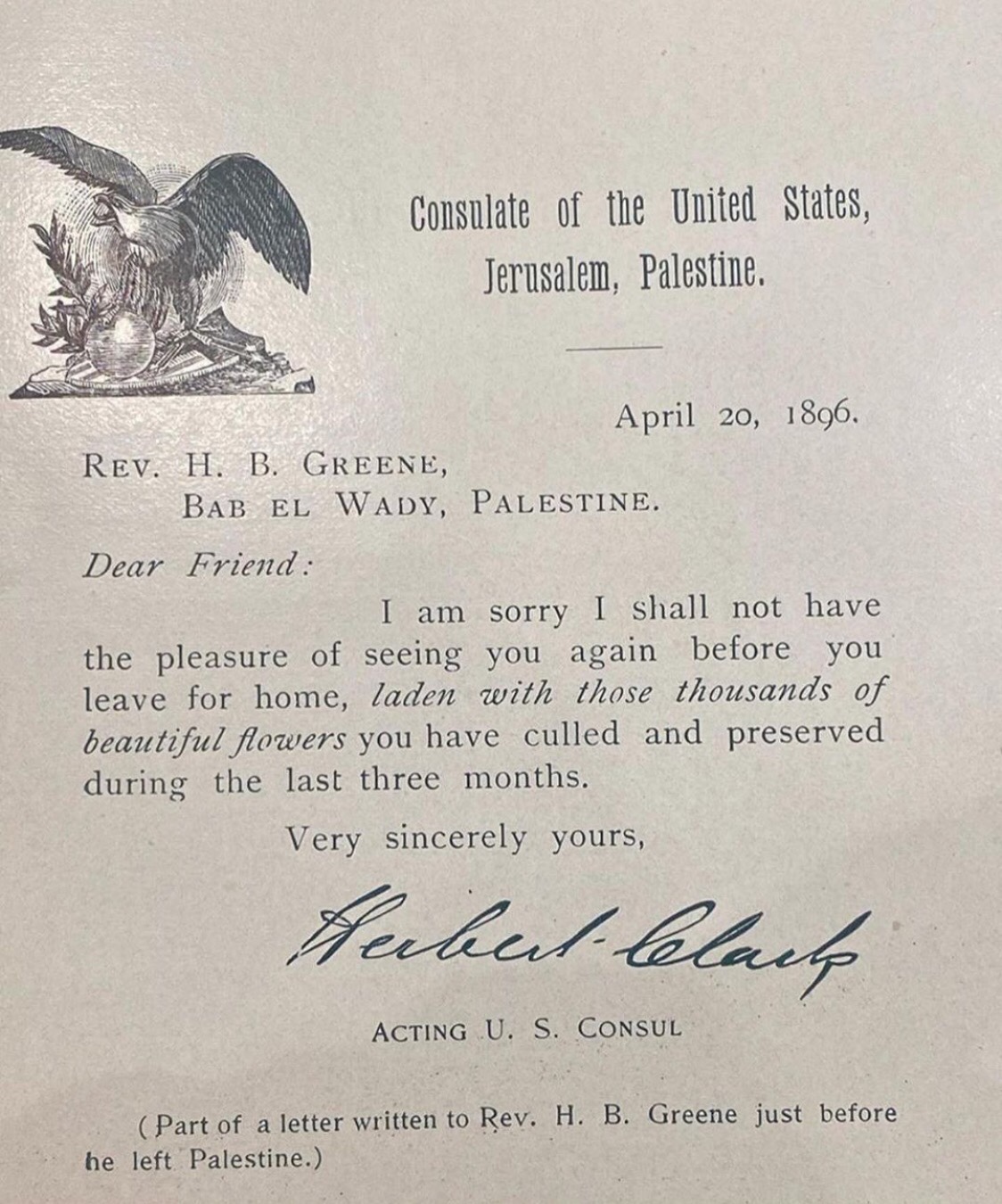
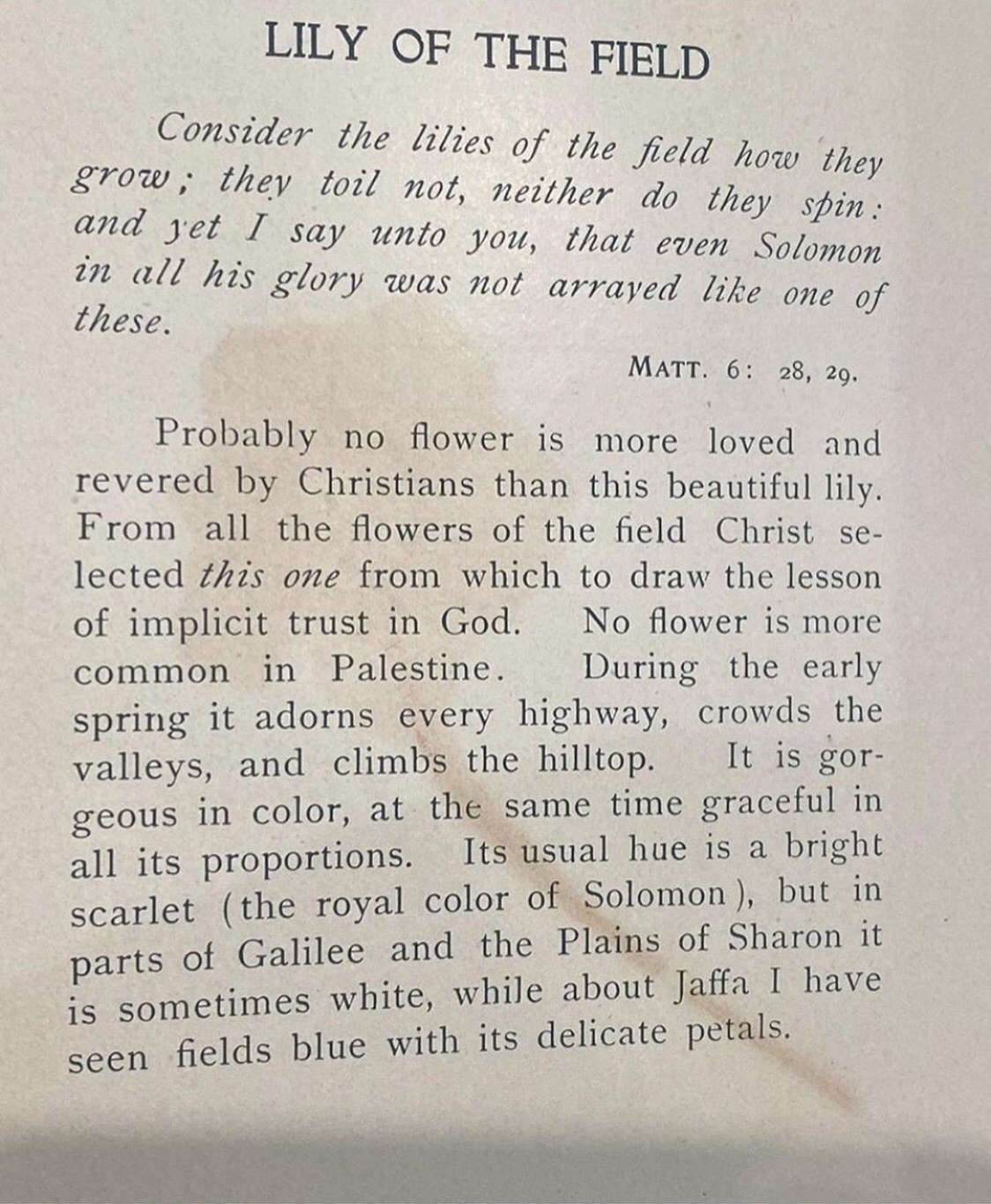

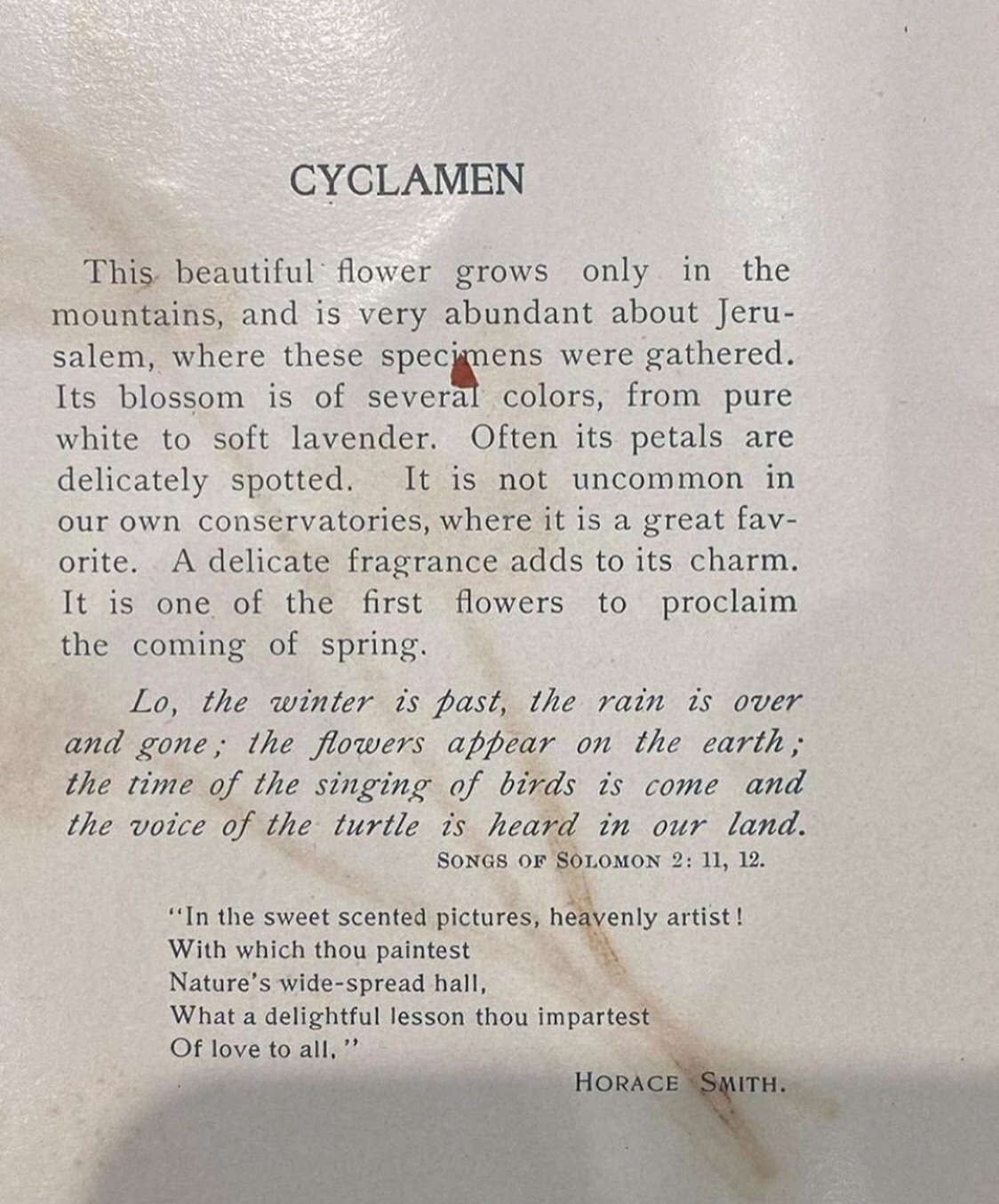



Indeed, Palestinians are/were the #Goals Arabs. With Semitic peoples being characteristically anti-Goals, so to speak, thanks to their inclination towards humility and profundity, the Palestinians must have become the #Goals Arabs through mingling with other people. It wouldn’t have been the Ottoman Turks —who held Palestine for hundreds of years until the British took it during World War I, even though Turkic peoples are indeed all characteristically wondrous as descendants of the Original Pinnaculars of the human population from way back when we all still dwelled in Africa— because the Ottomans were the dark, contrarian Turkics. No, those seeds were surely sowed by Indo-Europeans. Although, the Turks do have some diluted Indo-European heritage of their own. Anyway, the historical region of Palestine was once occupied by the Indo-European peoples of the Persians, Greeks and Romans, but this was before Arab invasion. Still, the Levantine Arabs will have inherited some of the classical Indo-European legacy that was left behind. I honestly think, for my part, that the Palestinians picked up where the iconic ancient Philistines left off. Philistine history had long since been wound down by the time they arrived in the Holy Land, and they went with the traces and built their culture open-mindedly from that – once upon a time, everyone had been obsessed with the Philistines… Palestinians are obsessed with the concept of obsession! On another level, the Palestinians grew to become the #Goals Arabs from having rubbed shoulders with… Jews and their potent arsenal of ancestral refinement for a millennium.
You might have assumed that what the Palestinians did wrong was doubt Israel’s might, and you would be wrong. Until recently, Israel was still carefully building its power and distinction following its establishment. They were certainly in no position to be carelessly throwing any of it around in the name of bullying. It goes so much deeper. The Israeli rationale rather has its roots solidly in ancient doctrine. Jewish dogma literally asserts that the Holy Land is definitively, rightfully theirs because of their pre-eminent hereditary urbanity as the sophisticates of the region. Meanwhile, the Palestinians, as I have explained, established the foundation of their particular sub-culture within the Arab World as a playful continuation of the contrarian Philistine legacy. But the Philistines were antagonists of the Israelites, making Palestinian culture sadly oppugnant to the beliefs of Jews and Christians. In light of their insistence on the inherent legitimacy of their own claim to the Holy Land, when they are disrespecting it as far as Jews and Christians could only ever be concerned, this kind of makes the Palestinian rhetoric a joke. Remember that the region is much, much less holy to Muslims than it is to Jews and Christians. The Arabs have dared to assert their claim to the sovereignty of the Holy Land, when they weren’t even around when the holiness itself was transpiring. The paradoxical sophistication of Israel’s position arises out of a bottomless ancestral reserve; the cycle just goes on and on, with the descendants of the ancient Semitic sophisticates getting more and more frustrated with pitiable Palestinian efforts to compete when there is no point. All the while stretching their patience, already thin due to anti-Semitism.
I think that what is happening between the two sides is especially sad because of what the whole entire world is losing to the resulting abyss. Again, bombing in the Holy Land could not be more important.
 The Buzz-Concept Project