
Life can be tough. Sometimes we are reduced metaphorically to “pushing our hands against the open sky” –like a baby does physically in trying to gain understanding of the world around them–without the power to grasp the stability of sense in a situation. Kinsale Hueston, a Yale-educated poet of the Navajo Nation, continues, concluding her poem entitled Seventh Generation thus: “we stand, we brush the dirt from our hands; we break open / inherited beginnings and begin to build up / from the fault lines.” The poem adeptly straddles the topics of the invigoration of birth with the monotony of adult life, both contrasting and uniting the two pillars of human existence. For Kinsale, the frustration stems from racial issues i.e. prejudice against Native Americans. But the significance of this particular poem is of a far more general scope, as outlined above. Her weariness with the tedious complexities of anti-Amerindian discrimination and the broader issue of unsound values within American society is palpable and the tone of the poem remarkable for its grit.
And now that one has appreciated this particular poem and assimilated its message: what next? Is there any next step to be taking? The correct answer is an effervescent “yes” because this world is an extraordinary place and you can never know enough of it. A monotonous life is one which is ill-lived, so to speak.


Why? There’s an internal corporeal organ for the exact purpose of avoiding this predicament. Organ? Well, there is a part of the brain that is supposed to take care of this. Western society has clearly ventured into some dark territory by capping the utility of the brain’s amygdalae in the context of excessively harsh yet feeble-spirited and structurally defective technocracy.
Technocracy is defined by Encyclopædia Britannica as “government [or governance] by [so-called] technicians who are guided solely [or overwhelmingly] by the imperatives of their technology [or expertise]”. It is ultimately an extreme form of meritocracy, streamlining society according to merit, with only the ablest intended to be sitting on top, but it is tragically atonal in the context of representative democracy, since “technicians” with lots of expertise are not representative of the general population and therefore cannot be unequivocally trusted to respect its will. Too many pivotal leaders have made the unforgiveable mistake of leading by rough-hewn theory instead of by straightforward exemplary example. The result is neurological chaos.
Technocracy is an excellent perspective to draw from in managing society effectively, but it cannot be depended upon. The reason for this hitch is simple: we have these things called amygdalae. Biologically, we will never be able to accommodate fully the searing rigours of technocratic leadership. And that’s it. That’s the downfall of technocracy and perhaps of blest meritocracy, too. We have amygdalae, and they’re in reality extremely important…
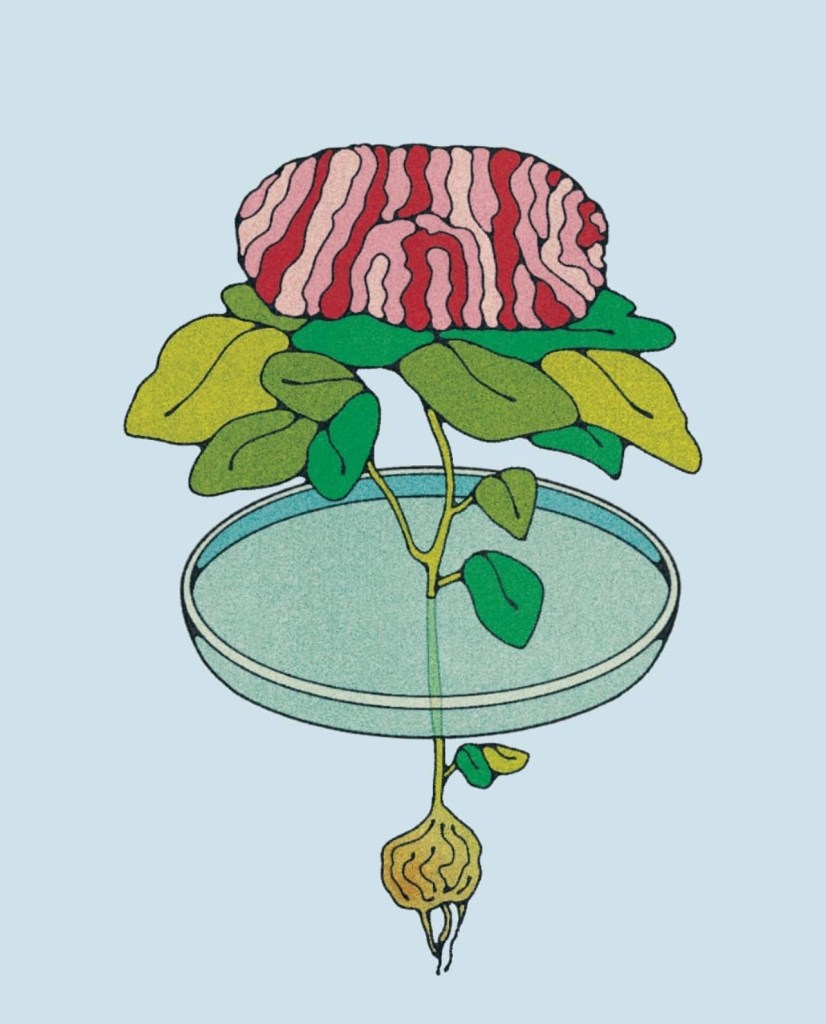
The amygdalae have been shown to perform a primary role in the processing of memory, decision making and emotional responses – historically related to to fear and other emotions responding to aversive or unpleasant stimuli (e.g. anxiety and aggression), but now known to be involved in positive emotions triggered by appetitive or rewarding stimuli. Primarily associated with emotional processes, the amygdala represents the vertex of our very humanity. From an evolutionary point of view, meanwhile, amygdalic function corresponds to satnav – but human and emotional! Computers vs. Amygdalae: this is the 21st century!
The name amygdala is derived from the Greek amygdale, meaning “almond,” in honour of the structure’s almondlike form. The amygdala can also be understood as the amygdaloid nuclear complex; it comprises a group of nuclei, or clusters of neurons, that receives stimuli and regurgitates impulses that lead to responses. The brain has two amygdalae, one in each hemisphere. The amygdalae are part of the limbic system, a neural network which governs many aspects of emotion and memory. Since emotional life is largely housed in the limbic system, and it critically aids the formation of memories, we can conclude that our actual concrete experience of the state of consciousness and therefore of life itself is determined by limbic activity. Amygdalic activity is the heart of this phenomenon, the ultimate jewel in the crown, around which social behaviour, social learning and personality materialise – generally.


Progressivism (the wheels on the bus go round and round-politics) and amygdalamania go hand in hand. But hardline arrogant meritocrats -whose views align necessarily but not always harmoniously with progressivism- have developed the tendency of taking advantage of this link, counterproductively undermining the validity of merit itself. And when those foxy technocrats are involved, in this respect standing plainly for the absolute most extreme iteration of the ideal meritocracy, it gets intense. Yes, it gets intense and neurological damage is difficult to avoid, as we can take away from the political tensions of the past two or three decades… since what? Since the fall of the Soviet Union…
 The Buzz-Concept Project