
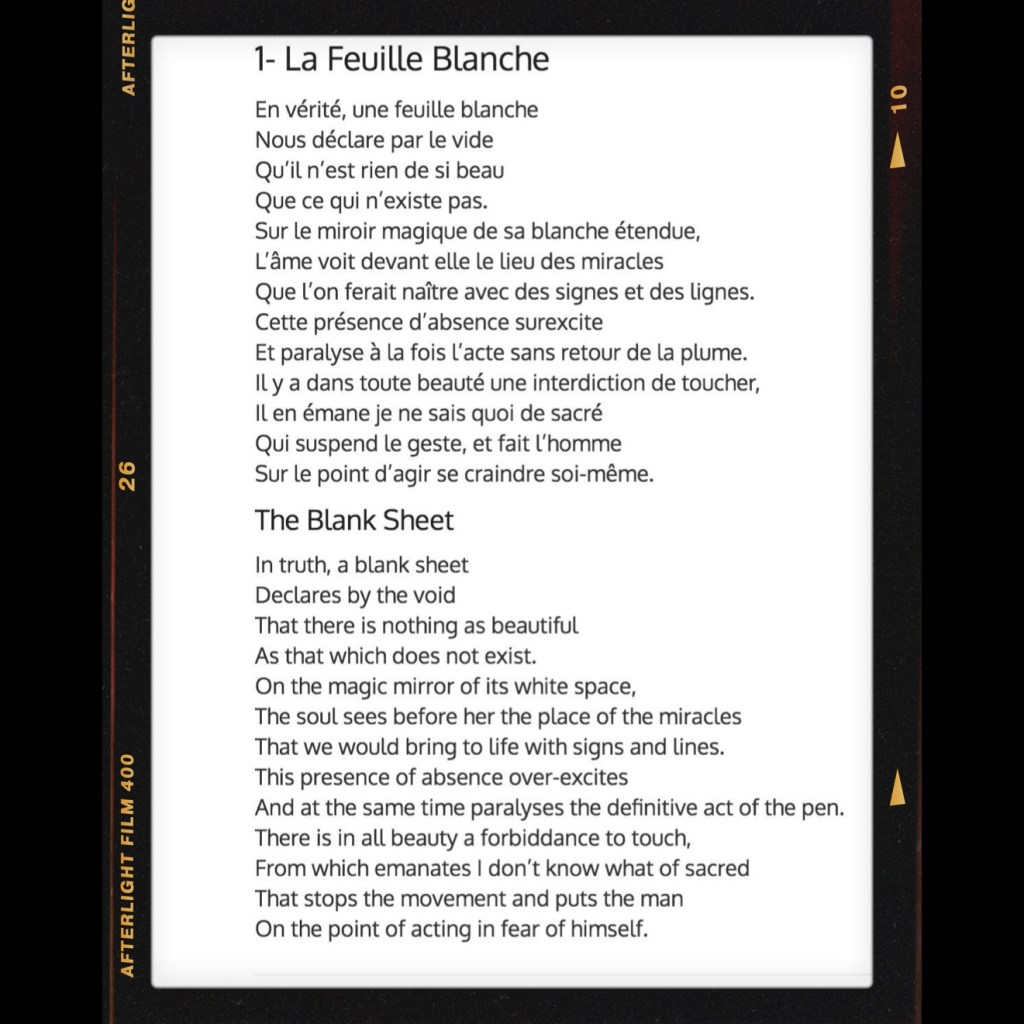
LA FAUSSE MORTE
Humblement, tendrement, sur le tombeau charmant
Sur l’insensible monument,
Que d’ombres, d’abandons, et d’amour prodiguée,
Forme ta grâce fatiguée,
Je meurs, je meurs sur toi, je tombe et je m’abats,
Mais à peine abattu sur le sépulcre bas,
Dont la close étendue aux cendres me convie,
Cette morte apparente, en qui revient la vie,
Frémit, rouvre les yeux, m’illumine et me mord,
Et m’arrache toujours une nouvelle mort
Plus précieuse que la vie.
THE FAUX DEATH
Humble, tender, against the charming tomb,
______Unfeeling monument
That out of shadows, leavings, offered love
______Conjures your weary grace,
I fall, dying against you, dying — Yet,
No sooner fallen across the low grave
Whose lawn littered with ashes summons me,
Life reawakens in her seeming death;
She shakes, reopens lambent eyes, and bites,
And wrenches from my chest still other deaths
……….Dearer than life.
(Translation by Nathaniel Rudavsky-Brody.)
LE VIN PERDU
J’ai, quelque jour, dans l’Océan,
(Mais je ne sais plus sous quels cieux),
Jeté, comme offrande au néant,
Tout un peu de vin précieux . . .
Qui voulut ta perte, ô liqueur?
J’obéis peut-être au devin?
Peut-être au souci de mon cœur,
Songeant au sang, versant le vin,
Sa transparence accoutumée
Après une rose fumée
Reprit aussi pure la mer . . .
Perdu ce vin, ivres les ondes! . . .
J’ai vu bondir dans l’air amer
Les figures les plus profondes . . .
THE LOST WINE
One morning on the endless Ocean
(Whose skies I cannot call to mind)
I threw out, honoring negation,
A quantity of precious wine.
Who willed that vinous dissipation?
Did I obey a god’s command?
Or did the heart’s mute agitation,
Dreaming of blood, disturb my hand?
After a flush of reddish spray,
The sea resurged in swells to save
Its ancient pure transparency.
O squandered wine, besotted wave!
I looked and saw in salt-flecked air
Profoundest figures leaping there.
(Translation by Jan Schreiber.)



🌬
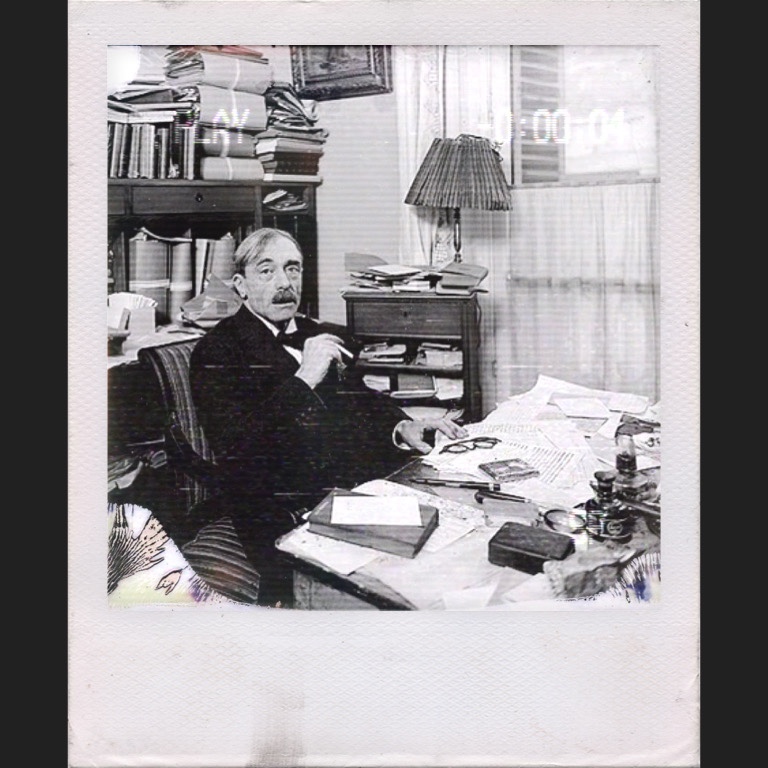
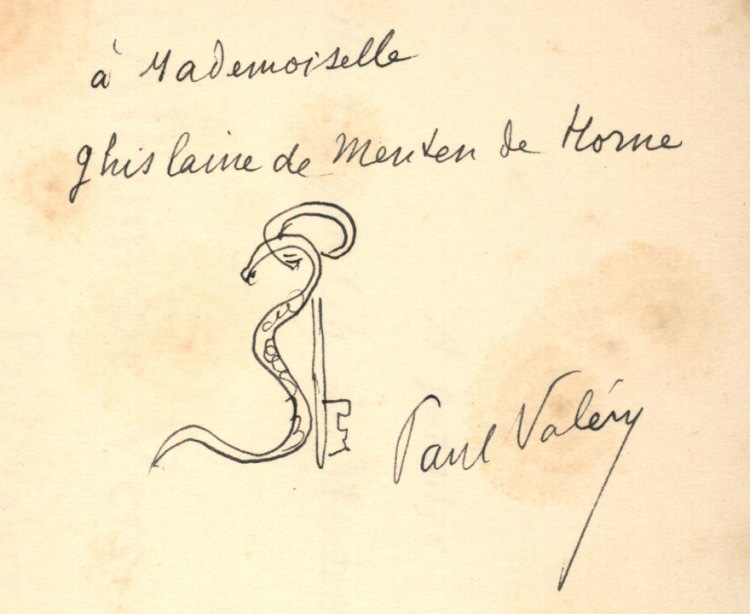
Paul Valéry (1871-1945), born Ambroise-Paul-Toussaint-Jules Valéry unto a Corsican father and a Genoese-Istrian mother in Sète, was a French poet, essayist, and critic. He was a smooth, graceful, fluid, efficient pensive type who composed heartfelt poetry on the significance of human consciousness. His was a sensitive soul housed within a psyche of great intellect, and indeed he cultivated interests in the disciplines of poetry and architecture alongside legal studies at Montpellier. Emotional issues would direct him instead by way of the devout pursuit of intellect. At one point, following a case of heartbreak, he disposed of most of his books and, starting from 1894, adopted the habit of rising at dawn each day to meditate for many hours on weighty topics like scientific method, consciousness, and the nature of language. His contemplations were later published under the title of Cahiers. He would then enter civil service, and was elected to the Académie française in 1925, becoming very active in French cultural life. He has been labelled “the last French symbolist, the first post-symbolist, a masterful classical prosodist, and an advocate of logical positivism” (Poetry Foundation). Amenably subversive, subversively amenable, he delicately evaded even the most esoteric attempts to define him, settling on the diaphanous boundary between late Symbolism and early Postsymbolism, moreover presenting himself as an earnestly hypothetical, acutely philosophising, manneristically-obsessed poet; he loved florid Baroque aesthetics but scornedthe mystical. Well, what is it that we are to take away above all else from Valéry? The meaning of life, of course! He even identified very strongly with the Narcissus myth, and once said in a poem: “I endlessly delight in my own brain”. Life and self are inextricable for humans, after all.

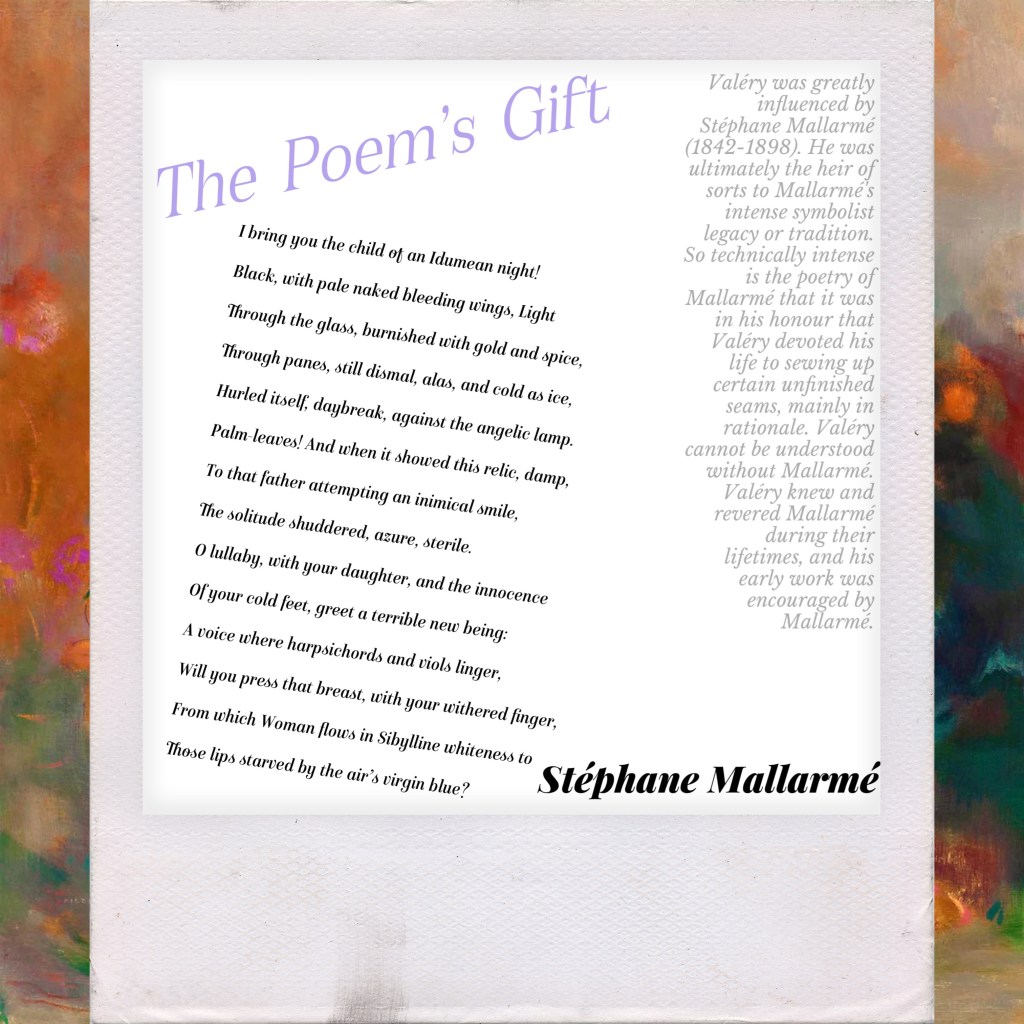
Valéry is agenda.

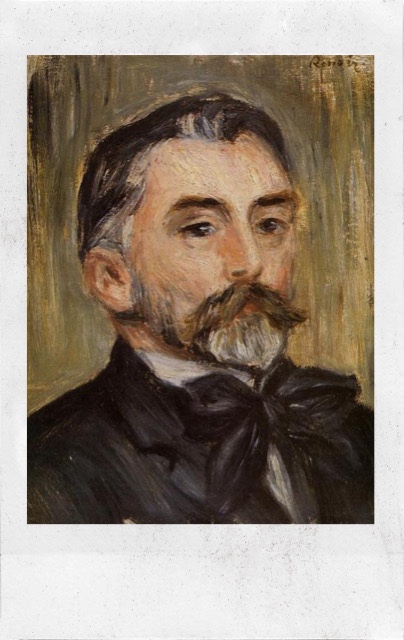
(And Stéphane Mallarmé has the answers.)


Whereby Valentino picked off…


COUTURE HOUSE OF THE MOMENT…?!









“I think that a woman dressed in red is always magnificent”
Valentino Garavani


Valentino Garavani founded the Valentino fashion house in 1960 in Rome, Italy. At the time, the fashion capital within Italy was not Milan but Florence, which is where his wildly successful international debut therefore took place in 1962. But prior to this, while living temporarily in Paris for training, he apprenticed with Jean Dessès and Guy Laroche. Valentino duly went on to become a master couturier himself. He left Paris in 1959 to open his first Valentino store and atelier, in Rome. He opened his first ready-to-wear shop in 1969 in Milan, and then opened stores in Rome and New York the following year.
Valentino Garavani founded his Maison in 1960, alongside a man, an architecture student, named Giancarlo Giammetti, who became his partner in work and love. He dressed noteworthy figures like Elizabeth Taylor, Audrey Hepburn, Jacqueline Kennedy, the Belgian Queen Paola and Princess Margaret of England. He grew to be known for his use of the colour “Valentino red”. The brand’s diffusion line is accordingly called REDValentino.
Garavani and Giammetti sold up in 1998, although the former carried on as the creative director (i.e. the designer) for another decade. Garavani eventually retired in 2008. From 2008, creative direction at the house was led by a duo, Pierpaolo Piccioli and Maria Grazia Chiuri, to great acclaim. Maria Grazia eventually left to lead Dior in 2016, whereupon Pierpaolo was named Valentino’s sole creative director.
The distinctive glamorous signature style Valentino cultivated went on to become ubiquitous for red carpet dressing. The house has also grown to become one of the world’s most important international fashion brands, particularly thanks to his service of socialites, élites and aristocrats.


 The Buzz-Concept Project